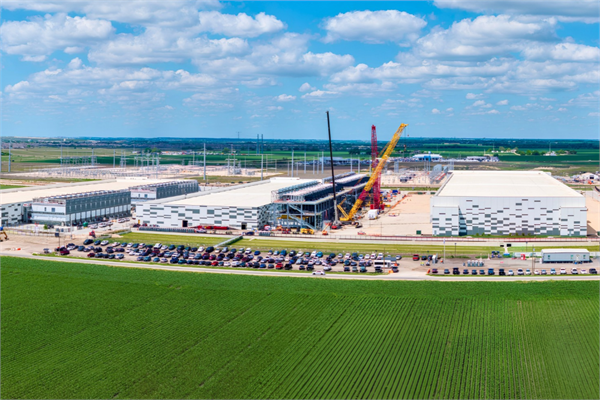
The company outlines measures to protect cooling systems, electrical equipment and stored components throughout fabrication, transport, commissioning and operation.
Cortec® Corporation has outlined a corrosion prevention approach for data centre infrastructure, addressing risks from initial equipment fabrication through to operation and the storage of spare components. According to the company, protection during testing, transport and construction can help avoid additional cleaning, commissioning delays and equipment deterioration.
Scott Bryan, Certified Water Technologist and Director of Business Development – Water Treatment at Cortec, identifies eight stages requiring attention:
- Factory fabrication and testing;
- Preparation for transit;
- On-site storage;
- Post-installation standby;
- Protection of electrical enclosures;
- Final cleaning and flushing;
- Commissioning tests;
- Operation and layup of spares.
Corrosion arising during an early project phase can create problems for teams responsible for subsequent activities. Bryan explains that, even when equipment does not fail, corrosion can generate unplanned cleaning and flushing requirements, increasing costs and delaying commissioning.
Cooling systems are a particular area of concern. Hydrostatic testing and filling or flushing operations can leave residual moisture inside chillers, piping, pumps, heat exchangers and thermal energy storage tanks. Cortec warns that this can lead to flash corrosion within hours of testing.
The company recommends incorporating suitable corrosion inhibitors into cleaning and test water. Its VpCI®-649 is one option proposed for these applications, with protection extending into subsequent storage or transport. Cortec also identifies VpCI®-649 and Cooling Tower Frog® as options for planned shutdowns and seasonal layup, alongside routine corrosion control within operational water treatment programmes.
Equipment awaiting installation may also require protection during transport and prolonged outdoor storage. For transformers, switchgear, piping and chillers, Cortec proposes VpCI®-126 HP UV Shrink Film, which combines an external barrier with vapour phase and contact corrosion inhibitors. According to the company, the inhibitors form a protective molecular layer on metal surfaces inside the packaging. Other options include the VpCI® Dragon™ delivery system for fogging internal spaces in chillers and vessels, and VpCI®-111 Emitters for protecting metal contacts and wiring inside electrical and electronic cabinets.
Cortec cites a project in Indonesia where a construction delay created a requirement to protect 40 coolant distribution units for 12 months in storage without climate control. The selected approach combined VpCI®-308 Pouches for internal protection with VpCI®-126 Film externally, while allowing inspections every 30 days. The company reports that, following two inspection cycles, the customer shared the method with its manufacturing site in India for use on units awaiting shipment.
In another application, a US chiller manufacturer uses the VpCI® Dragon™ to fog internal tubing and wraps equipment in a customised colour of VpCI®-126 HP UV Shrink Film before flatbed transport. According to Cortec, the manufacturer has used the external packaging for approximately two decades and added internal protection within the past five years.