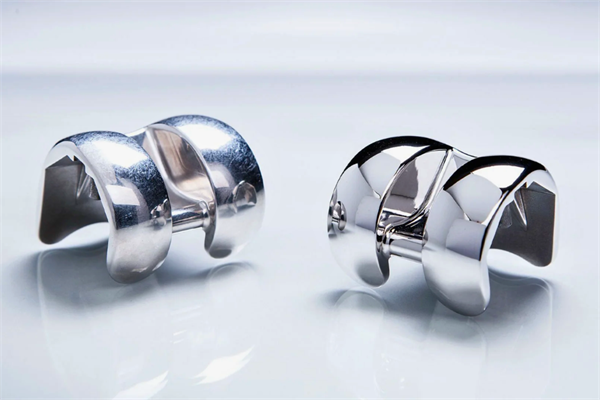
Operating across sites in the UK and the United States, the collaboration has systematically replaced traditional hand-polishing with advanced mechanical systems, drastically reducing cycle times and ensuring absolute repeatability in surface finishes.
Orchid Orthopedic Solutions (now part of Tecomet) and Rösler are celebrating a decade-long partnership that has successfully transitioned orthopaedic implant manufacturing from volatile manual finishing to highly automated, scalable processes.
Orchid is a major contract manufacturer for orthopaedic Original Equipment Manufacturers (OEMs), provides a full suite of services, including coating. The company employs over 1,500 people across the UK, US, and Switzerland.
In medical engineering, many manufacturers still rely on manual labour to deburr and polish delicate components like hip and knee joints. However, this approach is costly, time-consuming, and highly dependent on individual operator skill, leading to minor variations that compromise process stability. Recruitment challenges for these tedious manual roles have further strained the sector.
By integrating Rösler’s automated drag finishers and high-energy disc systems, Orchid has eliminated these variables. The automated processes deliver consistent, easy-to-validate results regardless of the location, working shift, or equipment operator.
“The surface finishing operation is the most important step of the entire manufacturing process. With the drag finishing technology, we achieved a real breakthrough. It helped us to replace unreliable manual operations with an automated, highly scalable system,” has stated Clay Clayton, Vice-President at Orchid Orthopedic Solutions.
The automated overhaul began roughly ten years ago at Orchid’s Sheffield facility in the UK before expanding to Oregon and Alabama in the US. Today, seven Rösler drag finishers are fully operational across these sites, primarily processing complex femoral components.
The technical demands are exceptionally strict. Femur components require internal surface roughness readings of maximum (approximately ). Any microscopic irregularity can cause component abrasion, leading to premature wear of the artificial joint. Orchid noted that alternative methods, such as robotic grinding, proved unfeasible long-term, as Rösler’s drag finishers delivered superior consistency and flexibility.
The partnership is poised to expand into new manufacturing areas:
- High-Energy Disc Systems: At Orchid’s Lansing facility, automated disc systems will be introduced to descale and clean forged hip stems. Moving from a manual process taking up to two minutes per piece, the new system will process batches of up to 150 components simultaneously.
- Dental Instrumentation: At Santa Ana (USA), trials are underway at Rösler's Michigan test centre to automate the deburring of dental instruments, which is expected to eliminate multiple manual workstations.
- Surf Finishing Technology: Orchid is evaluating Rösler’s targeted 'Surf Finishing' technology to treat the highly critical joint box on femoral components, aiming to eliminate manual post-polishing entirely.
“We jointly develop surface finishing processes that comply with the continuously increasing demands of the market. And by doing so, we create truly innovative solutions,” has added Michael Striebe, Global Sales and Process Expert at Rösler.
Orchid and Rösler Mark Ten Years of Automated Orthopaedic Implant Finishing
Operating across sites in the UK and the United States, the collaboration has systematically replaced traditional hand-polishing with advanced mechanical systems, drastically reducing cycle times and ensuring absolute repeatability in surface finishes.
Orchid Orthopedic Solutions (now part of Tecomet) and Rösler are celebrating a decade-long partnership that has successfully transitioned orthopaedic implant manufacturing from volatile manual finishing to highly automated, scalable processes.
Orchid is a major contract manufacturer for orthopaedic Original Equipment Manufacturers (OEMs), provides a full suite of services, including coating. The company employs over 1,500 people across the UK, US, and Switzerland.
In medical engineering, many manufacturers still rely on manual labour to deburr and polish delicate components like hip and knee joints. However, this approach is costly, time-consuming, and highly dependent on individual operator skill, leading to minor variations that compromise process stability. Recruitment challenges for these tedious manual roles have further strained the sector.
By integrating Rösler’s automated drag finishers and high-energy disc systems, Orchid has eliminated these variables. The automated processes deliver consistent, easy-to-validate results regardless of the location, working shift, or equipment operator.
“The surface finishing operation is the most important step of the entire manufacturing process. With the drag finishing technology, we achieved a real breakthrough. It helped us to replace unreliable manual operations with an automated, highly scalable system,” has stated Clay Clayton, Vice-President at Orchid Orthopedic Solutions.
The automated overhaul began roughly ten years ago at Orchid’s Sheffield facility in the UK before expanding to Oregon and Alabama in the US. Today, seven Rösler drag finishers are fully operational across these sites, primarily processing complex femoral components.
The technical demands are exceptionally strict. Femur components require internal surface roughness readings of maximum (approximately ). Any microscopic irregularity can cause component abrasion, leading to premature wear of the artificial joint. Orchid noted that alternative methods, such as robotic grinding, proved unfeasible long-term, as Rösler’s drag finishers delivered superior consistency and flexibility.
The partnership is poised to expand into new manufacturing areas:
- High-Energy Disc Systems: At Orchid’s Lansing facility, automated disc systems will be introduced to descale and clean forged hip stems. Moving from a manual process taking up to two minutes per piece, the new system will process batches of up to 150 components simultaneously.
- Dental Instrumentation: At Santa Ana (USA), trials are underway at Rösler's Michigan test centre to automate the deburring of dental instruments, which is expected to eliminate multiple manual workstations.
- Surf Finishing Technology: Orchid is evaluating Rösler’s targeted 'Surf Finishing' technology to treat the highly critical joint box on femoral components, aiming to eliminate manual post-polishing entirely.
“We jointly develop surface finishing processes that comply with the continuously increasing demands of the market. And by doing so, we create truly innovative solutions,” has added Michael Striebe, Global Sales and Process Expert at Rösler.