For decades, the North American architectural aluminium market has favoured liquid paints. Today, advances in powder coating technology, together with investment in digitalisation and automation, are shifting the balance. Colourific, a long-established Canadian coating contractor specialising in architectural aluminium profiles and panels, has chosen to lead this transformation by building one of the continent’s most advanced vertical production lines in collaboration with Euroimpianti.
For over forty years, liquid coating has been the standard process for architectural aluminium in North America. Today, the evolution of powder coatings using fluoropolymer technology has set new benchmarks for performance and quality, while a focus on sustainability and the growing digitalisation of processes are reshaping market trends.
Colourific Coatings, Canada’s leading coating contractor for architectural aluminium finishes, has invested heavily in its plant in Woodbridge (Vaughan), Ontario to stay ahead of this transformation, working with Euroimpianti (Valeggio sul Mincio, Verona, Italy) to develop a vertical line designed to European standards. This project was not simply aimed at increasing production capacity, but at building a new industrial model based on quality, automation, traceability, and process control.
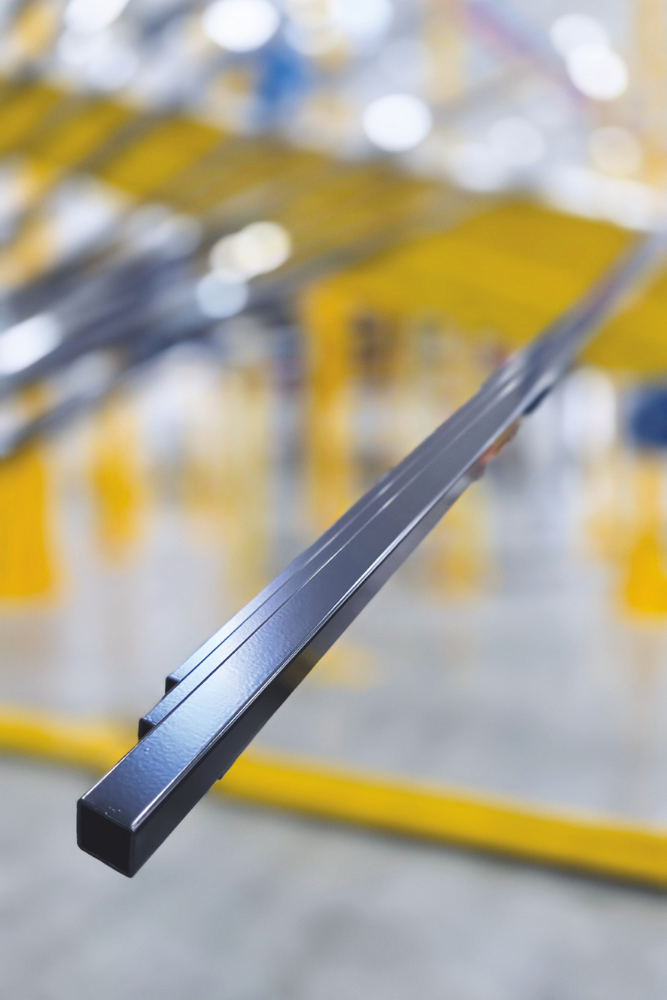 Colourific is a long-established Canadian coating contractor specialising in aluminium profiles. ©ipcm®
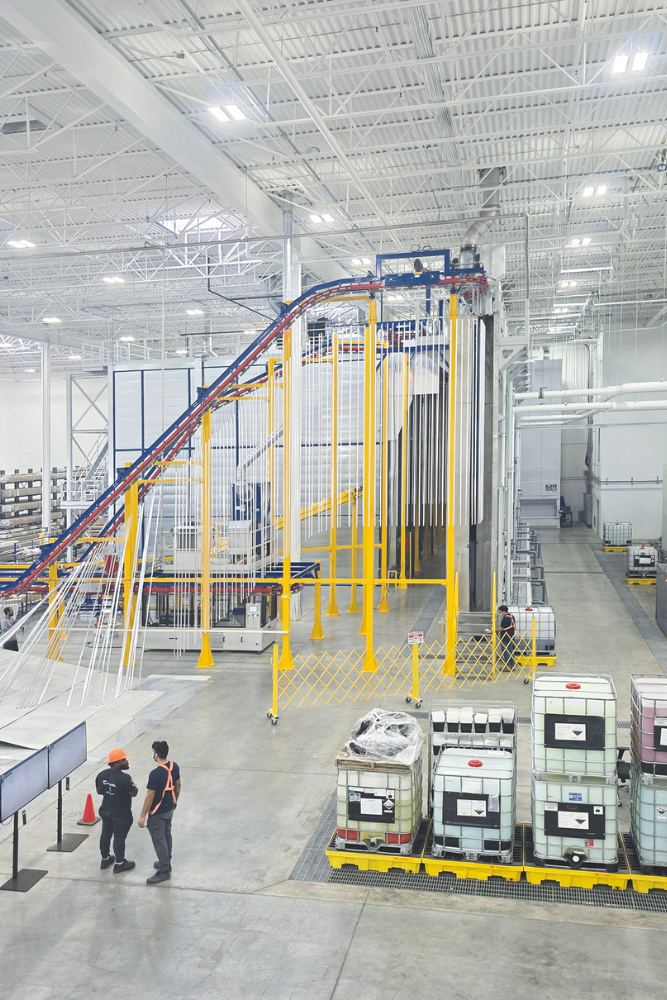 Overview of the vertical coating line supplied by Euroimpianti. ©ipcm®
More than just a new coating line: a statement of intent
Colourific’s goal was not to increase the number of profiles processed each day, but to build a technological platform to underpin its growth in the coming years. This choice reflects a firm conviction: the future of architectural coating in North America will increasingly shift towards powder coating technology. For decades, the Canadian and US markets have followed a different path from Europe. Whereas powder coating has gradually become the standard technology for architectural aluminium in the latter, liquid coating processes have continued to dominate the former, supported by established specifications, designer preferences, and an industrial supply chain developed around this technology. In recent years, however, the balance has begun to change.
Founded thirty-five years ago, Colourific has decided to take the lead in this transformation by building a new site in Vaughan as part of an industrial strategy to redefine quality standards in the sector. “The dominant position of liquid coatings in North America has never been linked solely to technological performance,” says Majdi Rayyan, COO at Colourific. “For many years, the market was driven by technical specifications and architects. The major manufacturers of liquid paints invested extensively in developing specifications and certifications, which helped consolidate their position. Today, however, technological differences are gradually narrowing.
“Modern fluoropolymer powders can meet the AAMA 2605 standard. Modern chromium-free pretreatment systems can provide corrosion protection comparable to traditional hexavalent-chromium conversion pretreatments, while eliminating the environmental and occupational-health concerns associated with hexavalent chromium and other heavy-metal-containing treatment processes. Alongside performance and environmental impact, the aesthetic characteristics of powder coatings have also evolved. New formulations enable increasingly sophisticated textural and metallic effects and finishes. Today, therefore, powder coating is no longer a compromise.”
“More and more iconic buildings and monumental projects are being completed with powder coatings. Every new project boosts market confidence and demonstrates that powders provide a viable alternative to liquid systems from a technical, economic, and environmental perspective,” adds Colourific CEO Garrett Clyne. “European companies have played a decisive role in this shift. Many European groups, already accustomed to working with powder coating, such as Permasteelisa, now operate permanently in North America. This helps promote a different technical culture and accelerates the evolution of design specifications. However, I believe that the uptake of powder coating in North America will depend not only on the evolution of materials but, above all, on the ability of applicators to deliver more controlled, more repeatable, and fully traceable processes.”
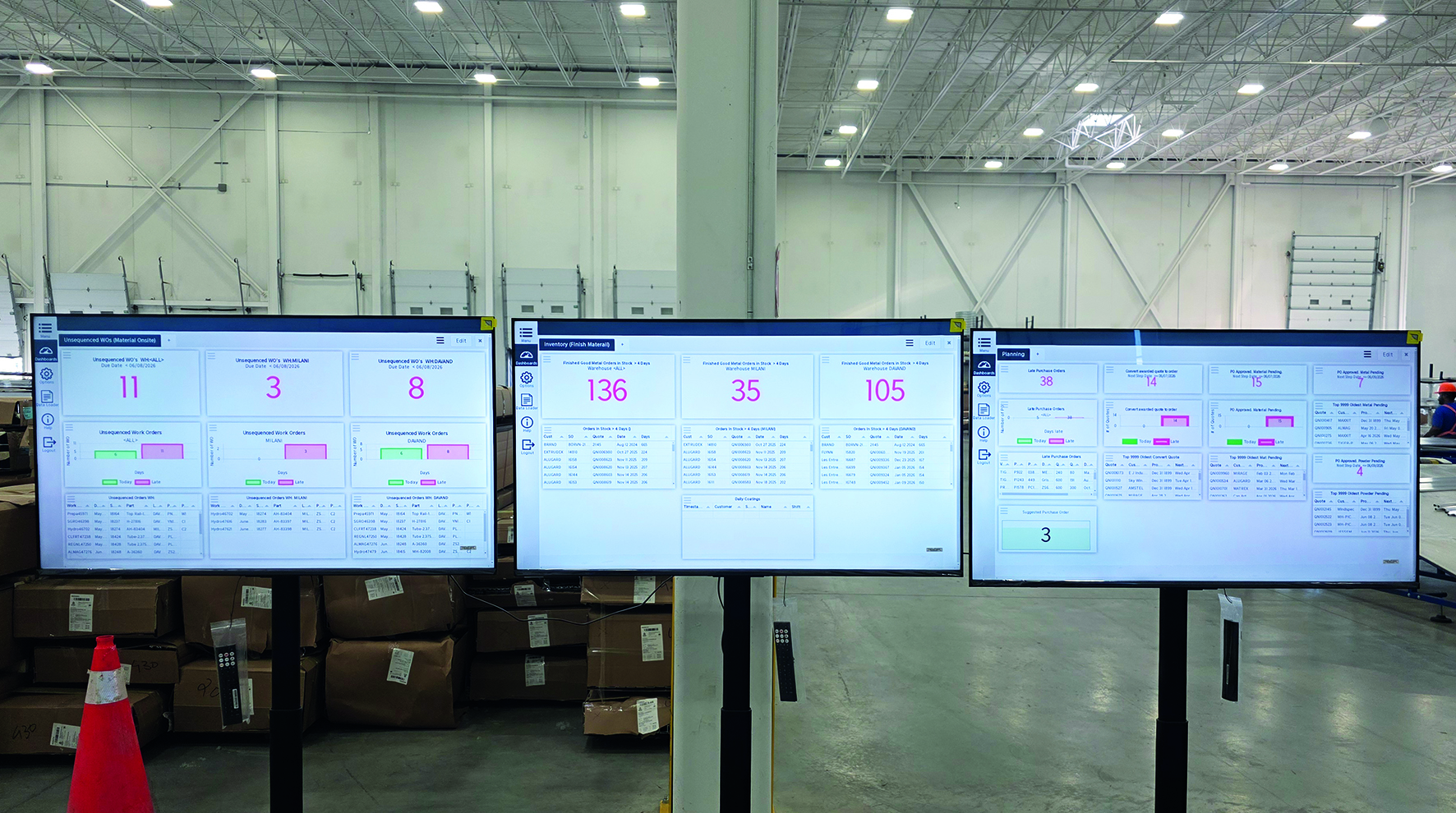 As a data-driven company, Colourific requested a fully digitalised plant that would integrate with its own management system. ©ipcm®
An investment intended to transform Colourific’s production model
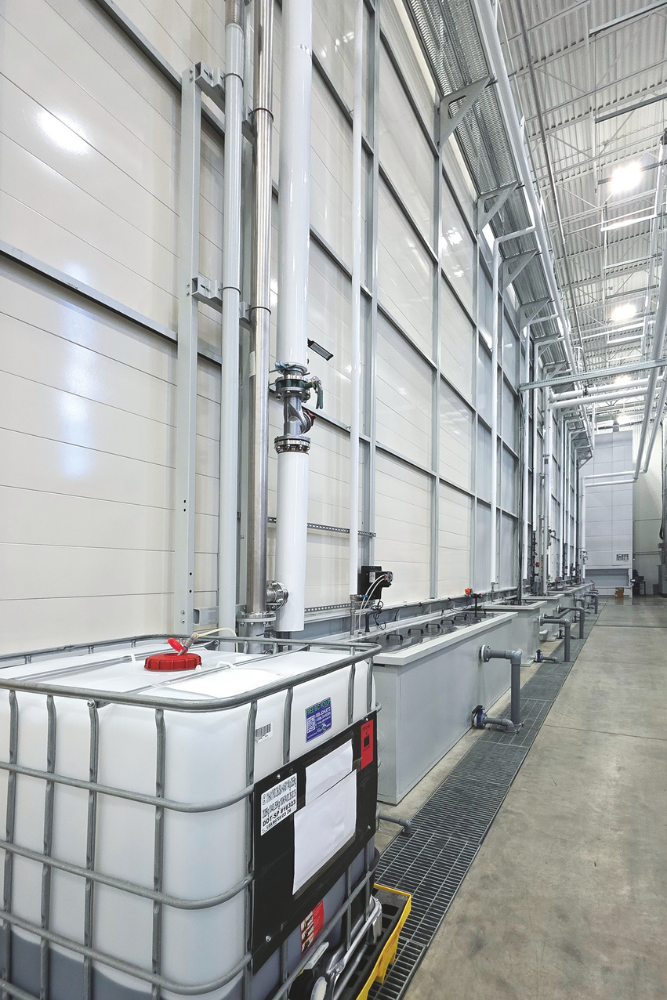 The seven-stage pre-treatment tunnel. ©ipcm®
The new vertical coating line in Woodbridge (Vaughan), which complements Colourific's existing horizontal coating lines, was designed to establish a production model capable of supporting the company's long-term growth. The vertical line is dedicated primarily to architectural aluminium extrusions, while the horizontal lines continue to process architectural panels and steel products. “Our objective is to help bridge the gap between the standards that currently characterise powder coating in Europe and those in North America. That requires investment in technology, systems, automation, and processes,” states Garrett Clyne. “This is the first vertical production line we consider to have been built to European standards, but it will not be the last. We intend to build further lines of this kind and create a production platform that can be replicated across North America, maintaining the same quality standards and collaborating with leading technology partners.”
Behind this project lies the transformation process initiated by Colourific five years ago, following the entry of Cassiar Partners Limited Partnership, a Canadian private equity fund that acquired the company to support its industrial development. “Typically, private equity funds buy and consolidate businesses with a view to reselling them. Cassiar, by contrast, acquired Colourific to build a solid industrial future. The aim was not simply to coat more parts,” confirms Majdi Rayyan. “Rather, it was to improve working procedures, raise quality standards, ensure greater process repeatability, and create a structure that would enable us to grow while maintaining the same standards across all future plants.”
To realise this vision, Colourific chose Euroimpianti as its technology partner. The new vertical line, capable of coating bars up to 7.62 m (25 ft) in height, serves as the starting point for a development programme, with further investment in Canada and the United States. However, for it to be truly replicable, every stage of the process must be standardised, monitored, and documented.
A plant designed not to discard a single profile
“As a coating contractor, Colourific cannot afford to discard even a single profile, as every wasted workpiece is a cost. Our entire design process was guided by this principle, aiming to minimise every possible source of error,” explains Nicolò Baruffaldi, Project Manager at Euroimpianti. “Colourific is a fully data-driven company. Everything that can be monitored is recorded and entered into its management system. That is why our line’s loading area, although maintaining a traditional layout, is already set up for the future integration of automatic profile recognition systems using cameras.”
This focus on digitalisation spans the entire plant. The pre-treatment tunnel, chemical dosing systems, coating segment, and process controls have been designed as components of a single digital ecosystem, in which every parameter is continuously recorded, archived, and made available to the company’s management system. Euroimpianti and Colourific are also developing an artificial intelligence-based system that will match each profile to the parameters recorded during its production cycle.
“The goal is to continuously monitor the plant’s performance and develop tools for predictive quality analysis. Each profile will be matched with its complete production history,” adds Baruffaldi. “This design philosophy perfectly reflects Colourific’s approach: to use technology not merely as a production tool, but as a key element to ensure consistent quality, traceability, and process standardisation.”
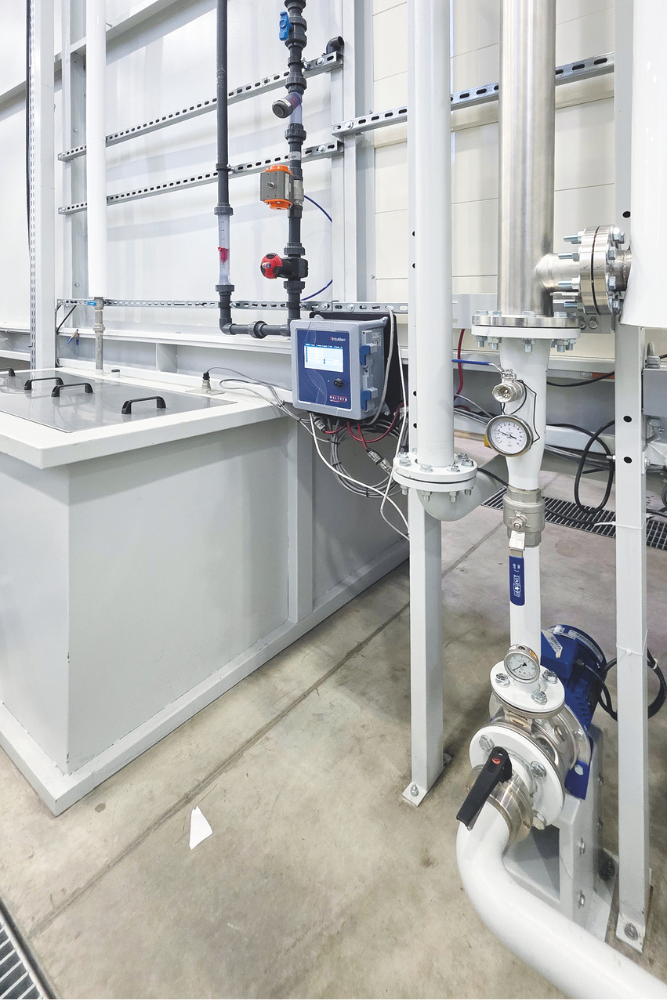 Euroimpianti developed an automatic dosing system that was fully integrated into the line. ©ipcm®
The technological heart of the line
Achieving consistent coating quality begins with a robust pretreatment process. For this reason, Euroimpianti designed the pretreatment system with a strong focus on process stability, automation, and repeatability, ensuring compliance with the stringent requirements of Qualicoat and AAMA 2605. The pretreatment line is fully integrated with automated process controls and chemical management systems to maintain stable operating conditions and support consistent coating performance. “The sensitive information appears here: Process stability is achieved through a combination of advanced pretreatment design, automated chemical control, and continuous process monitoring. The line has been engineered to maintain consistent operating conditions and ensure repeatable performance while meeting the requirements of Qualicoat and AAMA 2605 specifications.
Water treatment also follows the same philosophy. The chemical-physical system supplied by Saita (Limena, Padua, Italy) treats cleaning water in continuous flow, while concentrated effluent from the pre-coating tunnel and eluates from the demineraliser regeneration process are treated separately. The process includes flocculation, decantation, sludge dewatering in a semi-automatic filter press, and final filtration with pH control at a flow rate of 6,000 l/h before discharge into the sewer system. Saita also supplied a closed-loop duplex demineralisation plant for the continuous recirculation of demineralised water through the cleaning tanks at a maximum flow rate of 10-12,000 litres per hour, maintaining conductivity in the tanks below 20 microsiemens. This dual-line demineraliser ensures round-the-clock operation, even during resin regeneration.
The factory’s geographical location also required specific design solutions. “In Vaughan, winter temperatures are extremely low. The passivation tank is configured to be heated via a heat exchanger, and the mains water pipes are insulated to prevent condensation. These details are not immediately obvious, but they are essential to maintaining consistent operating conditions throughout the year.” Indicates Baruffaldi.
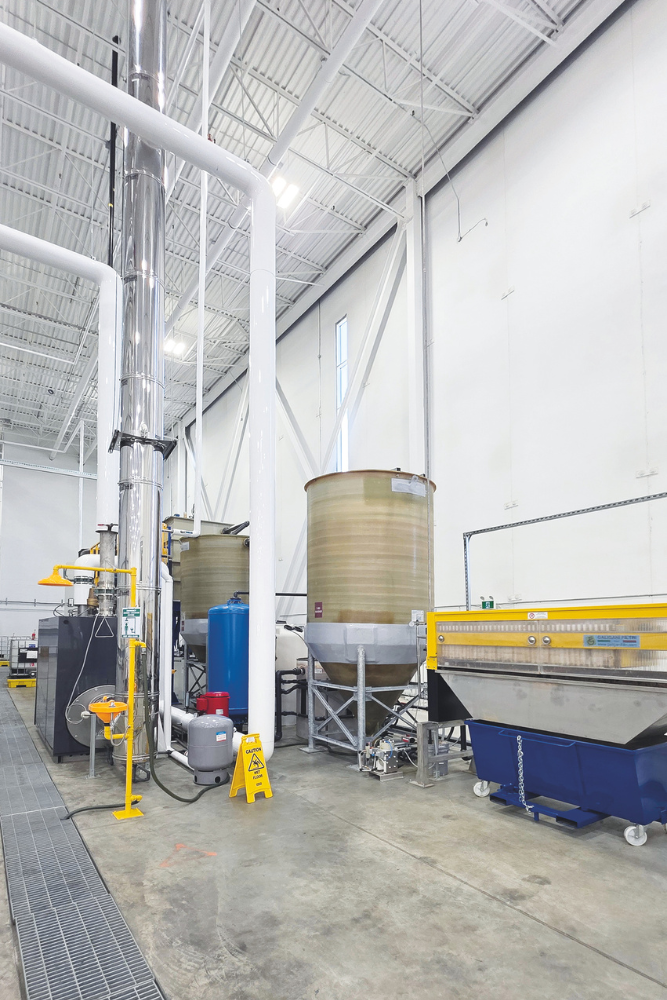 The physical-chemical water treatment plant with a filter press, designed by Saita. ©ipcm®
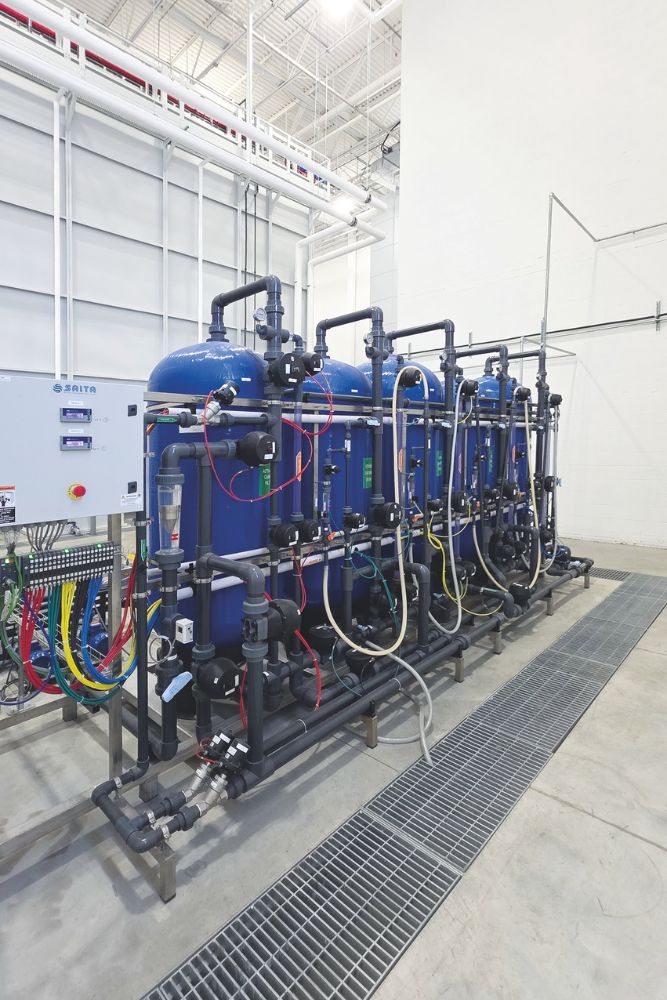 The demineraliser. ©ipcm®
Energy recovery and process optimisation
After pre-treatment, the profiles pass through a dedicated dripping area before entering the drying tunnel. Unlike traditional set-ups, which feature an oven dedicated exclusively to drying, this line features a single system in which heat recovered from the curing oven is utilised to feed the drying tunnel. “The goal was to reduce energy consumption without compromising process quality,” explains Nicoló Baruffaldi. “Drying is carried out using air curtains that limit heat loss within the department, further improving the plant’s energy efficiency. The workpiece’s route has been designed to avoid interference between the various production stages: after drying, the profiles move to the application booth and then to the curing oven. The curing oven’s inlet and outlet are completely separate. If a part treated with a white colour is being handled at the inlet and one treated with a black colour at the outlet, there is absolutely no chance of contamination between the two.” Reducing the risk of contamination was indeed one of the project’s main objectives, particularly given the variety of colours and finishes demanded by the architectural market.
The line is equipped with a Diamond® application booth, a patented Euroimpianti design characterised by a diamond shape, housed within a clean room. “We wanted a fully enclosed and pressurised clean room. In particular, pressurisation compensates for the air extracted from the booth and prevents dust from entering from outside, further improving the quality of finishes. When observing the booth during production, the level of cleanliness is immediately apparent. This result is achieved thanks to the correct extraction balance and the automatic cloth cleaning system.” The booth is equipped with a Gema OptiSpeeder powder centre featuring Smart-In-Line paint feeding technology and 24 spray guns.
Great attention was also paid to maintenance. All the main sections of the line are easily accessible via walkways above the tunnel and the booth, allowing operators to carry out maintenance work quickly and safely without compromising the plant’s productivity.
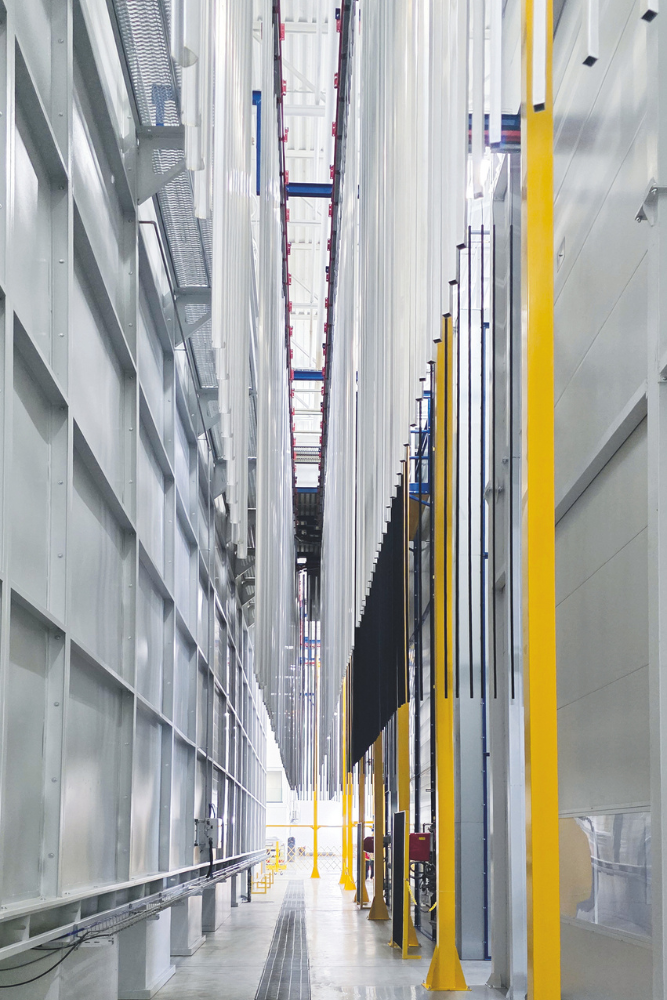 On the left, profiles exiting the pre-treatment tunnel; on the right, profiles leaving the drying oven and moving towards the coating booth. ©ipcm®
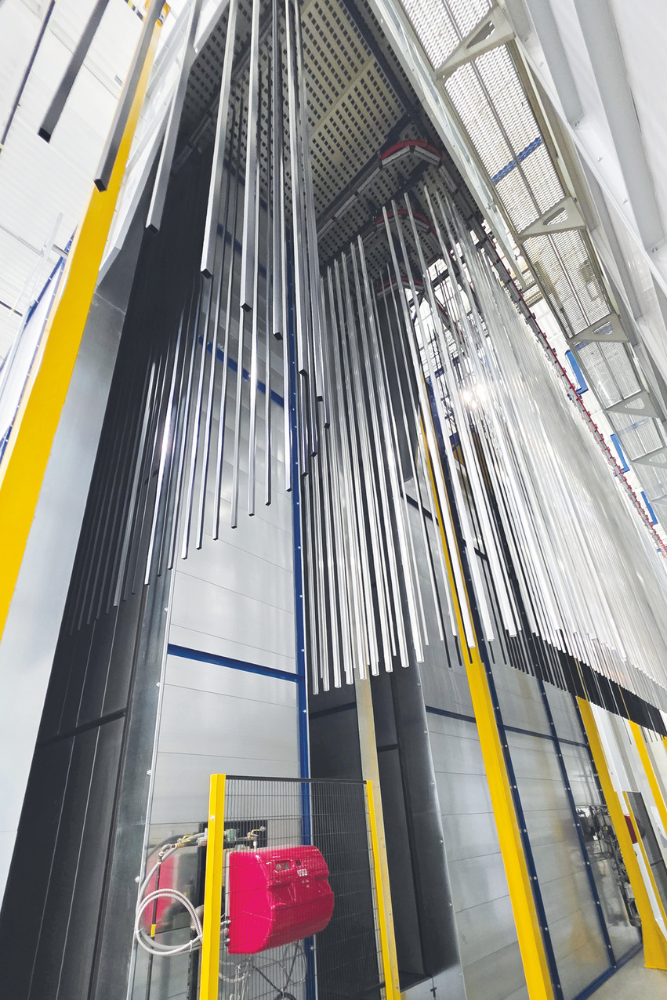 The two ovens are integrated into a single system, in which the heat recovered from the curing oven is used to heat the drying tunnel. ©ipcm®
Safety features designed in accordance with NFPA standards
A high level of automation and meticulous design characterise every detail of the line. However, one of the most significant engineering challenges of the project lay in designing its safety systems, which had to comply with the stringent requirements set out by the North American NFPA (National Fire Protection Association) standards. Unlike in Europe, where many plant engineering solutions follow established but less prescriptive criteria, in the United States and Canada every component must meet extremely rigorous requirements, verified by both the relevant authorities and insurance companies.
“Many North American lines use passive explosion venting systems consisting of rupture panels that burst open when overpressure occurs. In Ontario, and in many other parts of North America, however, there is a growing demand for active suppression systems,” illustrates Nicolò Baruffaldi. “To meet these requirements, we fitted the line with a system supplied by TAMA, which protects not only the filter unit but also the powder recovery cyclone. The system instantly detects pressure changes and activates cylinders containing an extinguishing agent, preventing the explosion from spreading. It is more complex and more expensive than traditional solutions, but it currently represents the highest level of safety available.”
Implementing this system required significant design work. “Simply protecting the filter is not enough. The cyclone must also be equipped with its own suppression system, and the entire circuit must be designed to avoid any risk of contamination during colour changes. This was one of the most challenging aspects of the project, not least because NFPA compliance covers not only explosion-proof systems but the entire line. The combustion system, for example, was built with a dual gas train for the main and pilot flames. All pressure regulators are located outside the process areas, and every safety device is redundant. Opening a door, pressing an emergency button, or any fault detected by the sensors triggers an immediate shutdown of the plant. When building a plant for the North American market, the design must take into account inspections by the relevant authorities from the outset. Every detail must comply with the requirements. This allows the customer to operate with complete peace of mind and to pass all the checks required by the authorities.”
The line is also equipped with a laser system for the automatic paint stripping of the conveyor’s hooks, another of the cutting-edge technologies offered by Euroimpianti to the aluminium industry.
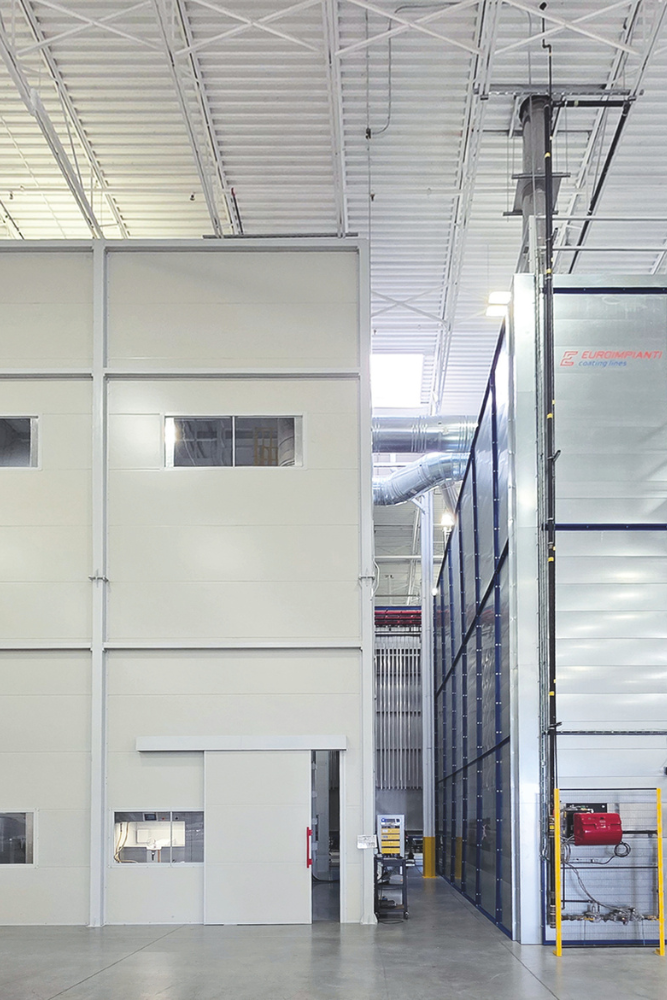 The coating booth is housed in a pressurised clean room. ©ipcm®
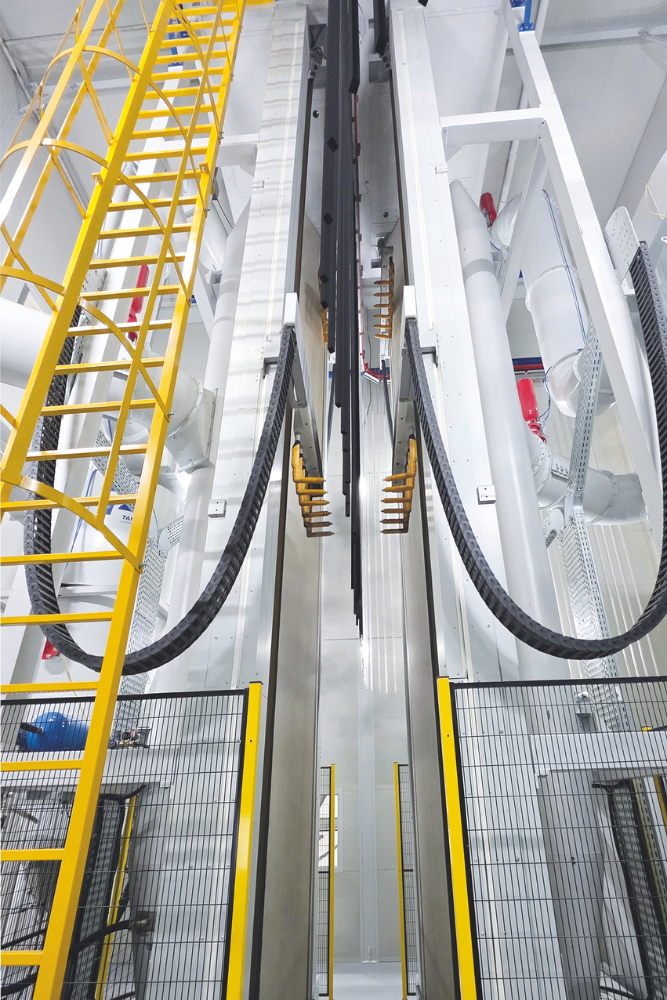 Euroimpianti’s patented Diamond® coating booth. ©ipcm®
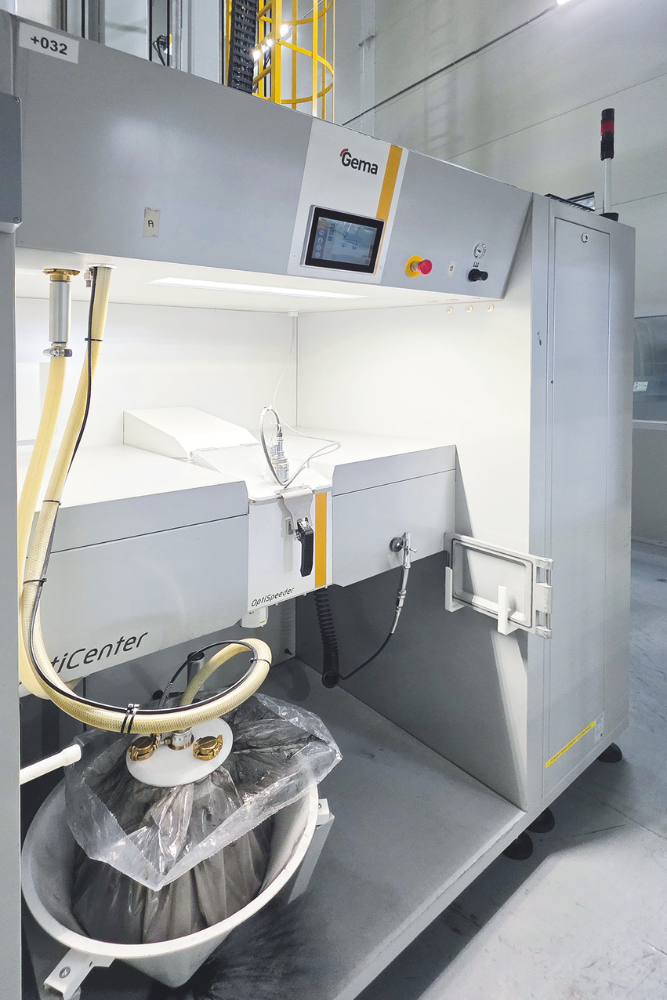 Gema’s powder coating centre featuring dense-phase technology. ©ipcm®
Quality is built on data
Every stage of the process includes systematic quality controls. “Quality is not something you check at the end; rather, it is built in throughout the entire process,” points out Majdi Rayyan. “Our laboratory constantly checks coating thickness, gloss, colour, adhesion, curing, and other parameters covered by the Qualicoat and AAMA 2605 specifications. At the same time, production follows an extremely rigorous inspection programme. Every two hours, we take samples directly from the line and subject them to laboratory testing. The oven’s performance is also checked frequently: once a day at least, the thermal profile is monitored using the Datapaq system, and three temperature measurements are taken (at the top, centre, and bottom of the load) at every colour change to ensure uniform curing throughout the entire height of the profiles. Just reaching the required temperature is not enough: we need to ensure that every part of the batch receives the same thermal energy and that the coating cross-links correctly.”
One of the most interesting aspects of the quality system adopted by Colourific concerns the management of documentation. “We retain physical samples of every production run for ten years. Should a dispute arise even several years after delivery, we can retrieve the original sample, compare it with the customer’s sample, and trace the operating conditions recorded during processing. This is made possible by the line’s complete digitalisation. Every parameter recorded during the cycle is archived and linked to the relevant batch, creating a database that enables us to trace the complete history of every order at any time,” comments Rayyan.
“For many years, coating has been regarded as a mere commodity. Today, customers are primarily buying reliability. They want to know that the process has been carried out correctly and that the coating will maintain its performance over time. Traceability is an integral part of this guarantee.” Digitalisation, therefore, is not just about monitoring tools; it is an essential element of this company’s industrial strategy: a wealth of data designed to support continuous process improvement and, looking ahead, the development of predictive analytics systems based on artificial intelligence.
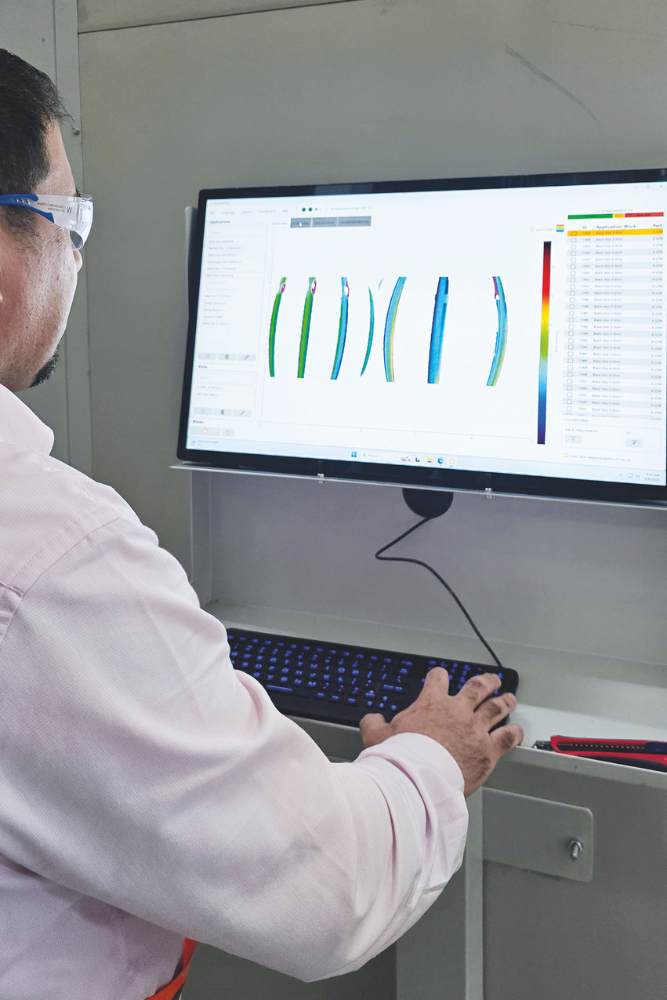 Colourific measures coating thicknesses in real time before curing. ©ipcm®
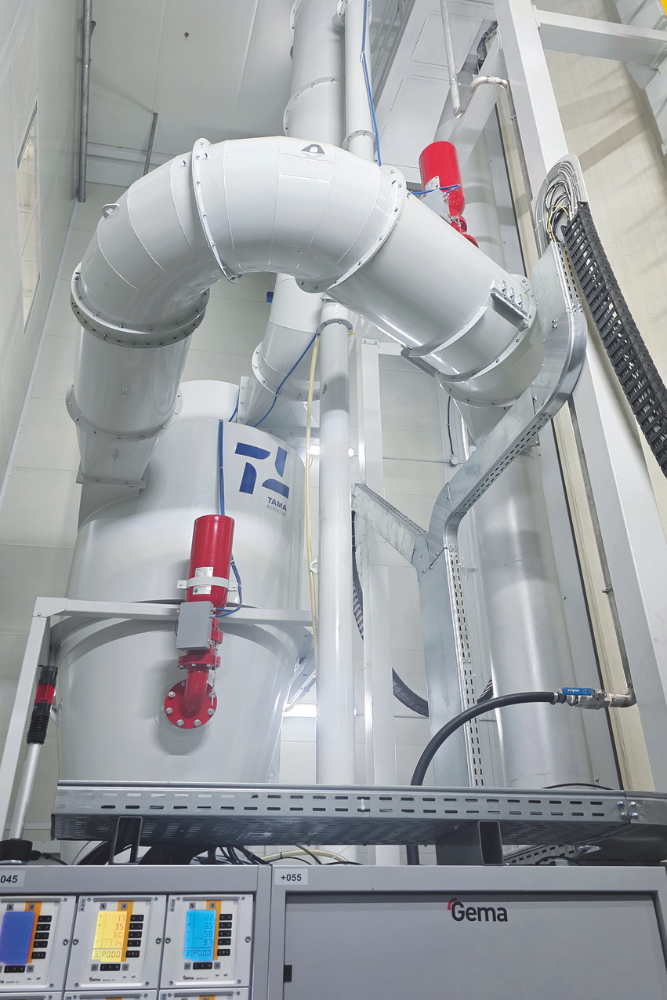 The NFPA-compliant active fire suppression system installed by TAMA. ©ipcm®
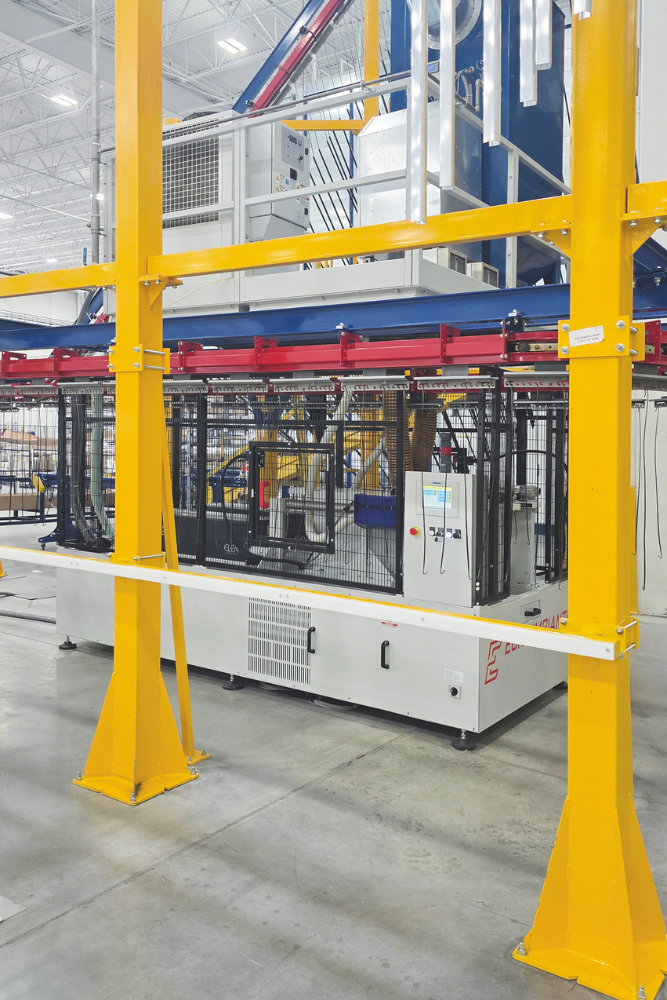 The line is completed with an in-line laser paint stripping system for the hanging hooks. ©ipcm®
A platform for growth
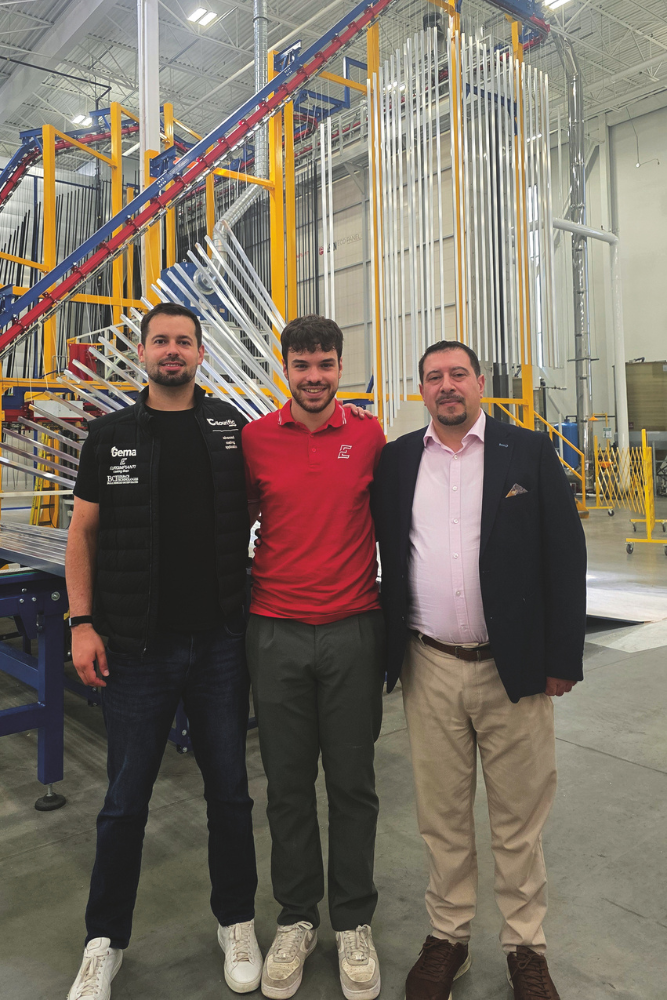 From left to right: Garrett Clyne, Nicoló Baruffaldi, and Majdi Rayyan. ©ipcm®
Among the projects already underway is a new horizontal coating line, also developed in collaboration with Euroimpianti, conceived to further expand the company’s production capacity. “We are designing a line with two separate pre-treatment tunnels for aluminium and steel, two independent conveyors, and mobile booths to manage colour changes and different product types with greater flexibility,” says Majdi Rayyan.
Among the projects already underway is a new horizontal coating line, also developed in collaboration with Euroimpianti, conceived to further expand the company’s production capacity. “We are designing a line with two separate pre-treatment tunnels for aluminium and steel, two independent conveyors, and mobile booths to manage colour changes and different product types with greater flexibility,” says Majdi Rayyan.
Colourific’s development plan also looks beyond Ontario’s borders. “Demand for powder coating continues to grow,” notes Garrett Clyne. “The automotive industry, particularly the electric vehicle sector, is also increasingly adopting this technology. We believe the potential for growth remains enormous. In Canada, we have not yet seen regulatory changes capable of significantly accelerating the transition from liquid to powder coating: for this reason, we must compete every day on quality, service, finishes, and production efficiency. If new environmental regulations come into force in the future, they will certainly be welcome. In the meantime, we must win over the market by demonstrating the value of our offering.”
That is precisely where the collaboration with Euroimpianti comes in. “We are very pleased with its team’s work,” Clyne concludes. “Euroimpianti has been a reliable partner throughout the project and will continue to be so in the next stages of our development.”
In a rapidly evolving market, this Canadian company has chosen to invest not only in new equipment but also in a new industrial culture that regards quality as the outcome of process design, data collection, and continuous improvement. “Anyone can produce a beautiful colour. Very few can guarantee it will last twenty years,” states Majdi Rayyan.