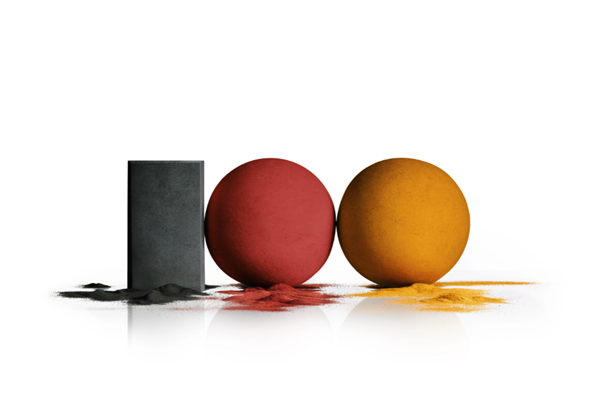
Known for their exceptional durability, these pigments are widely used to for coatings.
LANXESS is celebrating a century of iron oxide pigment production at its Krefeld-Uerdingen site with over 15 million tons produced from 1926 to today, a volume of pigment enough to produce more than 200 billion litres of paint.
“People encounter our pigments every day, on streets, roofs, and facades. Thanks to the pioneering spirit of our employees in Krefeld, our pigments have also become indispensable in many other applications,” has stated Michael Ertl, Head of the Inorganic Pigments business unit at LANXESS.
Beyond traditional construction, the pigments are now used in artificial turf for sports pitches, automotive airbags and brake pads, and chemical catalysts. Looking ahead, the company is actively developing the pigments as precursor materials for electric vehicle (EV) batteries.
The foundations for this global success were laid in 1926 by chemist Julius Laux, who developed an innovative aniline production process that successfully refined byproduct iron oxide into high-quality synthetic pigment. Today, the Laux process serves as an early masterclass in the circular economy, allowing LANXESS to boast an industry-leading low carbon footprint by transforming industrial byproducts into premium commercial goods.
“What has been created at LANXESS in Krefeld-Uerdingen over the past 100 years is a piece of industrial history of inestimable value. Those who view transformation as an opportunity and focus on reinvention are paving the way to the future,” has added Frank Meyer, Mayor of the City of Krefeld.