Industry stakeholders have joined forces in a major Joint Industry Project (JIP) to combat corrosion under insulation (CUI), one of the most complex, costly, and safety-critical asset integrity challenges facing the oil, gas, and petrochemical sectors.
Led by SIRRIS, the Belgian non-profit research and innovation centre for the technological industry, the initiative brings together global operators and coating specialists. Norwegian coatings supplier Jotun has taken a leading role in the collaboration, leveraging decades of experience to advance preventive coating technologies and safeguard steel integrity.
According to data from DNV, CUI accounts for approximately half of all hydrocarbon leaks in the oil and gas sector. Tackling this issue is now universally recognised as essential for industrial safety, asset sustainability, and reducing lifecycle costs.
Maintaining steel integrity beneath insulation requires a unified approach that connects material performance, exposure conditions, and inspection insights. The SIRRIS JIP has successfully established a structured forum for asset owners, coating experts, and research partners to openly share real-world data and align their technical understanding.
“We believe in collaboration, and creating a structured forum where coatings experts, asset owners and researchers can meet regularly, exchange experiences and discuss CUI challenges openly, as this leads to deeper technical understanding and trust. It has enabled customers to share real world learnings, helped clarify assumptions, and get a better understanding of the scope of this issue. We are proud to be one of the contributors to the project, sharing our experience from decades with corrosion challenges and coatings,” has stated Jenny Manvik, R&D Manager Speciality in Jotun.
The first phase of the project focused on developing realistic test conditions for preventive coatings, combining accelerated laboratory methods with longer-term "slow ageing" exposure to better reflect actual field performance.
Testing was conducted under harsh cyclic CUI conditions, using repeated wet–dry cycles fluctuating between 80 °C (wet) and 140 °C (dry)—a critical operating window for modern processing plants.
Key Areas of Technical Evaluation:
- Preventive coatings: Comparing degradation mechanisms between accelerated and long-term testing to ensure lab results accurately predict field performance.
- Moisture sensors: Assessing how continuous moisture monitoring technologies depend on insulation types and system designs to effectively rule out corrosion risk.
- Electrochemical Impedance Spectroscopy (EIS): Exploring EIS as both a laboratory and field inspection tool to quantify coating degradation, though further optimization is required to manage localized failures.
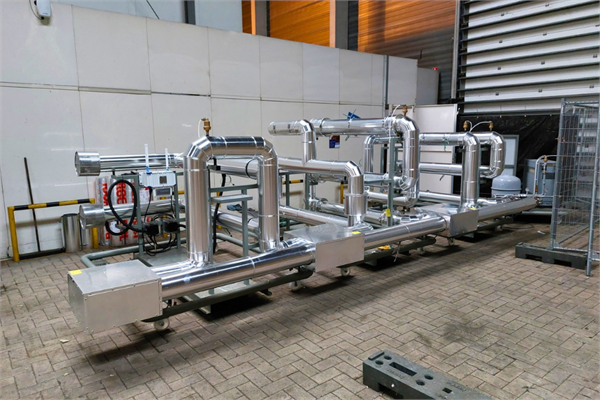
“Continuous monitoring of moisture in insulation is an important goal for controlling corrosion under insulation. If the measurements indicated that no moisture or water is present, corrosion can effectively be ruled out. The SIRRIS project, including the practical test rack, has given us valuable insight into how continuous moisture monitoring methods depend on system design and insulation type. Every moisture monitoring system has its pros and cons,” has added Peter Janssen, Expert Lead Corrosion & Materials at EbertHera and consultant for SABIC.
Building on these insights, a second phase of the JIP is launching this summer to further refine testing standards and expand research boundaries. The upcoming work will extend beyond standard epoxy technologies to investigate multi-polymeric coating systems and examine how various exposure conditions influence long-term protection.
The ultimate vision of the project is to create a reliable methodology for estimating the remaining life of protective coatings in the field by combining laboratory data with real-time moisture monitoring. For Jotun, the project represents a vital step forward in its long-term commercial and technical strategy.
“For us, the participation in the SIRRIS JIP aligns closely with the company’s strategic ambition to be a trusted partner and technology leader within prevention of corrosion under insulation – and our overall ambition to help the industry maintain steel integrity,” has noted Ingrid Vee, Global Category Manager in Jotun.
“The long-term goal and vision we’ve set out is to allow estimation of remaining coating life in the field based on a combination of laboratory testing and the integration of CUI moisture monitoring data. To achieve this goal, a better understanding of the impact of exposure conditions in laboratory testing on the observed failure mechanisms is required, as well as a method to quantify coating degradation in the lab and in the field. By continuing the JIP, we want to foster further collaboration in the industry and help tackle this safety critical and costly damage mechanism,” has concluded Jeroen Tacq in SIRRIS.
The high-profile consortium behind the JIP highlights its importance to the global energy sector. Alongside Jotun, Phase 1 participants included major coating manufacturers AkzoNobel
and Carboline, as well as leading operators Shell, Equinor, BP, Chevron, SABIC, Dow, and Gassco.