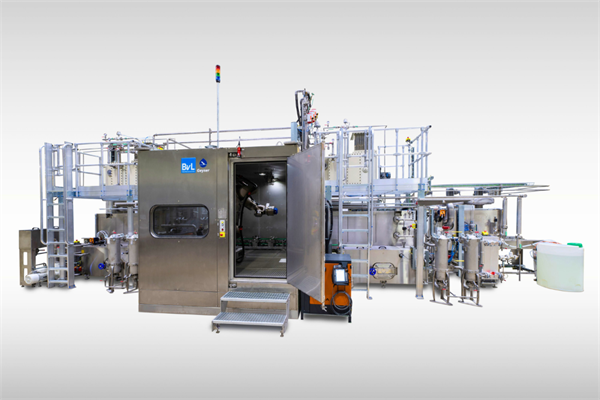
For professionals in the surface treatment sector, integrating high-pressure water-jet (HPWJ) deburring into the process chain is not merely a production preference, but a strategic decision for ensuring coating adhesion and finish integrity.
In the world of surface treatment, the durability and aesthetic quality of a coating are fundamentally determined by the condition of the substrate. While chemical pretreatment baths—such as degreasing and conversion coating—are designed to prepare surfaces, they cannot rectify mechanical defects left behind by upstream machining processes like drilling, milling, or turning. Burrs, often dismissed as minor surface irregularities, are in fact significant impediments to achieving a high-quality finish.
From a surface treatment perspective, a burr is more than a mechanical hazard; it is a coating disruptor. When workpieces enter the pretreatment line with burrs, the following challenges arise:
- Adhesion Compromise: Burrs create shadows where cleaning chemicals and conversion coatings cannot reach. This results in microscopic bare spots prone to premature corrosion.
- Irregular Coating Thickness: Burrs induce localized coating buildup (edge loading). During curing, these areas can result in runs, sags, or paint bridging, which are visually unacceptable and technically weak.
- Contamination Risks: Burrs are often porous and hold onto machining oils or swarf. When passed into a pretreatment bath, these contaminants can pollute the chemistry - shortening bath life and causing widespread coating defects across the production run.
High-pressure water-jet deburring transforms the deburring step from a separate mechanical chore into a vital pre-surface treatment stage. By utilizing the kinetic energy of a precisely controlled water stream (typically ranging from 300 to 800 bar, though scalable to 3,000 bar for specific materials), the system achieves two objectives simultaneously:
- Material Removal: It forcefully removes burrs and loose material at critical, difficult-to-reach internal channels and exterior edges.
- Surface Decontamination: The high-velocity impact effectively flushes out trapped swarf, cooling lubricants, and machining residues.
This dual-function capability creates a "clean-as-you-go" production environment, ensuring that components reach the chemical pretreatment stage in a state of optimal readiness. Adopting HPWJ deburring offers distinct operational advantages that align with the requirements of high-quality coating and painting lines:
- Non-Contact Surface Integrity: Unlike mechanical brushing or grinding, water-jetting is a non-contact process. It avoids tool wear and prevents the surface work-hardening or micro-scratching that can adversely affect the final appearance of high-gloss or thin-film coatings.
- No Thermal or Chemical Distortion: The process avoids heat input, ensuring no metallurgical changes occur in the substrate that could later affect the thermal expansion rates of the coating. Furthermore, because it uses water rather than aggressive media, it eliminates the risk of chemical residue carryover.
- Increased Throughput: By merging deburring and initial cleaning, finishers can often reduce the number of wash stages in their pretreatment line, shrinking the total footprint of the equipment and lowering energy consumption.
- Sustainability and Resource Efficiency: In an era of strict environmental compliance, HPWJ systems are highly compatible with closed-loop filtration and water recycling systems. This minimizes water waste and lowers the overall environmental impact of the finishing facility.
For the modern surface treatment plant, high-pressure water-jet deburring represents a synergy between mechanical engineering and surface science. By effectively eliminating the "hidden" flaws left by machining, finishers can guarantee the substrate cleanliness necessary for superior coating performance, ensuring that the final finish is uniform, durable, and free of defects.