Pramac, a company specialising in the manufacture of generator sets and material-handling equipment, has opened a new site, insourcing, among other operations, its powder coating process. For the new line, it has chosen Silvi as the plant engineering partner, Futura as the conveyor system supplier, and Wagner for the application technology. The most innovative feature of the resulting plant is its two-lane curing oven, which automatically adjusts the dwell time of workpieces according to their mass, ensuring the coatings cure correctly without disrupting production continuity.
The rapid spread of generative artificial intelligence is fuelling unprecedented growth in data centres. These digital infrastructures, however, require substantial processing, storage, and data management capabilities to train and operate AI models. Ensuring the operational continuity of such extremely energy-intensive facilities requires a highly reliable power supply, in which generator sets and energy storage systems play a vital role. Demand for these technologies continues to grow, driving investment from the sector’s leading operators. Among these is Pramac, a Tuscan company now part of the Generac Group, which has decided to expand its production capacity with an investment of €22.5 million in its new ‘Metalfab 5.0’ site in Casole d’Elsa (Siena, Italy), designed to centralise the production of sheet metal components for generator sets and energy storage systems.
“Metalfab 5.0 is a strategic investment for Pramac, strengthening the Italian industrial supply chain by insourcing key processes, implementing highly automated processes, and supporting growth in the energy, data centre, and energy transition-related technology sectors,” says Omar Chesi, Pramac’s costing and SGS NPI sourcing manager. The new site in Casole d’Elsa integrates the entire production cycle for sheet metal components used in generator manufacturing, from machining to powder coating. For this final stage, in particular, Pramac has installed a line designed by Silvi (Lesmo, Monza Brianza, Italy) and fitted with a power & free conveyor from Futura (Robecco Pavese, Pavia, Italy) and application equipment from Wagner Spa (Valmadrera, Lecco, Italy). The plant comprises a seven-stage spray pre-treatment tunnel performing a nanotechnology-based conversion treatment, a manual booth for primer application, two automatic coating booths, and a two-lane curing oven capable of managing different dwell times depending on the type and mass of the parts to be treated.
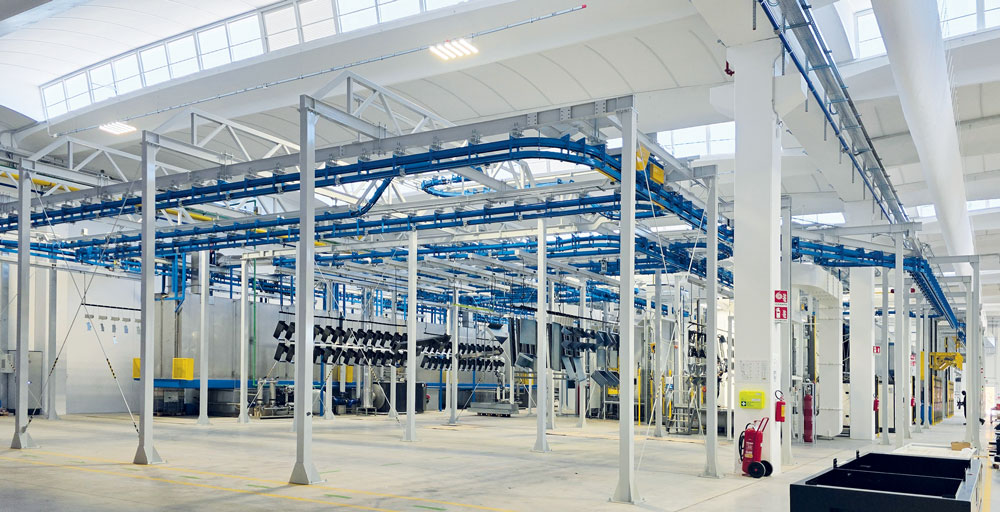 Overview of the coating shop with the power & free conveyor installed by Futura. © ipcm
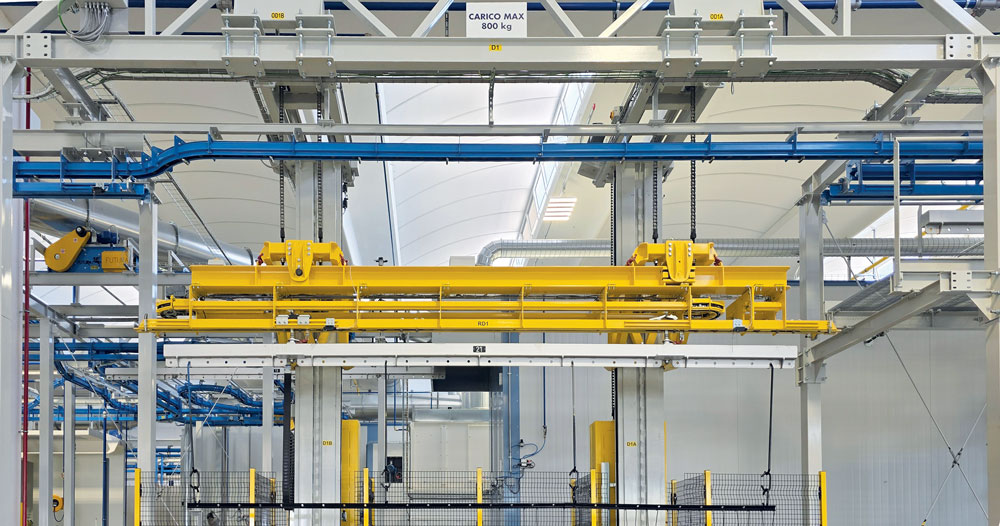 One of the conveyor’s loading/unloading elevators: these systems provide maximum operational flexibility. © ipcm
Pramac’s evolution: from construction machinery to Metalfab 5.0, the new energy systems hub
“Pramac’s history began in 1966 in Tuscany,” explains marketing specialist Matilde Furenti, “when the Campinoti family founded a business specialising in the manufacture of construction machinery.” From the outset, the company distinguished itself by its strong commitment to innovation and entrepreneurial spirit, which would guide its development over the following decades. Between the 1980s and 1990s, it underwent a strategic transformation that marked a decisive turning point in its growth. “The Pramac Lifter brand was launched, and the company expanded its scope by entering the power generation and material handling sectors,” Furenti adds. Diversifying the product range enabled rapid expansion into international markets and laid the foundations for the Group’s global development. “In 2002, the brand also entered the world of MotoGP with the launch of Pramac Racing, a project that has over the years become a key tool for international visibility and for conveying our values of performance, innovation, and competitive spirit.” Another milestone was reached in 2016, when Pramac was acquired by the Generac Group, a world leader in energy solutions. The deal consolidated its international presence, accelerated investment in research and innovation, and expanded its capacity to meet emerging market demands. Backed by sixty years of experience, the company continues to lead the evolution of energy solutions, combining technological innovation, manufacturing excellence, and a global vision firmly rooted in the Tuscany region. “Operating in power generation, energy storage, uninterruptible power supply, and material handling, Pramac is now an international company with over 1,100 employees, a commercial presence in more than 150 countries, and an industrial network spanning Europe, Asia, and the Americas. As a global Group, we aim to lead the evolution towards increasingly resilient, efficient, and sustainable solutions by developing a range of products that support the energy transition,” emphasises Chesi.
The latest, decisive step in the Group’s growth journey fits perfectly with this strategy: the launch of Metalfab 5.0. “This new site constitutes Pramac’s most significant industrial investment in recent years. Spanning approximately 20,000 m², it has strengthened our manufacturing presence in the Valdelsa area and brought in-house processes previously outsourced to other plants, thereby increasing our production capacity for international markets,” says Furenti. Designed in accordance with Industry 5.0 principles, the new production hub brings together the entire production cycle for sheet metal components used in generator sets and energy storage systems on a single site. This includes laser cutting, punching, panelling, automatic and manual bending, welding using a new MIG system and a high-precision laser welding system, and powder coating, as well as the assembly and finishing stages. The entire production flow is supported by automatic and semi-automatic machinery designed to optimise workpiece handling, guarantee operational continuity, and ensure high quality standards.
A new coating shop designed to meet a specific need
The new coating line installed at the Metalfab plant is a fully automated system for applying epoxy and hybrid epoxy-polyester powder paints, designed to handle components of varying weights and dimensions while maintaining consistent process parameters. “One of the most important aspects of the project was our need to implement a flexible line that could adapt to the variety of parts we produce while ensuring high quality standards and production continuity,” emphasises Chesi. This was a critical point not only for the application phase but, above all, for the subsequent curing of parts of varying weights. “To ensure the coating cures correctly, heavier components, which have greater thermal inertia, require longer dwell times in the oven, whereas smaller ones can complete the cycle in significantly less time.” Managing both types without slowing the line was therefore one of the main design challenges.
To meet this requirement, Silvi and Futura have developed a two-lane curing oven that automatically adjusts dwell times based on the components’ mass: heavier parts follow a longer path, while lighter ones complete curing on a shorter path. If necessary, the two paths can operate simultaneously, increasing production capacity without compromising coating quality.
The new plant’s configuration
The workpieces are handled via a high-capacity power & free conveyor from Futura, designed to support up to 1,000 kg per load bar. Each bar can carry up to 10 jigs, enabling the handling of even large, heavy panels and structures. The line is also fitted with a high-strength bi-planar chain, designed to operate in environments with temperatures of up to 250 °C, such as those found in the curing oven. “The conveyor system has been developed to ensure maximum flexibility in flow management through automatic transfers and holding stations, which allow routes, storage buffers, and dwell times to be defined according to production requirements,” point out Chesi. “The advancement speed, in both stop-and-go and continuous-flow modes, ranges from 4 to 10 m/min. The vertical and horizontal movement of the workpieces is handled by automated loading and unloading elevators, and an automatic lubrication system helps reduce component wear and maintain high system uptime.”
Futura has relied on a control system based on Siemens Safety technology, featuring a PLC, Profinet communication, a touchscreen panel, and comprehensive diagnostics of operating parameters. A dedicated software system featuring virtual tracking of the load bars enables the digital monitoring of component flows without the need for additional hardware devices. It also manages alarms, controls accumulation points, ensures automatic restart procedures in the event of line stoppages, and communicates with Pramac’s ERP system.
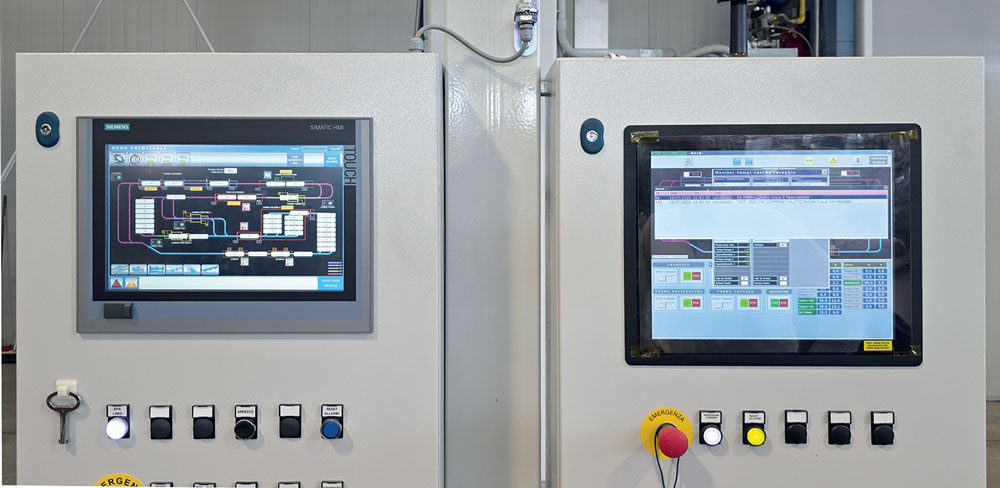 Material handling is managed by a control system based on Siemens Safety technology, featuring a PLC, Profinet communication, a touchscreen panel, and comprehensive diagnostics for operating parameters. © ipcm
Pre-treatment designed to optimise adhesion and protection
The cycle begins with a seven-stage pre-treatment phase comprising degreasing, phosphodegreasing, the associated rinses, nanotechnology-based passivation, and a final rinse with osmotised water. “The nanotechnology-based passivation product is applied via 2 spray bars fitted with air-assisted atomising nozzles; this station also includes a 100-litre collection tank for recovering the solution. The final stage involves a rinse with reverse osmosis-treated water, produced by a system with a permeate capacity of 2 m³/h and fitted with a 3 m³ storage tank,” says Daniele Fumagalli, the CEO of Silvi. The entire pre-treatment phase is managed automatically via a PLC. “The tunnel is also equipped with high-efficiency stainless steel plate heat exchangers for heating the tanks to 50–65 °C, and with a water filtration system to enhance the nozzles’ durability and reliability.”
At the end of the pre-treatment stage, the components are manually blown dry with high-pressure air jets, and residual water is extracted to prevent build-up. The subsequent drying stage takes place in a two-station natural gas-fired convection oven with direct-fired burners, where the parts are left at 130 °C for approximately 20 minutes. The oven is fitted with a temperature control system featuring a probe, which ensures temperature regulation throughout the cycle. “Right from the design stage of the pre-treatment phase, we have been working to define a cycle capable of guaranteeing high levels of adhesion and corrosion resistance, even on components intended for use in harsh operating conditions,” notes Chesi.
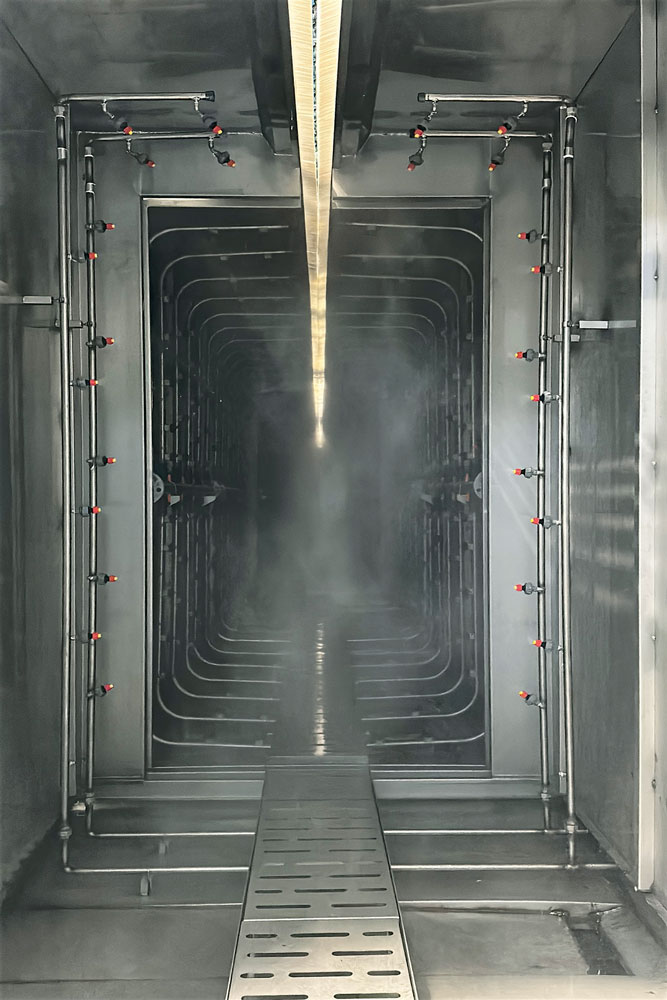 The inside of the pre-treatment tunnel. © Silvi
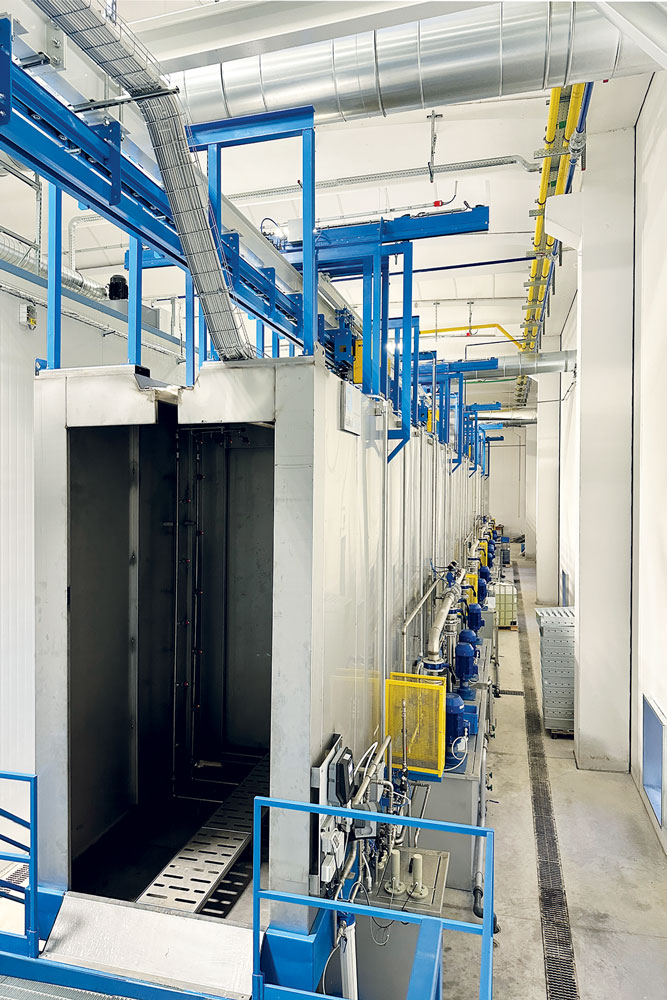 The drying oven, designed and installed by Silvi. © Silvi
A high-tech application system
The powder coating application stage is carried out in 3 Wagner booths: a manual booth for primer application and 2 automatic booths for black and coloured finishes, respectively; the latter is equipped with a SuperCenter EVO powder management unit. “Our standard cycle involves the application of one coat of paint. However, for heavier components intended for the most demanding conditions of use, some customers’ specifications require the use of a two-coat system; in these cases, the process includes primer application, oven pre-gelling for 20 minutes at 120 °C, and top coat application using a dry-on-fused process. The primer is applied to only around 5% of the components we produce, mainly the heavier, black ones, which are more exposed to mechanical stress and the risk of damage during handling and installation,” explains Chesi.
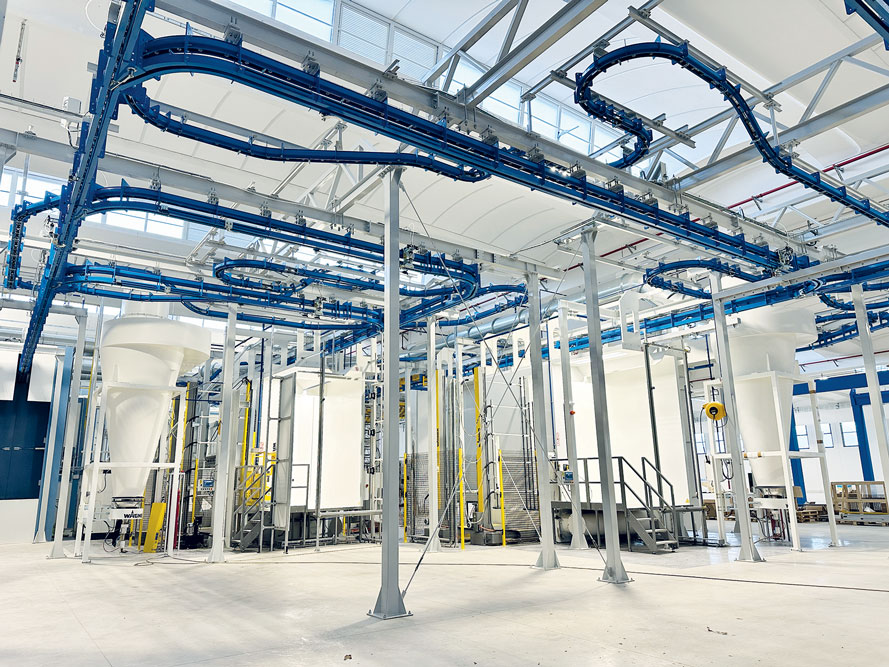 Overview of the application area equipped with Wagner automatic coating booths. © Silvi
In the standard single-layer cycle, on the other hand, the parts pass through the gelling oven without heat treatment and reach the transfer junction, which directs them to the 2 automatic booths for either coloured or black finishes. The one applying the black product is equipped with an automatic three-dimensional scanning system. “The booth fitted with a 3D scanning system is one of the most advanced features of this line, as it automatically detects the geometry and position of parts to adjust the application parameters for black, which is one of the most challenging colours to manage,” says Chesi. “This technology optimises the movement of the spray guns, improves surface coverage, and reduces powder consumption, ensuring a more uniform coating even on components with complex shapes or varying sizes.”
The SuperCenter EVO system manages the preparation and feeding of powder to the application guns, while also optimising the recovery of undeposited material. This technology helps maintain stable process conditions, reducing waste and facilitating colour changeovers and system cleaning, all of which are particularly important in a high-volume production environment with varying product configurations. Supplied with Data Production 4.0 software, it monitors the coating cycle by collecting data on powder consumption, colour change times, and predictive maintenance. This data, which can be viewed by operators and transferred to a PC, enables the process to be managed easily and effectively, facilitating the optimisation of parameters and the implementation of solutions to improve efficiency and performance.
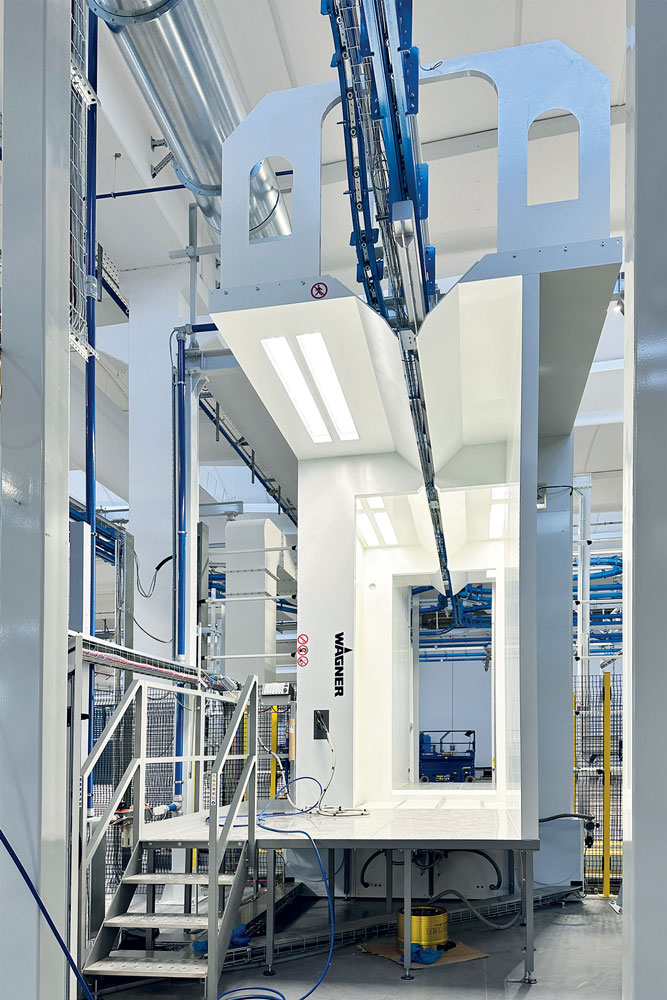 The booth for manual primer application. © Silvi
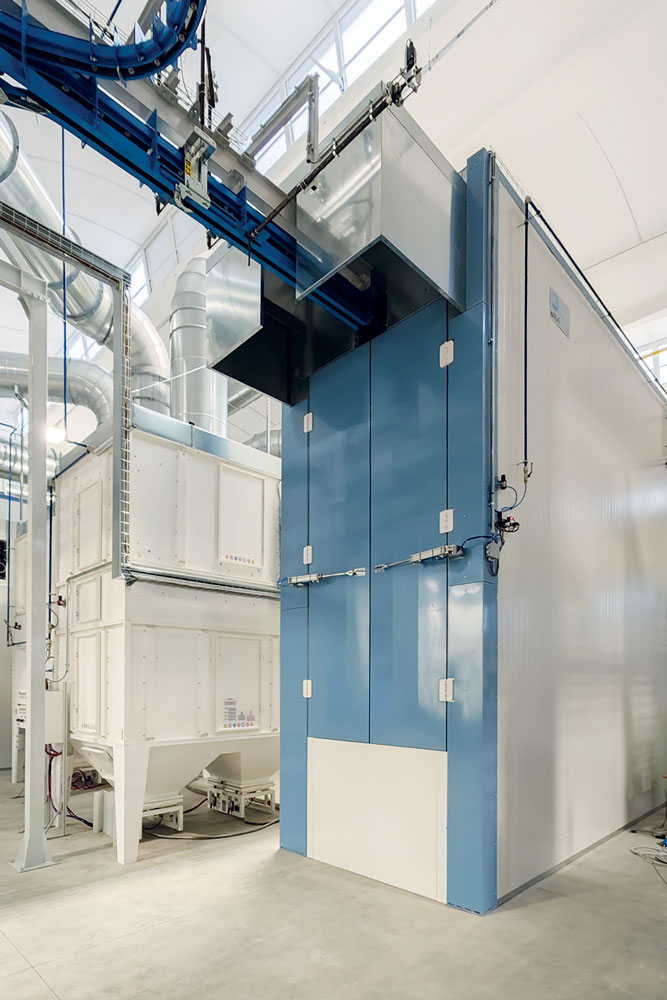 The gelling oven. © Silvi
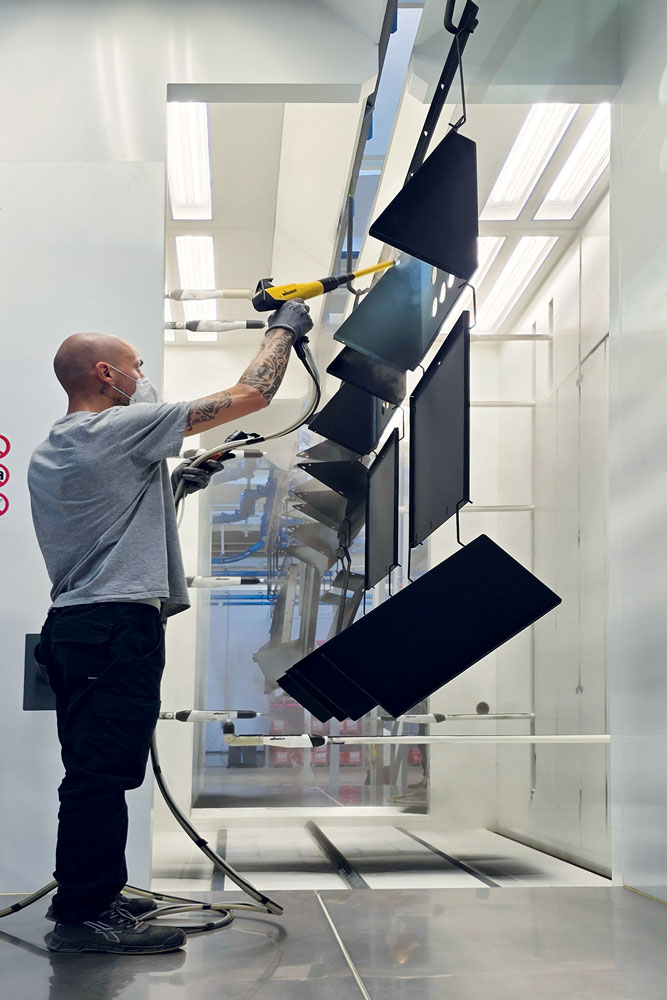 The post-finishing station for black paint. © ipcm
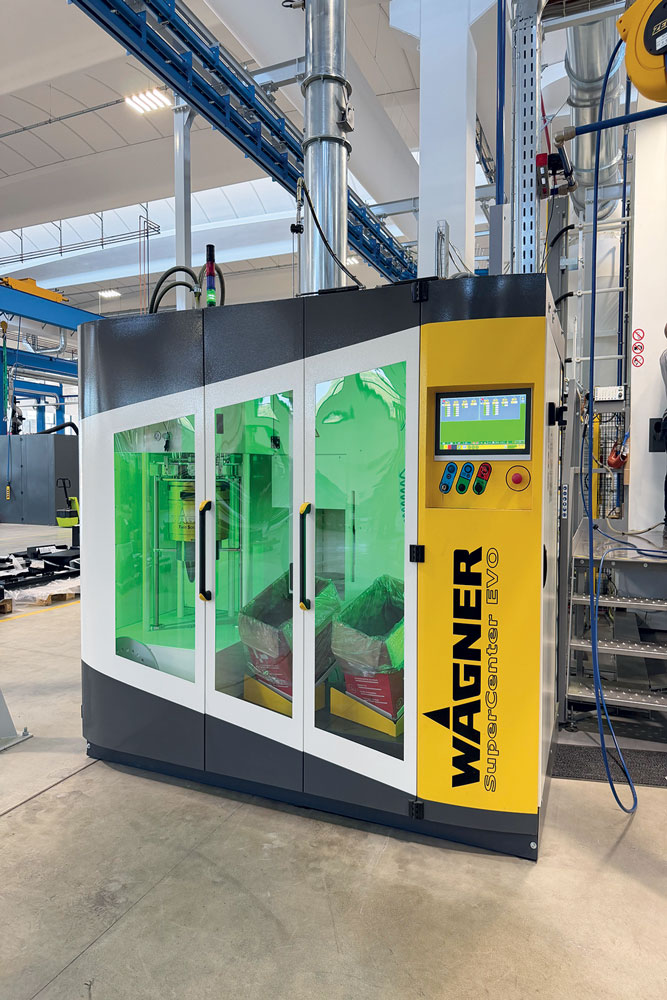 The Wagner SuperCenter EVO. © ipcm
The key technological solution: a two-lane curing oven
After powder coating, the components pass through the gelling pre-chamber, fitted with double doors to prevent heat loss. From here, they enter the two-lane accumulation curing oven, the line’s defining feature. The solution developed by Silvi and Futura features two lanes with different dwell times: about 20 minutes for lighter components and 40 minutes for heavier ones. The accumulation of workpieces and the automated management of their paths allow parts with different heat absorption capacities to be processed simultaneously. “The distinctive feature of this oven, also a hot-air convection type with direct-fired burners, is the ability to manage different dwell times within the same system: heavier parts can undergo a longer cycle at 180 °C, while lighter ones can be processed more quickly with a shorter curing phase at higher temperatures, reaching up to 220 °C. In addition, when necessary, the two lanes can operate simultaneously, thereby increasing the line’s production capacity,” illustrates Fumagalli.
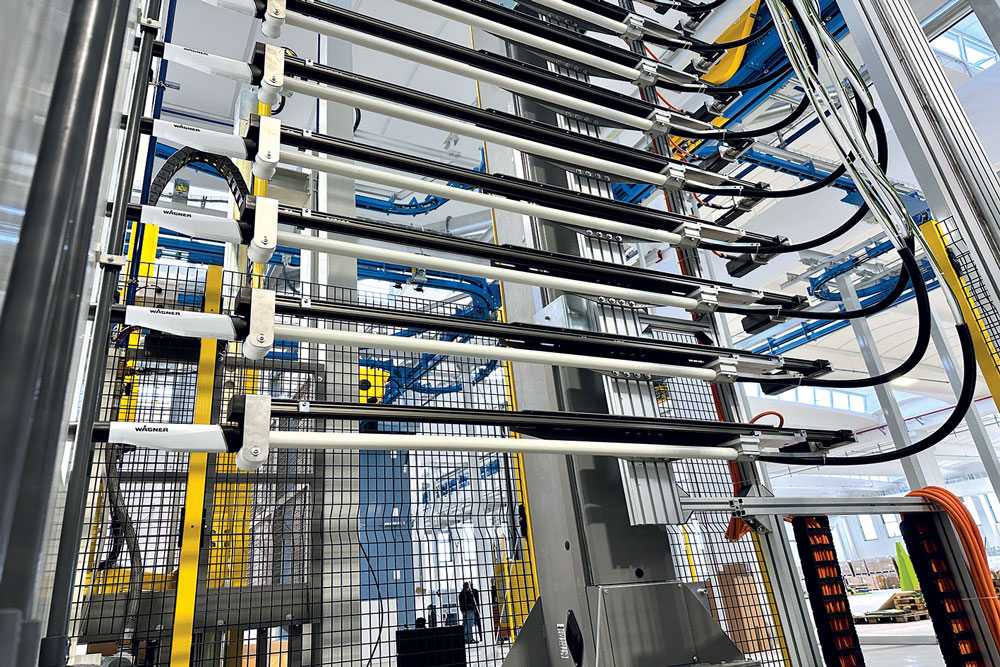 The reciprocators for powder application. © Silvi
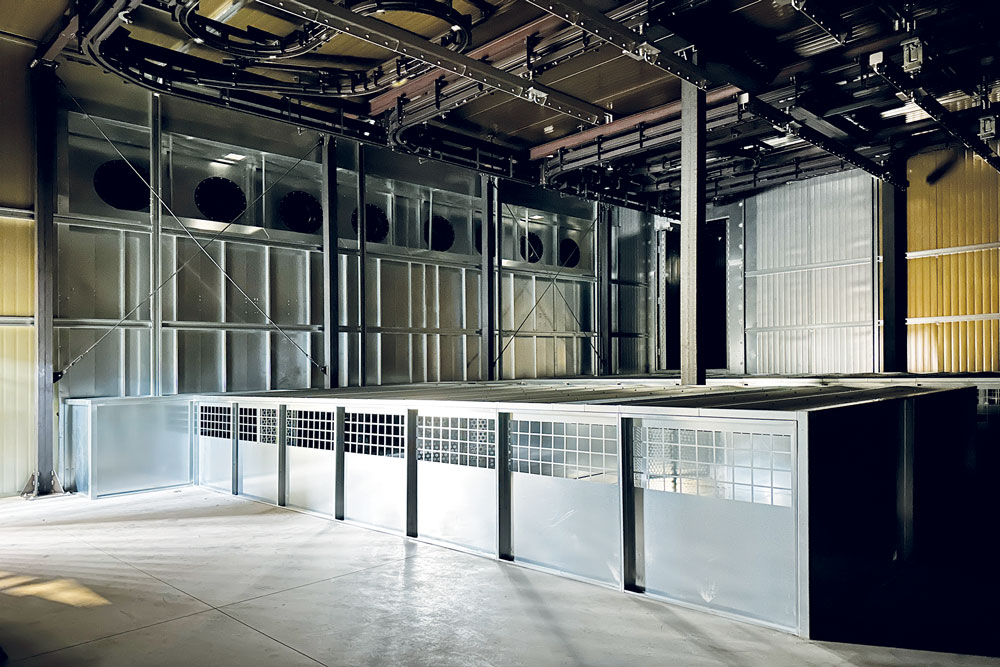 The inside of the curing oven. © Silvi
A line designed to grow with Pramac
The decision to entrust Silvi with the construction of the coating plant, Futura with the conveyor system, and Wagner with the application technology stemmed from Pramac’s commitment to integrating complementary technologies into a single, highly efficient solution. “We chose Silvi for the quality and robustness of its line’s structure, Futura for the durability and intelligent control of its power & free conveyor, and Wagner for its high application efficiency. The combination of these three systems has provided us with a fully automated, stable, and traceable production cycle, with consistent quality and reliable lead times. It guarantees production continuity, reduced downtime, and maximum repeatability of results,” comments Chesi.
The coating line was also designed with future expansion in mind. “We have set aside an off-line area for shot blasting, although at present mechanical pre-treatment is not necessary because we can meet the requirements for class C5M by applying a primer in our two-coat system. Following the same philosophy, we have allocated space within the manual booth for the future implementation of automatic reciprocators. The aim of this project was, in fact, to achieve a line configuration that would not require further disruptive modifications. To this end, it was necessary to conceive a plant with the greatest possible flexibility. The seamless coordination among the teams at Silvi, Futura, and Wagner during the design and installation phases made this possible,” concludes Chesi.
The value of the installed line lies precisely in the synergy among the conveyor system, the process line, and the application architecture, resulting in a plant capable of precisely managing cycle times, downtime, and production flows, and designed to evolve alongside Pramac and support the expansion of its production capacity within the constantly changing energy solutions industry.
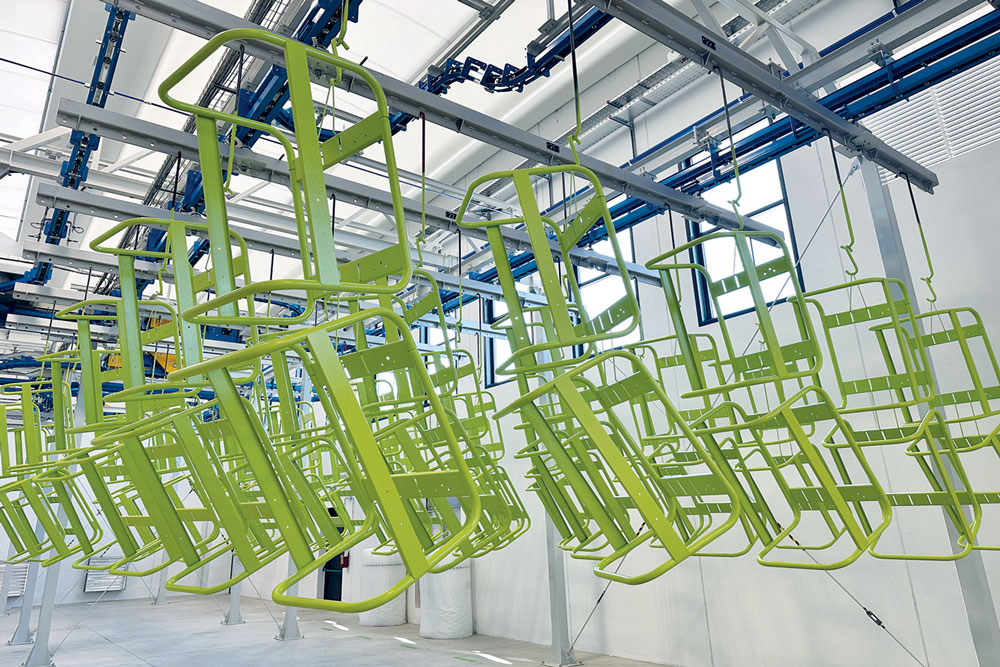 The storage buffer at the end of the line. © Silvi
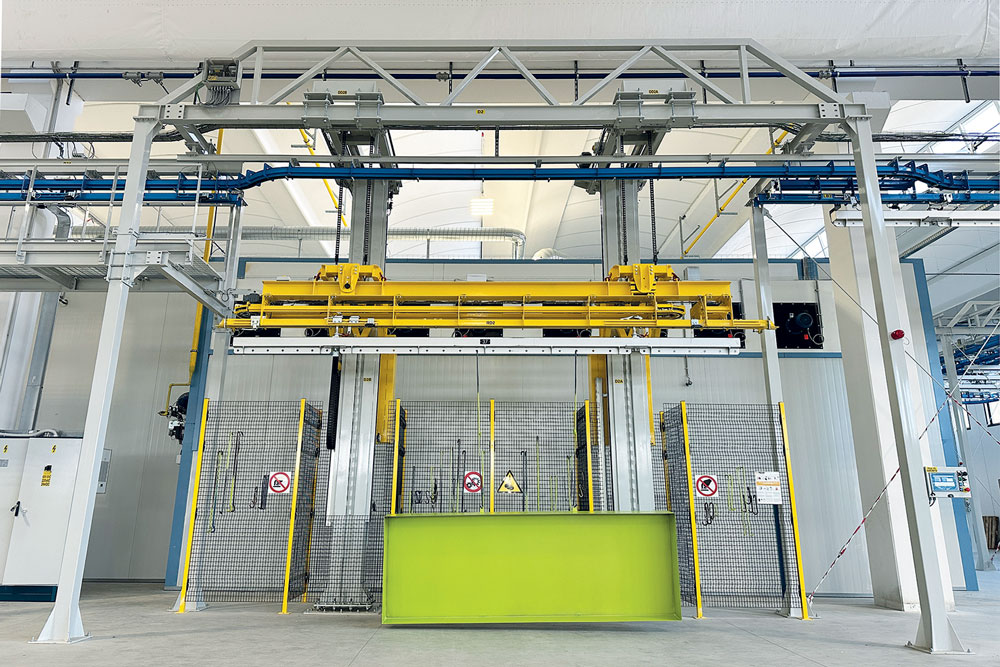 The unloading station’s elevator. © ipcm