Until recently, bathrooms were regarded as relatively unimportant spaces. Yet in just a few years, they have evolved from purely functional rooms into areas dedicated to well-being and living, where aesthetics, comfort, and attention to detail have become essential. This change has also extended to taps and other products that characterise bathroom design, transforming basic elements into genuine pieces of furniture. It is therefore no longer just about form and function: colours and finishes are now integral to the bathroom’s overall aesthetics and contribute to its perceived value.
Rubinetterie Treemme, a company specialising in the production of designer sanitaryware and fittings, has long recognised this: its idea of promoting the use of colour, launched with the Arcobaleno collection featuring handles in a variety of shades, dates back to 1980. “That turning point marked the beginning of our journey as an interior design brand and prompted the development of new types of finishes,” explains Federico Pizzetti, fittings finishing process manager at this company based in Asciano, in the province of Siena (Italy).
“Until a few years ago, chrome plating was the standard finish for taps, partly due to the market’s established preference: thanks to its widespread use, it is highly standardised, and the durability it provides to surfaces is widely recognised. However, alongside it, other finishing processes have gradually gained ground, such as traditional coating and PVD coating, which have expanded the range of chromatic and aesthetic options without compromising on the functional performance required for these products’ everyday use, even though they have not yet achieved the same level of widespread adoption and market confidence as chrome plating. An increasingly refined aesthetic must, indeed, be matched by adequate surface performance in terms of hardness, adhesion, and resistance to scratches, chemicals, and corrosion,” Pizzetti adds.
“In particular, PVD requires surfaces to be properly prepared and cleaned beforehand; without this, it would be impossible to achieve a uniform, perfectly adherent, and durable coating. Component preparation is therefore integral to the quality standards for taps and fittings. This is why our company decided to invest in a new cleaning system that combines water and modified alcohol to secure the high finishing quality for which our products are internationally recognised.” To insource its cleaning operations, the Tuscan company has installed three plants from IFP Europe (Galliera Veneta, Padua, Italy), a firm specialising in cutting-edge plant solutions designed with Industry 4.0 in mind and capable of adapting to specific customer requirements.
Rubinetterie Treemme: the pioneers of colour in bathroom fittings
Founded in 1968 as Rubinetterie Toscane 3M – a name derived from the initials of the three founding partners’ surnames: Renato Michelangioli, Armando Medina, and Guido Mencarelli – the company focused from the outset on manufacturing taps and fittings, managing most of its production cycle in-house, from foundry operations and galvanic treatments to coating and assembly. Today, Rubinetterie Treemme carries out over 80% of its production processes at its own factory. In 1980, it launched the Arcobaleno collection, created in collaboration with design studio Calonaci & Gazzei, helping to popularise the use of colour in bathrooms and introducing a vibrant chromatic trend to a market that had, until then, been dominated almost exclusively by chrome and metallic finishes. “With the gradual rise in demand, which surged during the Covid-19 health crisis, we have increased our production volumes, tripling our workforce in just a few years to 130 employees today. On the one hand, this has led us to outsource certain processes, including foundry and polishing operations; on the other hand, it has prompted us to insource the most specialised finishing stages, such as PVD treatments, which now constitute a key driver of our growth and underpin our position in the international bathroom furniture market.”
Three materials for different product requirements
The variety of solutions developed by Rubinetterie Treemme is also reflected in the choice of materials, which depends on the products’ characteristics and the finishes required by the market. Brass accounts for around 80% of the material processed, and its recyclability is central to the company’s environmentally sustainable vision. 316L stainless steel and, for certain applications, Zamak are also used.
“Our brass components,” Pizzetti illustrates, “are manufactured by external foundries based on our designers’ drawings and then machined in-house in our turning department, which is equipped with state-of-the-art CNC plants integrated into Industry 4.0 processes.” This is where machining and subsequent deburring of components such as cups, plates, cartridge covers, and wall-mounted fittings that do not require further finishing are carried out. After that, the raw brass components are cleaned in a KP.150 Easy modified alcohol cleaning plant, the first of three plants supplied by IFP Europe to Rubinetterie Treemme. “This initial cleaning stage removes the emulsions used in the turning phase before the parts are sent for polishing or, in the case of wall-mounted fittings, directly to the end customer.” For most components, however, the cycle continues after polishing to achieve a more uniform and precise finish than would be possible if the work were carried out directly on the raw material.
“316L stainless steel is used to a lesser extent, but demand for it is rising, particularly for products such as shower heads. Machining of these components is outsourced to external suppliers, who are subject to quality controls covering both the material and its performance, including salt spray tests to assess corrosion resistance.” Stainless steel components are then brushed or satin-finished and sent to the customer, or subjected to galvanic or PVD treatments. Finally, Zamak is used for specific components, which are subsequently liquid-coated using manual or automatic methods.
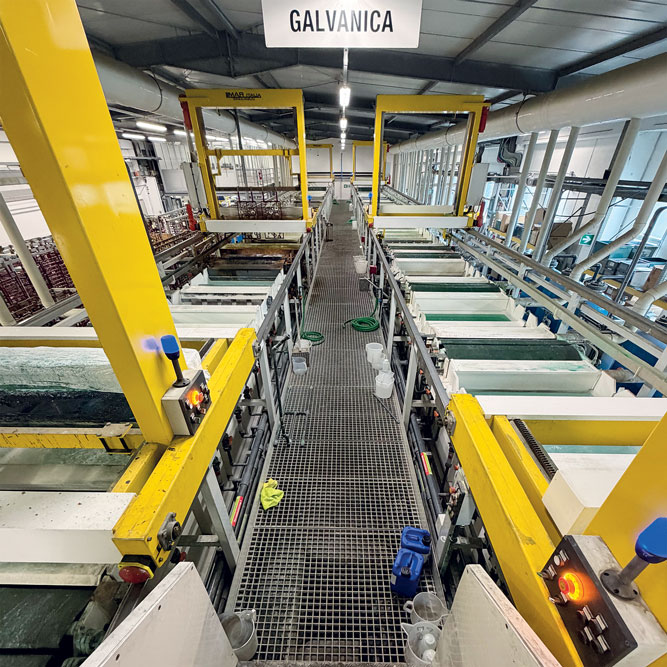 The galvanic treatment department. © ipcm
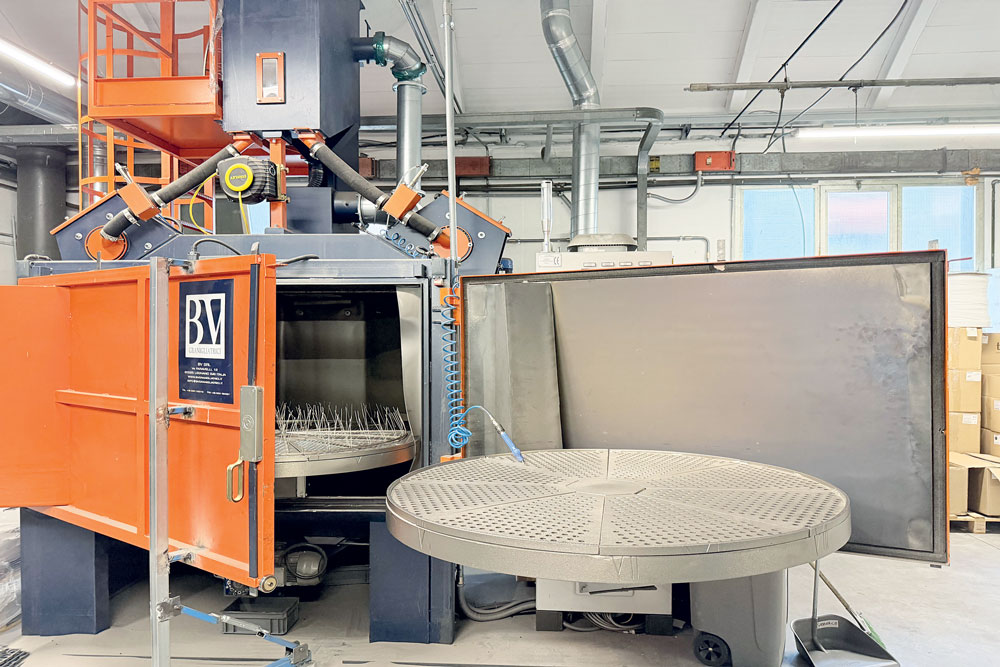 The shot blasting machine, where parts undergo mechanical pre-treatment before coating. © ipcm
Quality control at the heart of the production process
Following machining, the components undergo various finishing processes depending on the material and the chosen finish. Galvanic finishes are applied either directly to the polished brass component or after manual satin finishing. For liquid-painted finishes, predominantly in black and white, the surface is prepared by shot blasting or brushing before manual or automated coating. In recent years, PVD has been introduced alongside these treatments and is used on brass and stainless steel components to achieve a range of shades, particularly warm tones.
“Such a variety of materials and finishing processes requires meticulous monitoring throughout the entire process, from raw materials to finished components: 100% of our production undergoes visual inspection to check the uniformity of the finishes and ensure there are no imperfections, such as dust or particulate inclusions and minor surface irregularities,” emphasises Pizzetti. The company has an in-house laboratory dedicated to testing treatment performance. “Before a new treatment is implemented in production, we carry out several tests, combining standardised ones, such as salt spray testing, with others developed on the basis of our experience. These include tests of resistance to contact with limescale removers and detergents, abrasion tests, and mechanical tests for hardness and scratch resistance.”
With PVD, surface preparation is particularly important: the component must be perfectly clean and free from any residues or contaminants that could compromise the coating’s uniformity and adhesion. “It was precisely at this stage that our quality control team encountered the most significant challenges. The solution was to introduce two dedicated cleaning machines to prepare the components for the PVD phase.”
Cleaning: the critical pre-PVD stage
In the PVD process, cleaning is one of the most critical stages for achieving high-quality results. “The deposited layer is generally very thin and unable to cover any contamination or defects that remain on the surface following non-compliant surface preparation,” notes Pizzetti. A drop, a smudge, or a streak left over from the cleaning stage may be visible on the finished part and cannot be effectively removed through decoating. In some cases, contamination can also compromise paint adhesion, causing a defect that requires particularly complex repair work. For this reason, all components intended for PVD undergo a targeted cleaning process after galvanic treatment.
“Our specific cleaning system, which combines two processes characterised by different technologies and products, was selected above all to get the most out of this pre-PVD treatment phase and, therefore, avoid subsequent rejects,” says Pizzetti. “Traditional water-based cleaning alone, in fact, presents certain challenges. Even minimal salt residue in the final rinse can leave stains that become visible during drying, while the internal cavities of some components may retain water that cannot be completely removed. This is particularly problematic in PVD processes, which take place under high-vacuum conditions: residual water remaining inside parts with complex geometries continues to evaporate, precisely hindering the achievement and maintenance of the vacuum conditions necessary for deposition.”
IFP Europe has therefore installed two separate, complementary machines: the first, from its KP WTR series, performs a water-based pre-cleaning stage to remove contaminants that solvent cannot eliminate, whereas the second, a KP.1200 MAX machine, completes the process with a cleaning stage using modified alcohols and a drying stage. The modified alcohol removes water residues from the components’ surfaces and cavities, ensuring that parts are dry even in areas that tend to retain liquids, thus eliminating the risk of spot formation. The workpieces are loaded and unloaded manually onto specially designed frames, which allow them to be moved throughout the entire surface treatment cycle, from galvanic treatments to PVD coating.
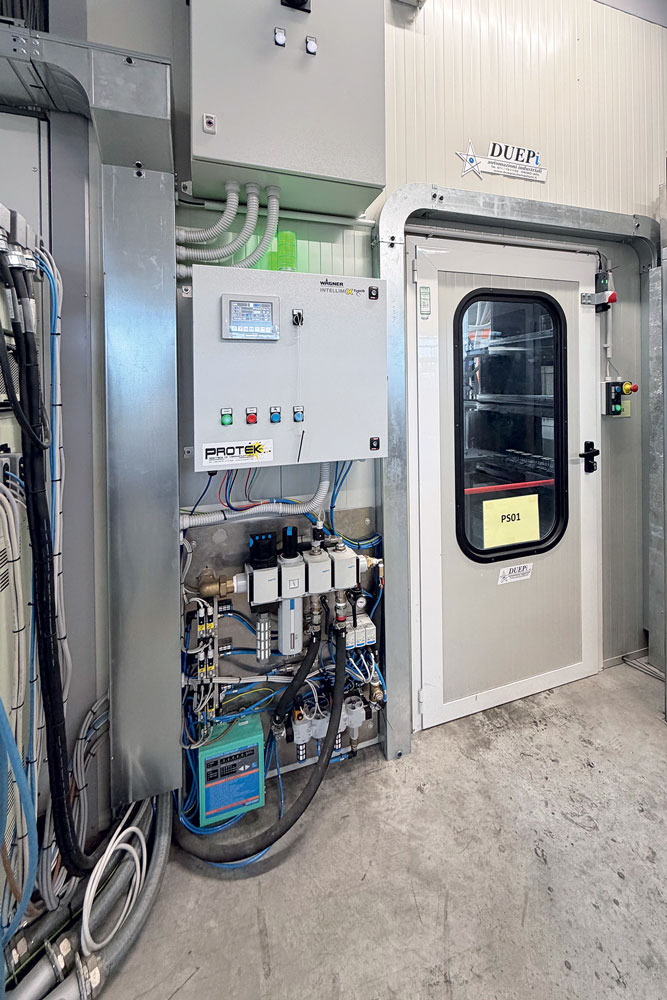 Outside the liquid coating booth. © ipcm
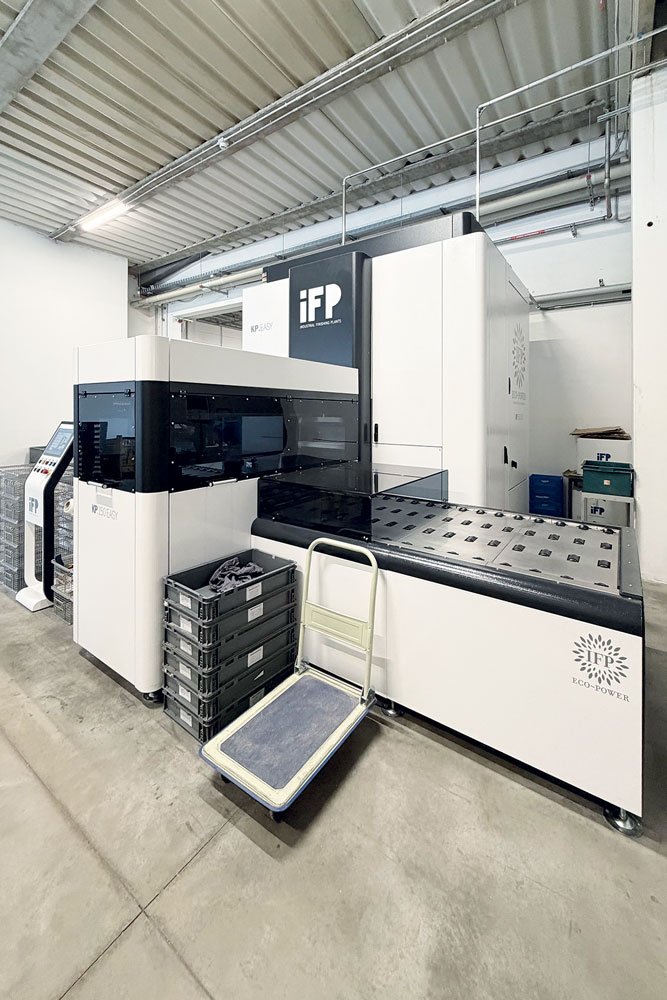 The KP.150 Easy cleaning plant installed by IFP Europe for cleaning brass parts prior to polishing. © ipcm
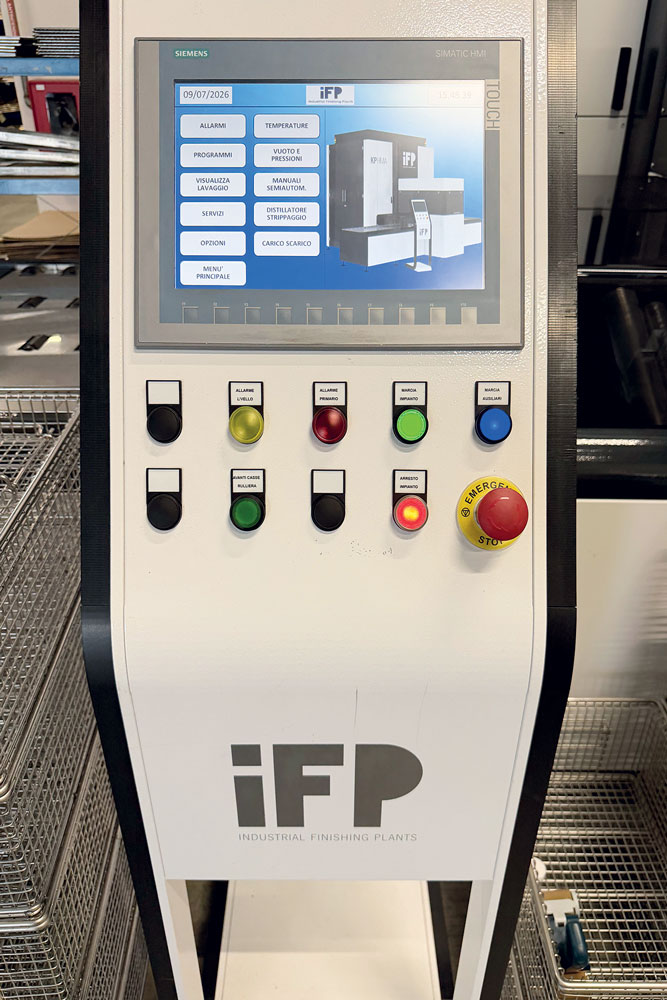 The IFP Europe cleaning plants’ management system has been developed in line with Industry 4.0 parameters. © ipcm
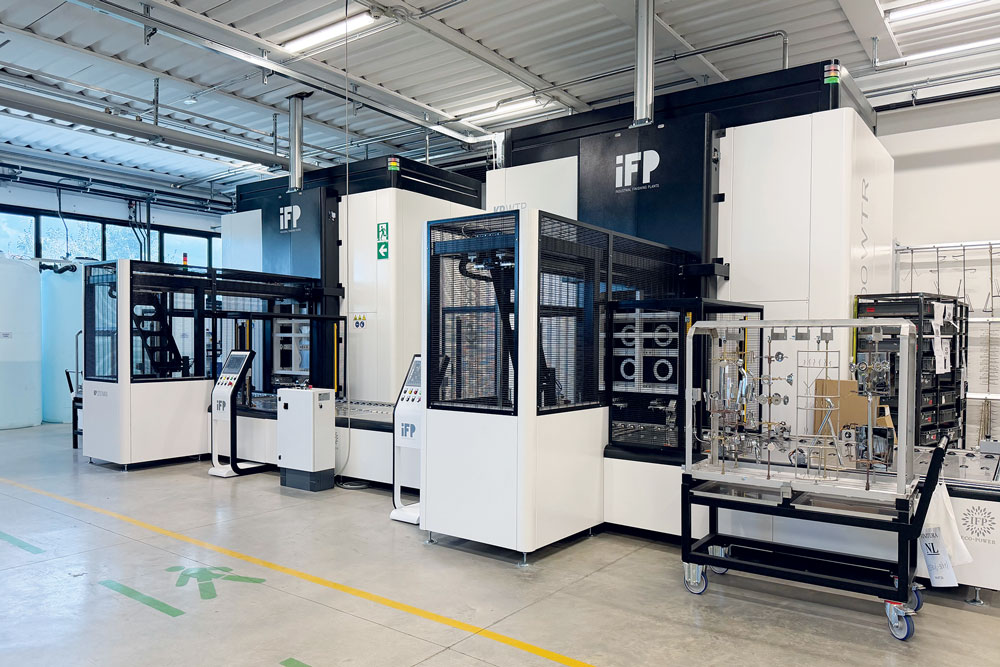 The two cleaning plants side by side: KP.1200 MAX (left) and KP WTR (right). © ipcm
IFP Europe’s cleaning plants for Rubinetterie Treemme
The systems in IFP Europe’s KP Kleen Power series, to which the three cleaning plants installed at Rubinetterie Treemme belong, comply with Industry 4.0 requirements, Italian MOCA specifications, and the ISO 16232 and VDA 19 standards. Their configuration can be supplemented with various accessories, including customised basket-loading systems, robotic handling solutions, additional systems for drying metal components, protective coating application units, and cleanroom integration equipment. Made entirely of stainless steel, the plants are also designed to facilitate routine maintenance and ensure its safety.
“These closed-loop plants do not require direct contact with the cleaning liquids,” says Giacomo Sabbadin, the CEO of IFP Europe Srl. “High performance is achieved through customised cycles managed by software tailor-designed by our technical team.” The closed-loop system, combined with filtration, purification, and stripping units, enables the separation and recovery of oils, water, and swarf, thereby reducing waste. “The cleaning cycles are also conceived to optimise energy consumption and requirements. Routine maintenance is facilitated by the systems’ configuration and monitoring options, which can be integrated with remote support solutions.”
At Rubinetterie Treemme, the KP series machines have been configured to meet varying requirements throughout the production process. The three plants perform distinct functions: one is dedicated to cleaning brass components after machining, while the other two handle the preparation of components for PVD treatment.
KP.150 Easy for intermediate cleaning of brass components before polishing
The entry-level KP Easy model shares the distinctive features of the KP Kleen Power range, including continuous-flow filtration and distillation of the cleaning liquid, automatic separation of emulsions and oils, constant monitoring of operating data, and remote internet connectivity. For handling moderate quantities of components, KP Easy systems can be fitted with a manual loading table with a free-running roller conveyor, enabling the simultaneous handling of baskets for loading components to be cleaned and for unloading cleaned components.
“Thanks to the fully vacuum-operated treatment cycle (down to 1 mbar) and the standard and optional equipment, the machines in this series offer a high level of cleaning performance,” notes Sabbadin. The KP.150 Easy series plants are designed to handle loads with maximum dimensions of 450 × 900 × 200 mm and a weight of up to 150 kg. The overall dimensions of the system are 2,900 × 2,050 × 3,200 (H) mm, with a throughput of 4-8 cycles per hour.
Two combined water- and modified alcohol-based plants for pre-PVD cleaning of components
KP 150 WTR water-based cleaning plant
The KP WTR model is designed for cleaning metal components with aqueous solutions
and features all the key capabilities of the KP Kleen Power range, including vacuum treatment, software-based cycle management configured to customer requirements, remote control, and the option to integrate specific equipment and technical solutions. The water-based cleaning technology can be used for deoxidisation and pickling, as well as for removing specific contaminants and stains, making it suitable for high-volume production.
In the case of Rubinetterie Treemme, the KP 150 WTR plant constitutes the first stage in the preparation process for components intended for PVD treatment, preceding the modified-alcohol cleaning phase.
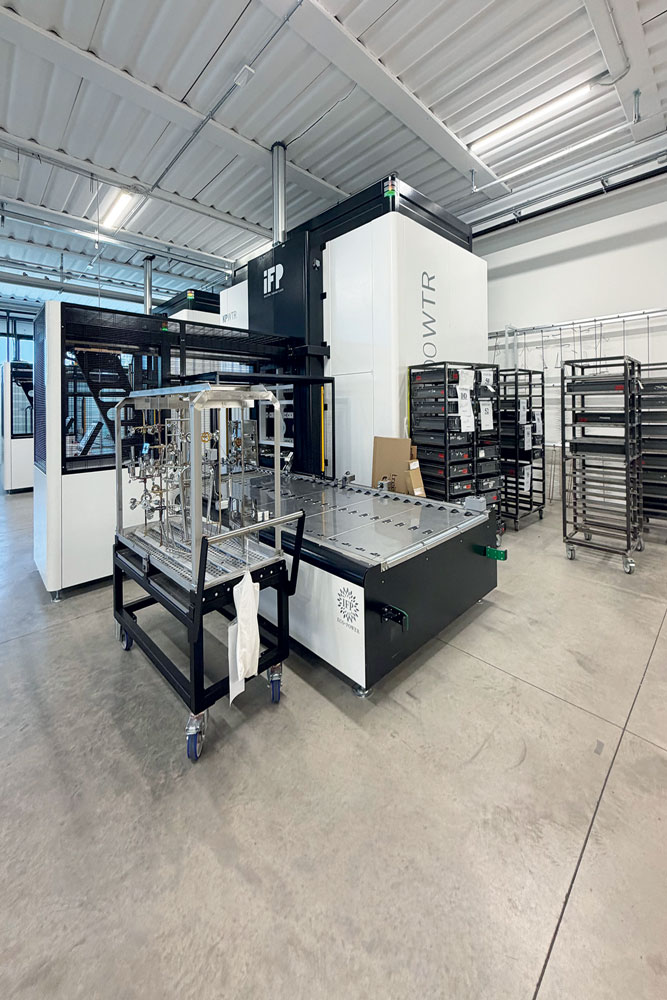 The KP WTR series plant for water-based pre-cleaning. © ipcm
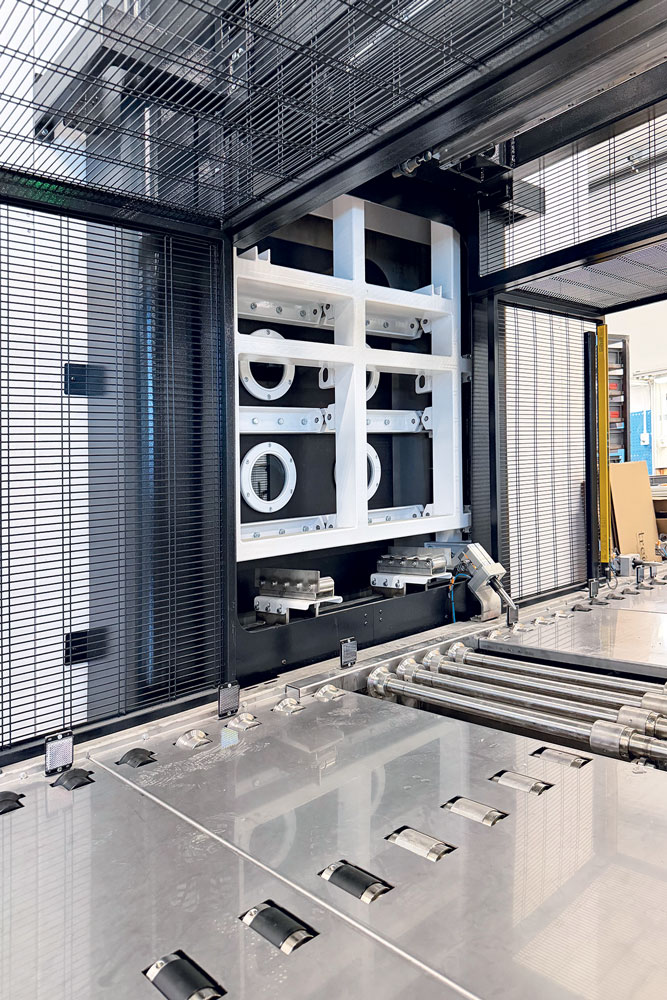 The workpiece handling solutions developed by IFP Europe are among the distinctive features of its plant engineering technology. © ipcm
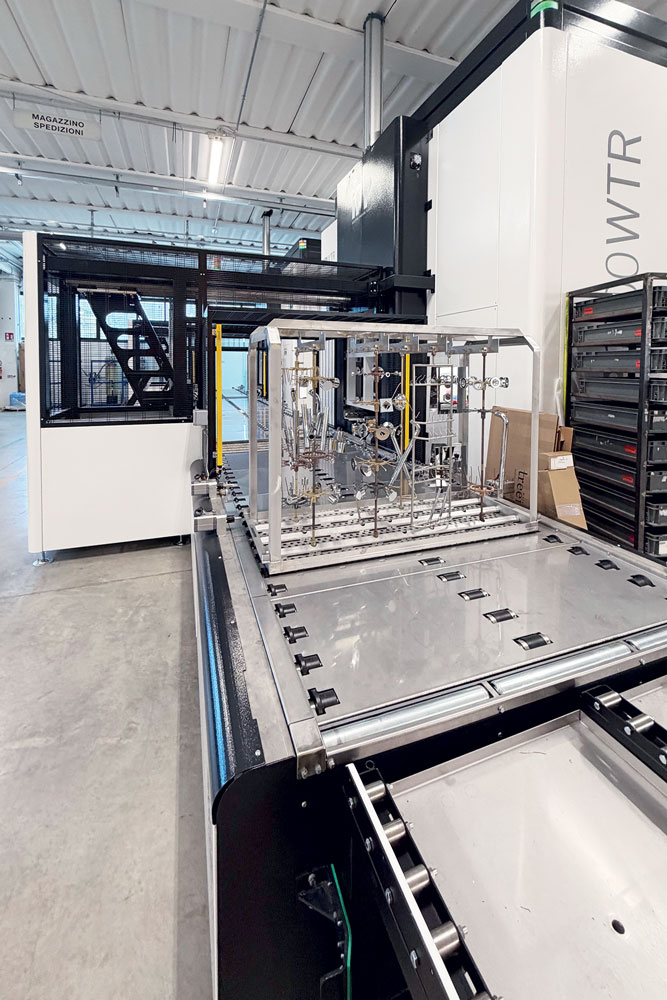 One of the frames positioned on the roller conveyor, ready for pre-cleaning of components. © ipcm
KP.1200 MAX modified alcohol-based cleaning plant
The KP.1200 MAX machine is the largest model in the KP Kleen Power range and features a large, steel cleaning chamber designed to handle both high production volumes and individual large-sized loads. Like the other systems in the KP MAX series, it operates entirely under vacuum and can be configured with various options to suit production requirements and the components to be processed. “In addition to the standard KP 400 MAX, KP 600 MAX, and KP 800 MAX models, we can manufacture larger systems tailored to customer requirements,” confirms Sabbadin. “This is the case with the machine installed at Rubinetterie Treemme, which was developed to handle very large loads and complex contaminants while maintaining high standards of energy efficiency.”
In Rubinetterie Treemme’s workflow, the KP.1200 MAX plant performs the second cleaning stage for components destined for PVD coating, following pre-cleaning with an aqueous solution. It is designed to remove residual water and ensure surfaces are completely dry before the subsequent treatment.
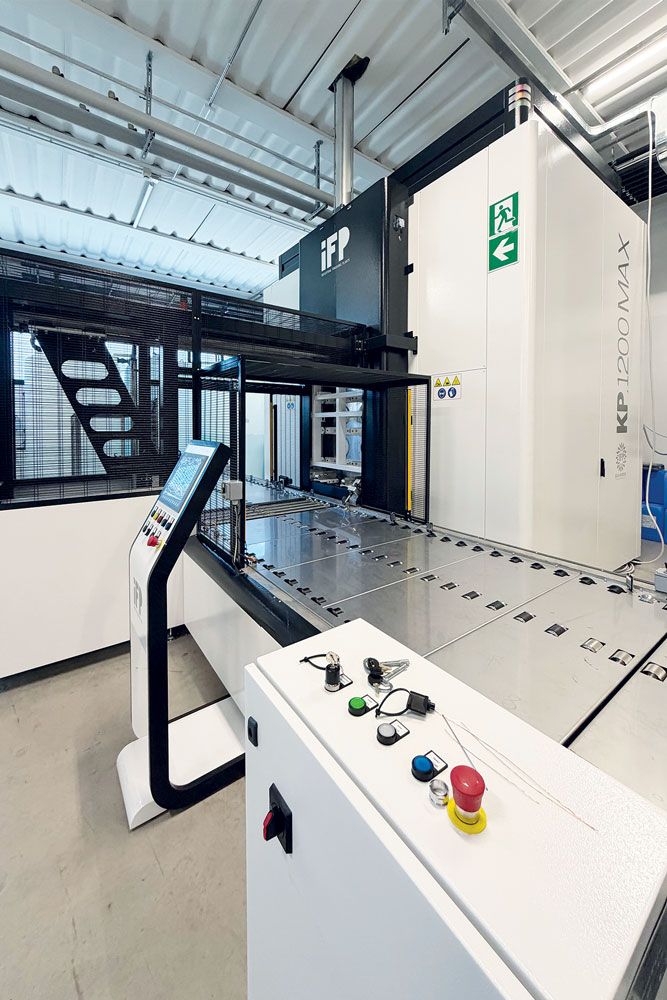 The KP.1200 MAX solvent-based cleaning plant. © ipcm
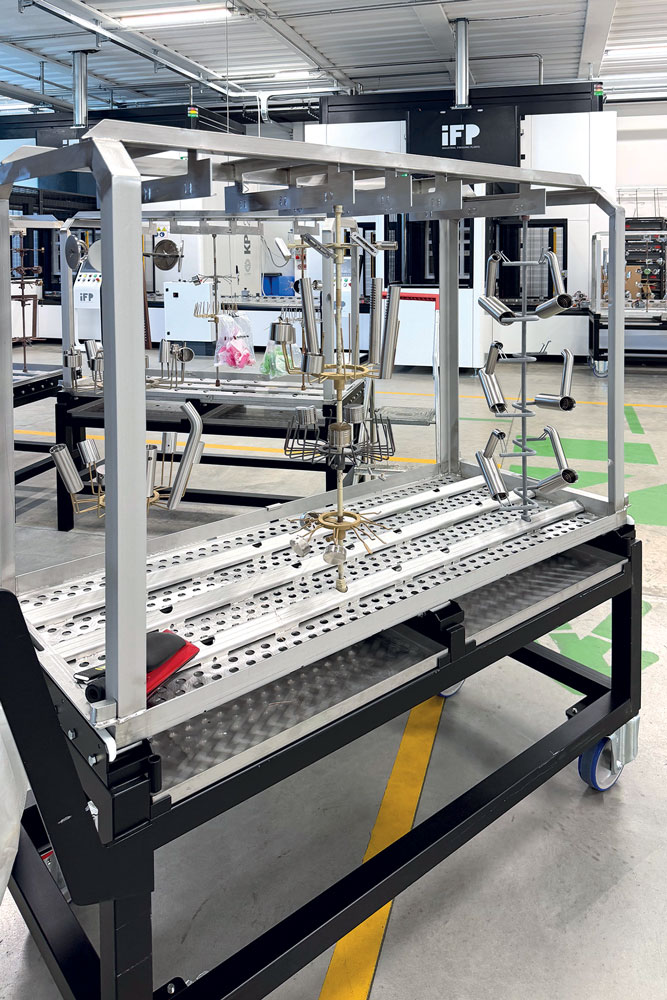 Frames specifically designed to handle components throughout the entire production cycle, from galvanic treatments to PVD coating. © ipcm
A cleaning solution to support PVD development
Installed in October 2025, the system has supported the gradual growth of production volumes in the department, which reached full capacity in January 2026 and is now ramping up. “The PVD department is currently one of the areas on which our company is focusing most of its development efforts,” states Pizzetti. “This technology can significantly expand our range of finishing options, combining high resistance to abrasion and chemicals with a wide choice of colours and surface finishes. PVD coatings enhance the appearance of functional elements such as taps and mixers by achieving the desired colour effects, thus meeting the growing demand for bathroom fittings characterised by greater aesthetic variety and customisation options. However, the expansion of PVD applications depends on the ability to guarantee quality throughout all the stages preceding deposition: this is where our investment in a new cleaning system comes in. The combination of the two cleaning processes developed by IFP Europe enables us to control the preparation of workpieces with greater precision and, above all, to ensure that their surfaces are clean and completely dry before deposition.”
From the pioneering use of colour in the Arcobaleno collection to the new possibilities offered by PVD, Rubinetterie Treemme continues to invest in the evolution of finishing, developing solutions in collaboration with partners such as IFP Europe that translate the need for improved cleaning performance into practical engineering solutions.
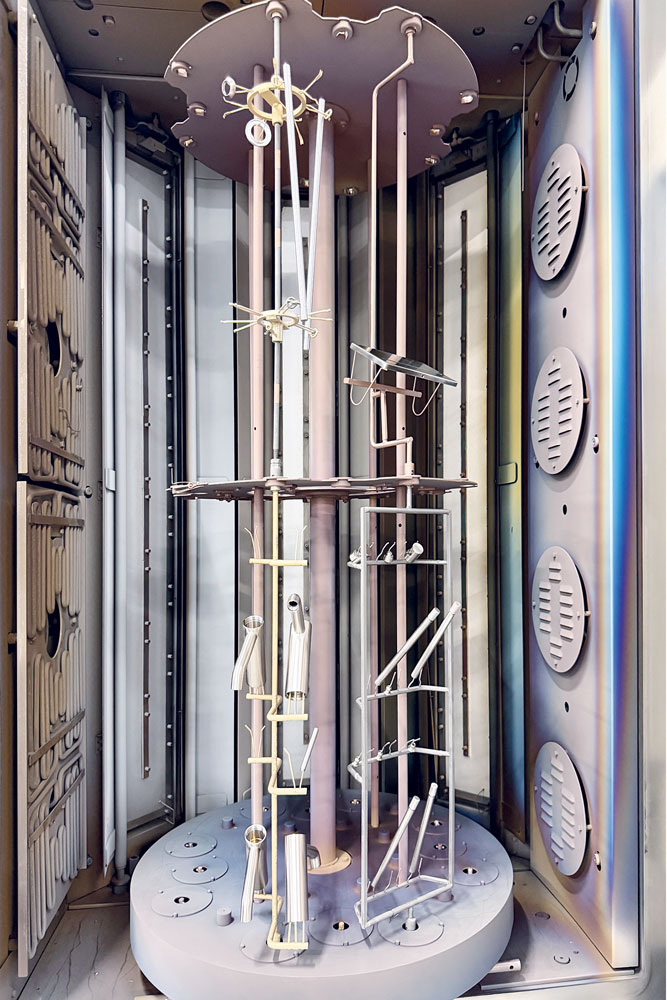 Inside one of the two PVD plants. © ipcm
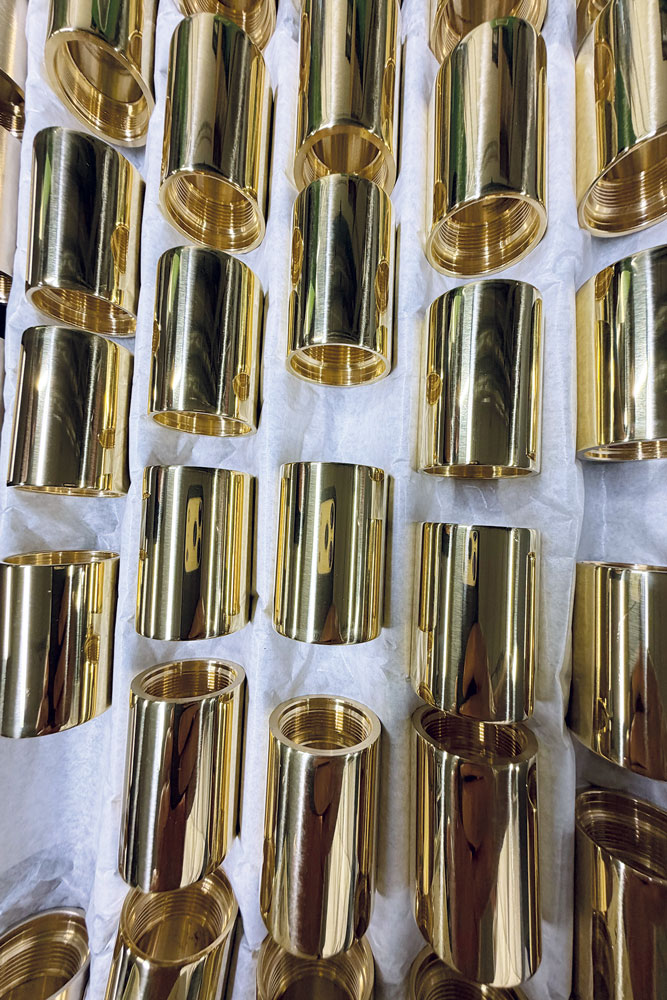 Some finished components ready for dispatch. © ipcm