The investment in a vertical powder coating line for bars up to 9 metres in length, designed by SAT, equipped with an in-line brushing machine and a Visicoat profile recognition system, and integrated with an automated profile storage facility upstream and an automatic packaging machine downstream, has marked a further step in Coroxal’s development strategy, focused on automation, efficiency, and quality. Indeed, it has resulted in a highly integrated production system capable of meeting the demands of an increasingly competitive and dynamic market.
“Combining coating with anodising, first with a horizontal line and now with this state-of-the-art, high-productivity vertical system, has been a forward-thinking decision. We aim to provide a comprehensive service to our customers who use aluminium with both finishes and prefer to rely on a single supplier for all processing phases required for their products, whether machining, anodising, or coating. Companies today are seeking lean processes, streamlined administrative and logistical management, and consistent, uniform treatments for aluminium. At the same time, this material’s industrial and architectural applications call for perfect colour matching, harmonious textures, special effects, and consistent resistance and durability across the various treated surfaces. That is why being able to source from a single supplier is a significant competitive advantage for our customers, as well as a guarantee of quality,” states Guglielmo Corradi, a partner at Coroxal alongside his brother Gianluca, commenting on his company’s latest investment in a state-of-the-art vertical powder coating line from SAT (Verona, Italy).
Experience in aluminium treatment has enabled Coroxal to develop specific expertise in surface protection and enhancement processes by integrating a range of technologies over time. While anodising has always been at the heart of its operations, it has now turned its attention to coating, aiming to provide its customers with a comprehensive service by removing the challenge of dealing with multiple points of contact in the production of a single item. The main results achieved include increased production capacity and reduced processing times thanks to the integration of an automated warehouse and a packaging machine, greater uniformity and quality of finishes, enhanced process reliability, and, last but not least, the optimisation of energy resources.
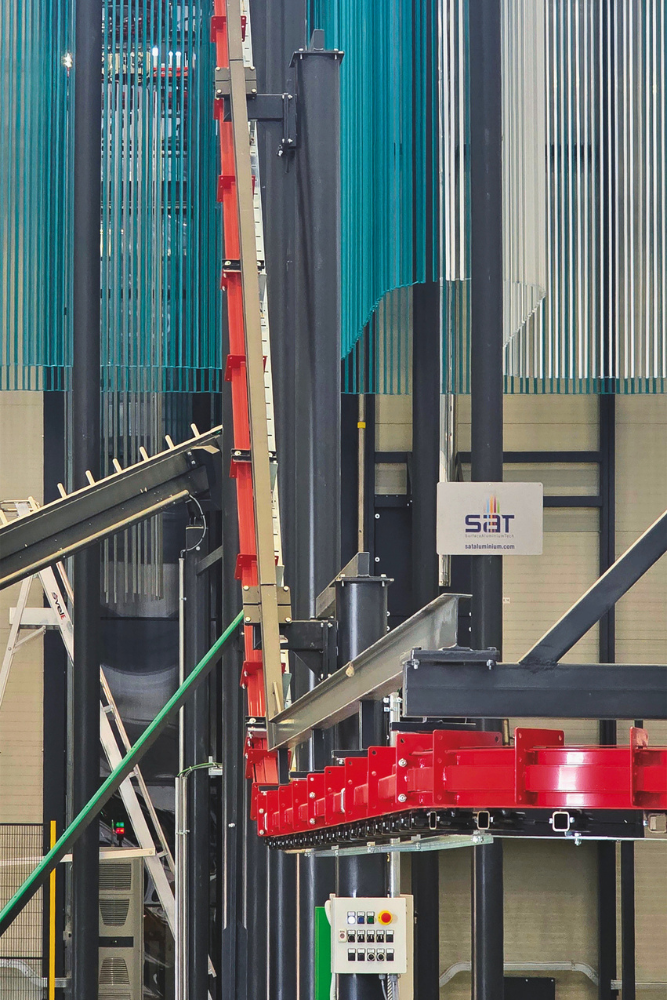 Raw and coated bars entering and leaving the coating line.
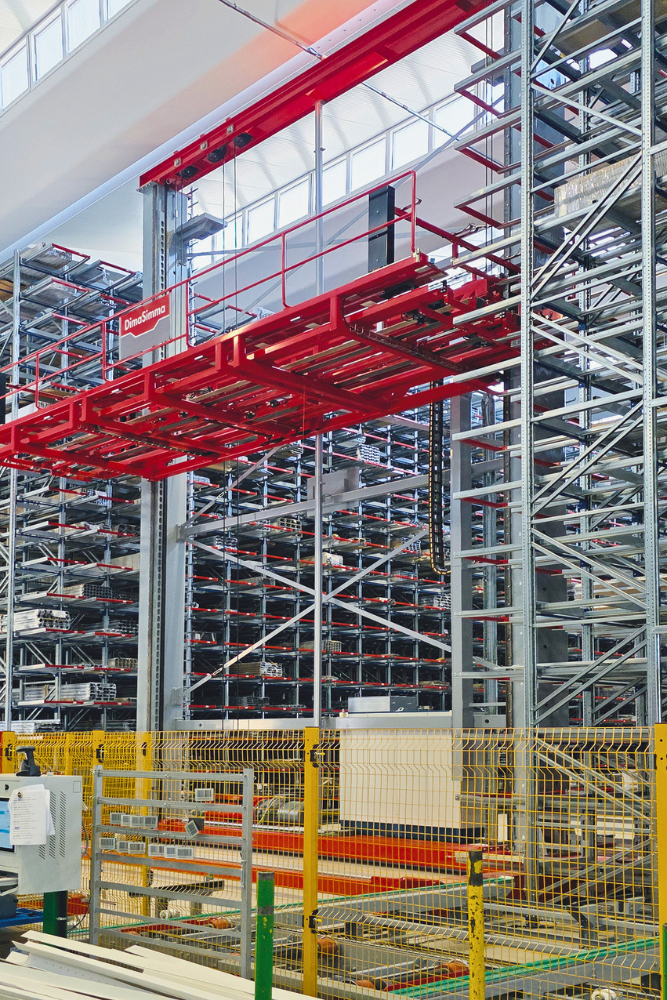 The automated warehouse for profiles, with a capacity of 2,500 units, is integrated with the coating line to ensure a continuous, orderly, and efficient production flow.
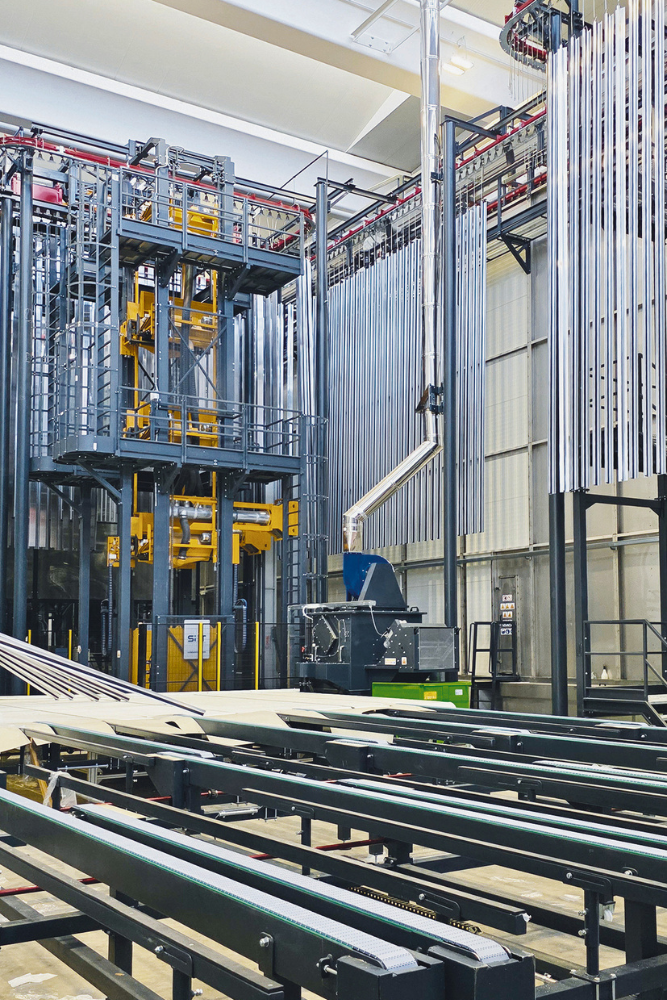 The in-line brushing machine can be activated either automatically by the Visicoat system if this phase is included in the treatment recipe, or manually by the operator if defects are detected during loading.
History, growth, and target markets
The history of Coroxal S.r.l. began in 1961 in Ospitaletto (Brescia, Italy), when the late industrialist Guglielmo Corradi, together with his wife Maria Gogna, founded a business offering highly specialised services for treating aluminium and its alloys, with particular expertise in anodic oxidation. From the outset, Coroxal has distinguished itself for the quality of its workmanship, attention to detail, and ability to develop technical solutions that meet the needs of a constantly evolving industrial market. Experience in aluminium surface treatments has enabled the company to build, over time, a solid reputation based on reliability, technical expertise, and attention to customer needs.
In 2000, Guglielmo Corradi, the founder’s grandson, joined the company, bringing new energy and entrepreneurial drive that revitalised its growth. His arrival marked a period of expansion characterised by significant investment in technological innovation, the modernisation of facilities, and the continuous improvement of production processes, with a particular focus on quality and efficiency. In 2008, Coroxal took a further step forward with the complete revamp of its oxidation plant at the Ospitaletto headquarters. The project implemented cutting-edge technologies and installed 27 new in-line steel tanks, increasing production capacity, improving process control, and ensuring ever-higher quality standards. At the same time, the company invested in a horizontal coating line to provide customers with a full range of services.
The founder’s second grandson, Gianluca Corradi, joined the company in 2016, contributing to the further development of its business structure. Under his guidance, an in-house mechanical workshop was established to enhance customer service and enable Coroxal to provide complete finished products by integrating machining with surface treatments. This strategic decision enabled Coroxal to handle an ever-increasing proportion of its workflow in-house, ensuring greater quality control, reduced processing times, and a more comprehensive and competitive service.
In 2020, Coroxal opened a new site in Rovato, near Brescia. This major investment was intended to increase production capacity and support the company’s growth. A new oxidation plant was installed, featuring tanks up to 8 metres in length (longer than those at the Ospitaletto site, which are up to 7 metres, and twice their depth), automatic overhead cranes, and a control room for remote plant management. In 2021, the new plant reached full capacity, with production organised across three shifts, allowing greater flexibility and a better response to market demands. In 2022, the company renewed its commitment to sustainable innovation, focusing on reducing energy consumption and utilising renewable sources by installing a photovoltaic system with a total capacity of 2 MW.
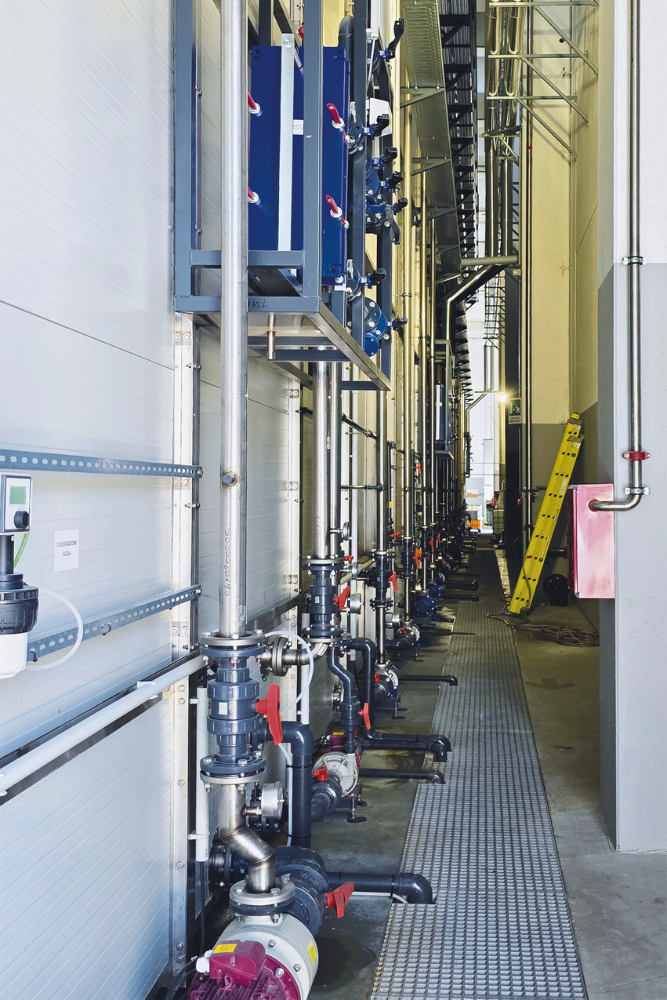 The seven-stage cascade pre-treatment tunnel performing nanotechnology-based conversion through atomisation.
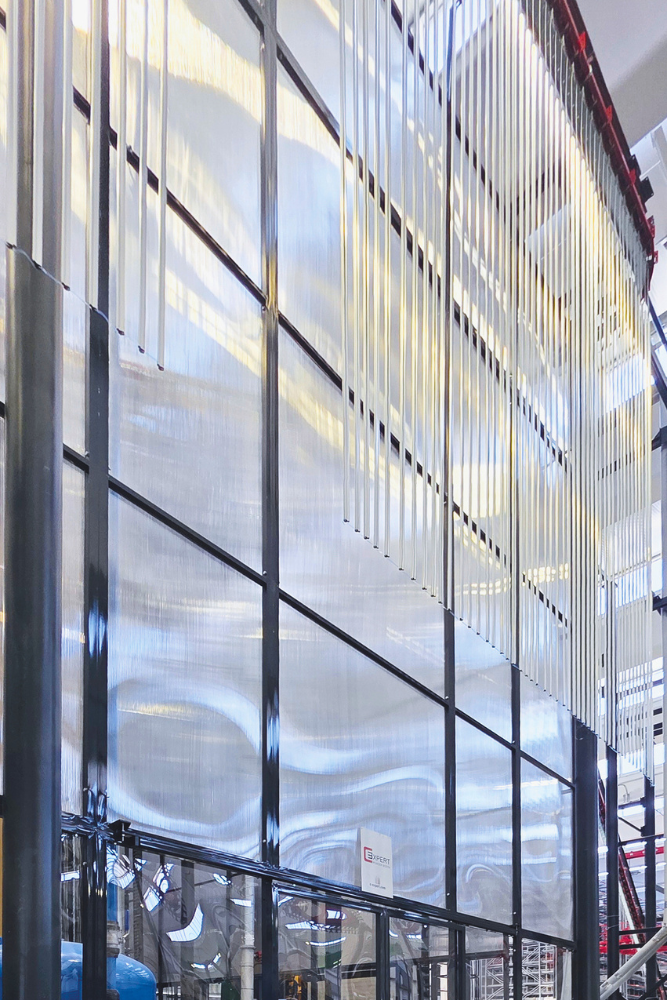 The two SAT C-Expert coating booths are housed within a cleanroom.
In 2026, Coroxal reached another significant milestone in its growth journey with the launch of the new vertical coating plant designed and built by SAT. This strategic investment, once again, aimed to increase the company’s production capacity and introduce advanced technologies into its surface finishing process. To complement the new vertical coating department, an automated warehouse for aluminium profiles, with a capacity of 2,500 units, was installed in line with the SAT system. This integrated solution enables automated management of profiles, from storage to feeding the coating line, ensuring a continuous, orderly, and efficient production flow. It optimises internal material handling, reduces manual operations, improves material traceability, and ensures greater continuity in the production process.
“Coroxal’s market is very broad: it is not limited to the architectural envelope sector. We cover 99% of products made from anodised or coated aluminium,” explains Claudio Pozzi, from the technical department of Coroxal’s Rovato site. “Offering both anodising and coating means we can quickly and efficiently meet the needs of companies that need profiles to be anodised or coated and then processed, or vice versa, as well as those requiring pre-treatment with flash anodising and powder coating, particularly in the shipbuilding and architectural sectors. At the Ospitaletto site, coating was introduced as a complementary process to anodising; in the Rovato plant, on the other hand, we have chosen to expand our coating capacity to vertically integrate production, attract new customers, and enhance the services offered to existing ones. Today, production volumes are still higher for anodising, but having installed such a high-performance vertical coating line as the one supplied by SAT, which is already operating in three shifts, five days a week, we expect to soon reach the same volumes for coated materials as well.”
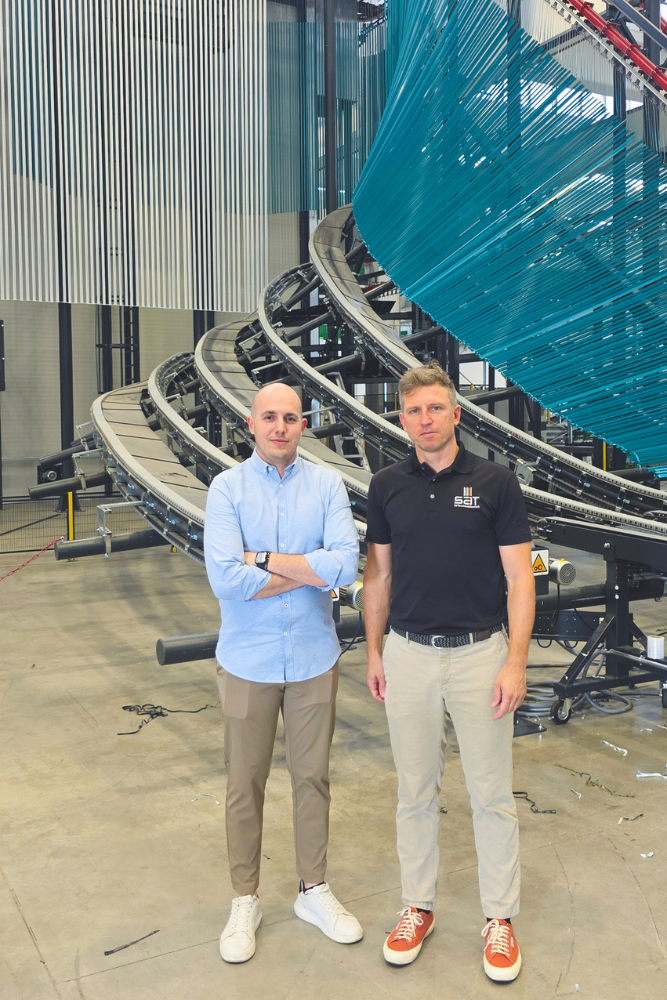 Claudio Pozzi (left), and Andrea Trevisan (right).
A vertical system designed for flexibility and automation
The launch of the new vertical coating plant in 2026 was a major technological investment for Coroxal. The system was designed to meet the demands of modern production, characterised by high volumes, production flexibility, and the need to maintain consistent quality standards, particularly in terms of coating consistency and uniformity. It therefore enables Coroxal to further strengthen its offering by combining long-standing expertise with industrial innovation. “We chose SAT as our technology partner because we wanted to work with a firm with extensive experience in designing and installing advanced industrial coating systems,” comments Guglielmo Corradi. “Thanks to its extensive technical expertise and in-depth knowledge of the sector, this collaboration has provided us with bespoke plant design, reliable technology, support during the installation and commissioning phases, optimised production performance, and the valuable prospect of future development and upgrades.”
“SAT designed the plant’s technological and flexibility-oriented features to enable us to process even materials that competitors cannot handle. Indeed, one key distinguishing feature is the ability to coat profiles up to 9 metres in height,” notes Claudio Pozzi.
The line was fitted with multiple devices to improve both production performance and quality consistency. Among these, the Visicoat vision system plays a central role, automatically detecting each profile’s shape, linking it to the corresponding coating recipe preset by the technical department, and adjusting the booth’s application parameters to match the profile’s geometry, thereby ensuring treatment repeatability and reducing the margin for operator error.
In addition, a brushing machine was installed directly on the line. “We can brush profiles without pre-treating them and without stopping the line,” indicates Pozzi. “In the brushing area, a ‘festoon’ system mounted on the monorail conveyor keeps the five hooks involved in the operation stationary while the rest of the system continues to operate. This means that the surface treatment can be carried out without interrupting the production flow.” As SAT’s CEO, Andrea Trevisan, explains, “This is the first brushing machine we have built for 9-metre profiles, although we have now installed around fifty of them worldwide. That meant we had to make some modifications to the loading area: since Coroxal processes profiles ranging from 3 to 9 metres, we fitted a roller shutter system that guides the profiles and prevents them from jamming. Once they reach a vertical position, they pass under the Visicoat camera system, which detects their shape; the brushing machine can then be activated according to their specific characteristics and treatment requirements.”
“The Visicoat system is integrated with our MES, and the brushing machine can be activated either through production orders or manually at the loading stage,” confirms Pozzi. “This feature is particularly useful in a contract coating context, where profiles arrive at our company after extrusion and may have issues that can only be identified during loading.”
The chemical pre-treatment following mechanical brushing has been designed to achieve Qualicoat Seaside certification. The cycle, a cascade process except for the final conversion stage, comprises seven stages. It starts with two acid degreasing (deoxidation) stages, unlike more traditional set-ups that include only one acid degreasing stage. These are followed by corresponding rinses with mains water, an alkaline degreasing stage, a final rinse with demineralised water with a conductivity of less than 30 µS, and a Henkel no-rinse, nanotechnology-based conversion stage, where the product is mixed and atomised using a PNR system. However, the plant is also designed to accommodate a traditional cascade conversion process, complete with the associated rinse. The system features automatic dosing of chemicals and monitoring of process parameters, which are checked daily; operators can view the measured values in real time. The dosage is adjusted according to the preset parameters, while the alkaline degreasing process is controlled based on pH. The probes are regularly inspected and maintained. Automatic replenishment of the tanks ensures that concentrations remain constant.
Downstream of the pre-treatment stage, there is an independent drying oven with its own burner, followed by two SAT C-Expert coating booths, one dedicated to light colours and the other to dark colours, each equipped with Gema CM40 units and dense-phase powder feeding systems using Smart-In-Line technology. The booths are fitted with high-efficiency cyclone filters for very rapid colour changes and are configured to facilitate opening, inspection, and cleaning during the most critical colour change operations. The Visicoat vision system plays a critical role in the application phase as well. “Under normal conditions, operators simply feed powder into the system,” illustrates Andrea Trevisan. “By contrast, SAT automation allows for a more precise definition of the quantity of powder to be dispensed, preventing over-dosing and making consumption more controllable, thereby ensuring greater coating consistency. Automatic adjustment effectively minimises the variations that can arise when different operators manually set different parameters, helping to ensure consistent product quality.”
The line ends with a polymerisation oven in SAT’s standard configuration, with fans at the bottom and separate inlet and outlet. “The oven’s design keeps the polymerisation chamber extremely well sealed from the external environment, promoting a flat temperature curve even at the system’s high operating speeds,” explains Andrea Trevisan. “The standard cycle speed is approximately 2 m/min. For profiles with critical coverage issues or specific customer requirements, it can be adjusted to the profile’s characteristics and finishing requirements, reducing it to 1.8, 1.6, or, more rarely, to 1.4 m/min. Here too, the use of the Visicoat vision system is crucial.”
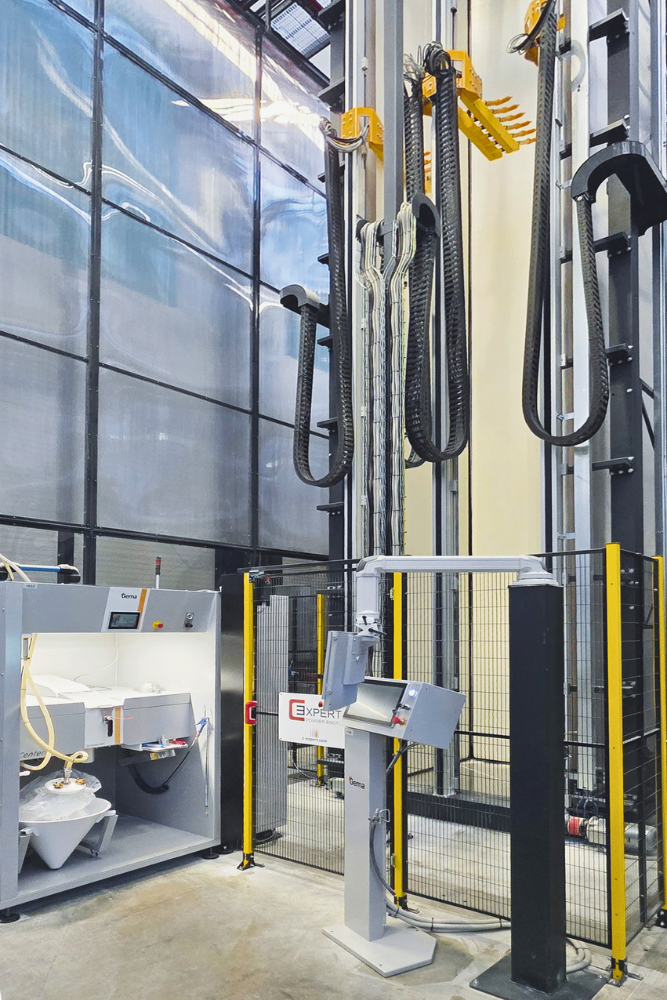 The coating booths are equipped with Gema CM40 units and dense-phase powder feeding systems featuring Smart-In-Line technology.
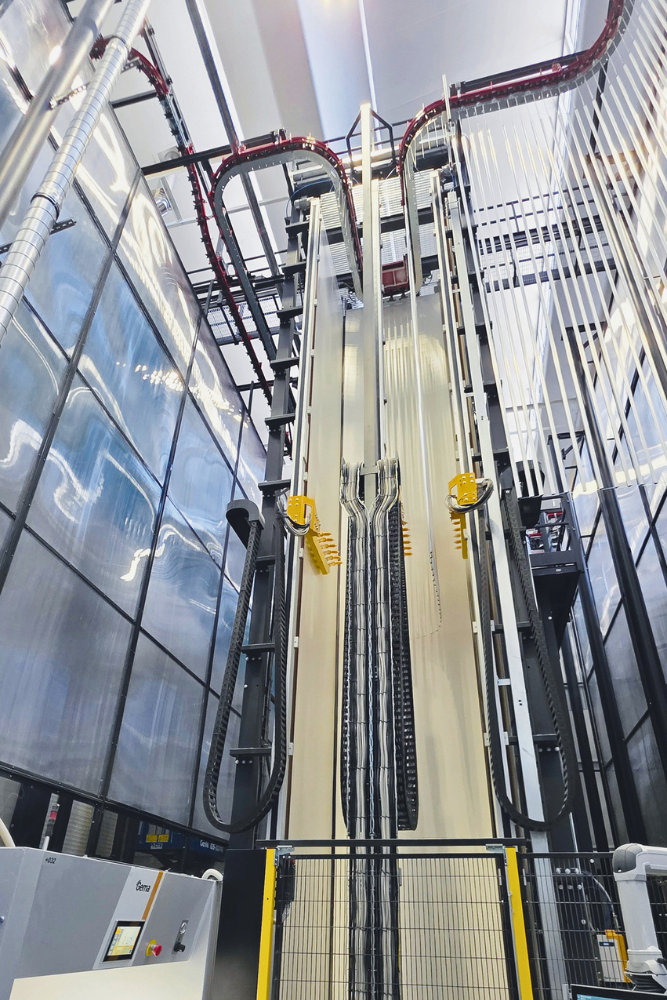 The coating booths are equipped with Gema CM40 units and dense-phase powder feeding systems featuring Smart-In-Line technology.
Visicoat for adjusting working speed
“The Visicoat system plays a major part in this plant’s performance,” states Claudio Pozzi, “one of the most interesting aspects being the relation between the line’s speed and the coating recipes.”
“For example, if the loading of profiles is slowed by the presence of very heavy or complex-shaped parts that are difficult to hang without the operator in the booth realising it, the Visicoat system automatically adjusts the coating recipe by changing the parameters to suit the new scenario, thus reducing the risk of errors during coating application,” confirms Andrea Trevisan. “A set of photoelectric cells detects the length of the incoming profiles and enables the system to adjust the recipe parameters according to their actual size, in order to achieve the same results regardless of the workpieces’ length.”
This approach is particularly advantageous for a coating contractor. Profiles with different requirements can be processed simultaneously within the same booth: if some require a lower speed and others a higher one, the plant automatically adjusts the treatment programme. The spray guns are controlled individually, so the recipe adapts to each profile, even when different shapes are loaded next to one another. “At SAT, we describe it as a dynamic system,” summarises Andrea Trevisan. “The coating requirements are continuously monitored and adjusted to the profiles present in the booth, and the recipes are automatically adapted. This allows the plant to accommodate any variations caused by the loading and unloading operations without requiring manual intervention in the process.”
Dual unloading for continuous-flow operation
The plant’s flexibility also extends to the final stage of the cycle. The unloading area has been designed with a dual configuration: on the one hand, an automatic unloading system consisting of a series of chains, capable of safely handling profiles of varying lengths and weights, transfers them directly to the packaging machine; on the other, a traditional unloading bay with an inclined arm creates a small buffer zone downstream of the line and ensures the process is not interrupted when the material is not destined for the packaging machine. This applies to profiles that require the application of protective film, a sublimation phase, or a different type of packaging.
“Packaging is currently the bottleneck of our line,” says Pozzi. “The ability to temporarily divert material to trolleys via the conventional unloading system therefore allows production to continue at 2 m/min, with the time required for packaging made up later without affecting the coating cycle.”
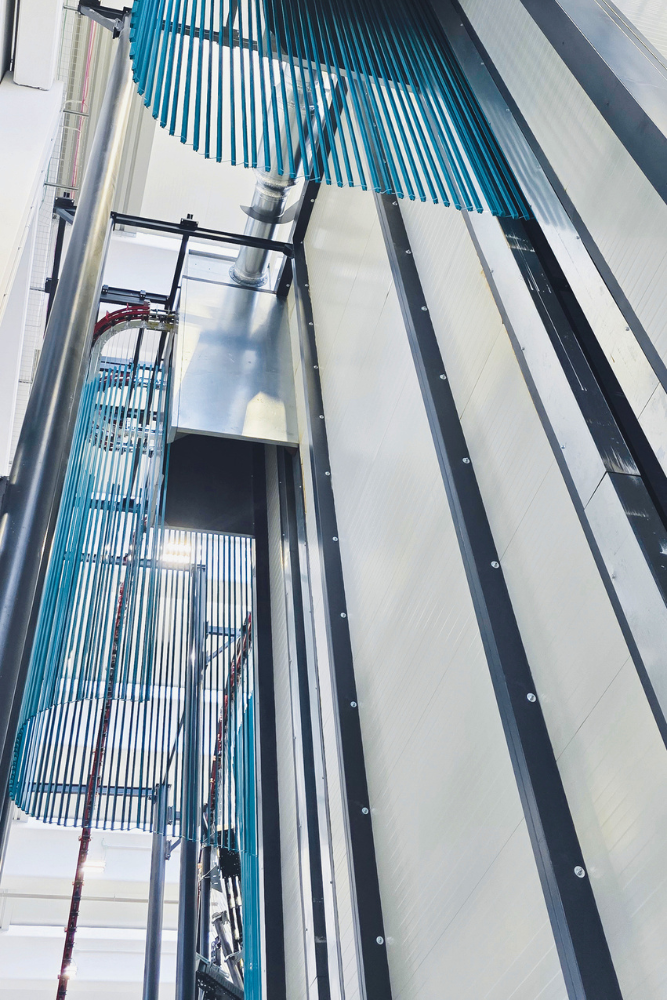 Coated profiles entering and exiting the polymerisation oven.
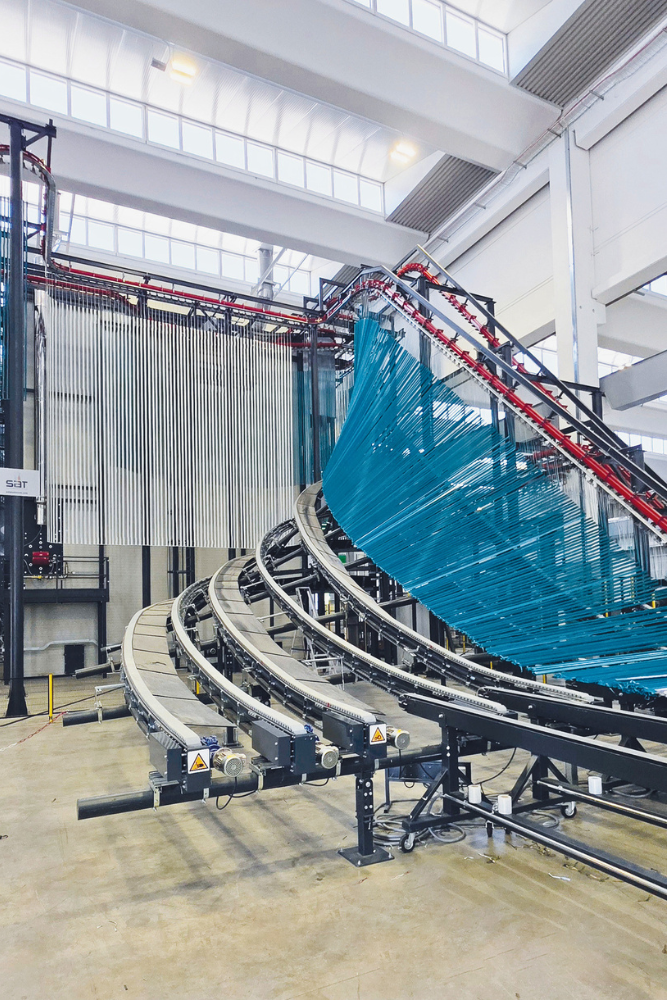 Coated profiles entering and exiting the polymerisation oven.
The automated warehouse as an integral part of the production line
The investment in the coating line was accompanied by the implementation of an automated storage system for aluminium profiles and powder products. A traditional drawer system is used for powder coatings, while the profile storage area was designed to make better use of space, reduce handling, and minimise the risk of damaging materials.
The line is currently fed by roughly 50% of material from the physical warehouse, loaded by an operator using an overhead crane, and 50% from the automated warehouse. The latter houses profiles belonging to customers and, upon receipt of an order, automatically checks stock levels using its own algorithms, retrieves the required packages, and transports them to an area outside the storage department. Lights and monitors then guide operators in preparing the orders.
The system also allows baskets for the various orders to be prepared in advance and made available directly at the loading area. The operator requests the necessary materials from their slots, and the warehouse system sends them directly to the loading bays, ready for transfer to the line.
“The entire picking process is managed in a more streamlined way,” says Pozzi. “The materials reach the coating department already prepared, avoiding the manual handling involved in opening packages, removing parts, and arranging different orders. The result is smoother management of the plant’s feeding operations and greater overall production efficiency.”
Above-average performance and potential
The evolution of Coroxal, from its foundation in 1961 to its most recent investments, tells the story of a company that combines industrial tradition, technical expertise, and a constant pursuit of innovation. The installed plant was designed not merely as a practical solution but as a tool to support high production volumes while maintaining a high degree of flexibility: in contract coating, the ability to handle different colours, batches, and profiles simultaneously is essential.
Under specific conditions, Coroxal’s capacity can reach up to 2.5 m/min, effectively treating profiles that are relatively short yet have a large surface area. “This figure certainly does not represent normal operating conditions, but we know we can achieve that level of performance, and that makes us extremely proud of our investment,” concludes Guglielmo Corradi.