Cantoni & C. S.p.A., a long-established manufacturer of tippers, has installed a new integrated shot blasting and water-based coating line designed to ensure not only application flexibility and colour customisation but also operator safety and simplified maintenance.
Since the early 2000s, the industrial vehicle bodywork sector has seen a gradual rise in coating quality requirements, transforming a product previously defined by its operational and functional value into one that also appeals to customers’ aesthetic taste – especially in the Italian market.
“Whereas in the past the focus was mainly on the structural strength of the tipper body, today its aesthetic impact and colour customisation, together with its structural characteristics, have become decisive factors in product selection,” observes Andrea Cantoni, sales director and son of the founder of Cantoni & C. Spa (Marcallo con Casone, Milan, Italy). “The increase in customer demands has had a direct effect on the required level of coating quality and, as a result, on the production organisation of companies in the industry, which must adapt their plants and processes to higher and higher standards.”
In the case of Cantoni, this adaptation has been part of a broader development plan launched in 2004 and due to be completed this year. “Our headquarters have always been in Boffalora sopra Ticino (Milan), where our company started. Over time, we grew to such an extent that in 2004 we purchased a new 46,500 m² plot in Marcallo con Casone, in a more convenient location for logistics, and began transferring production. In 2022, we built three new industrial buildings and are currently finalizing a fourth facility, which will house the offices and the assembly department for a few specific products.
In one of these buildings, we installed a new water-based liquid coating line. This project was led by Eurotherm (Volpiano, Turin, Italy) as the main contractor, with the participation of J. Wagner which provided the application system and Estalia for the supply of the water-based paints. The initial shot blasting stage was designed and implemented in collaboration with Tosca, which supplied the system, and Ervin Germany GmbH for the supply of the media.”
Key requirements for the new coating line included seamless integration of the shot blasting system, maximum operational safety during the handling and treatment of large parts, and streamlined maintenance. Eurotherm was entrusted with delivering these features alongside high process reliability. “It designed and installed a plant that fully meets the standards we set ourselves,” Cantoni emphasises, “ensuring a level of production continuity that is now one of our main hallmarks of quality.”
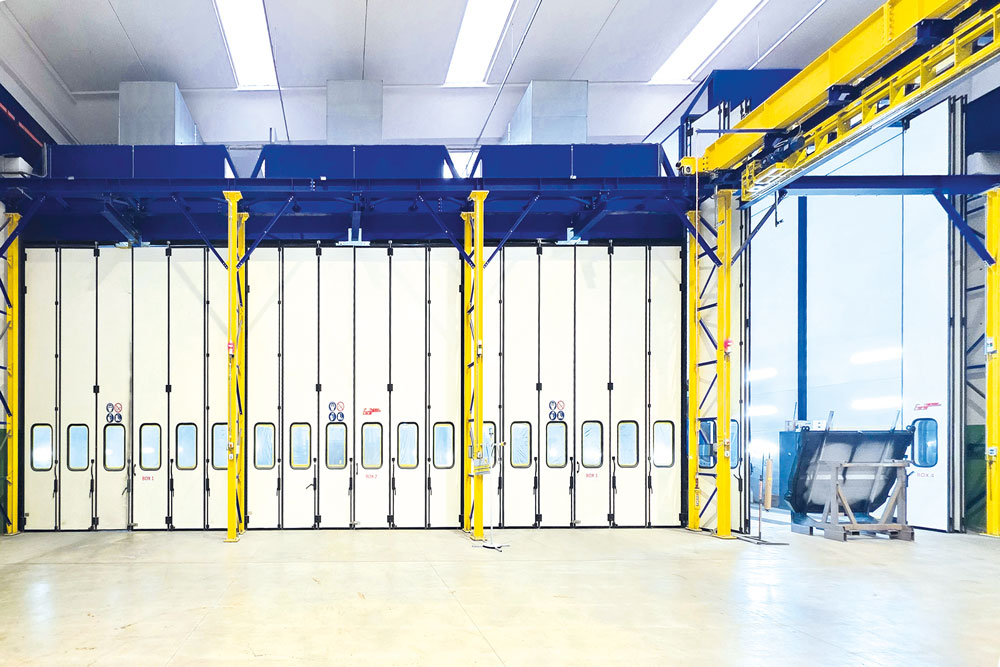 The 3 identical, pressurised coating booths at the heart of Cantoni’s new coating system. Ⓒ ipcm®
When an idea turns into a business
The history of Cantoni exemplifies how the Italian industry has often turned critical times into real opportunities. In the post-war period, in a country focused on reconstruction after the devastation of war, demand for construction equipment was high, while resources were limited. These constraints sparked the idea that led to the company’s development: in 1953, Marco Cantoni and two partners began converting and refurbishing military vehicles left behind by American troops after the Liberation, laying the foundations for what is now a family-run business in its third generation.
“My father and his partners specialised in the production of tipper bodies,” says Andrea Cantoni. “They soon recognised the importance of consolidating an international presence by establishing production facilities abroad.” In 1965, a factory was inaugurated in Tripoli, Libya; it was subsequently closed following the political events that affected the country. However, that experience made them even more aware of the importance of going global, a point now confirmed by Cantoni’s export rate, which has ranged from 70% to 85% at different times. “Our foreign strategy involves selecting local representatives and technicians to whom we send our products in kits to be assembled on site: we are mainly present in Eastern European countries and the former Soviet bloc.”
At the same time, the company continued to expand across Italy, leading it to acquire F.lli Cordero in 2001 to broaden its range with new tipping bodies, cranes, fixed bodies, vehicle conversion services, interchangeable superstructure systems, and other special solutions. “Our portfolio currently spans from light vehicles starting at 3.5 tonnes, with a production capacity of approximately 2,200 units per year, to heavier vehicles designed for construction sites, which can reach 63 tonnes, for which we have a production capacity of around 1,000 units per year. Both types are manufactured fully assembled or in kits, in a 70% to 30% ratio. We also have a special range dedicated to mining, i.e. vehicles with tippers for mining applications, which accounts for a smaller share of our production.”
“Everything in its place, a place for everything”
The three new buildings in Marcallo con Casone house, respectively, machining (cutting, bending, and robotic welding of bodies and subframes), shot blasting and water-based coating, and the assembly of finished products on vehicles. “The new factory has been designed to integrate state-of-the-art technologies in metalworking, coating, and assembly according to Industry 4.0 parameters,” says Antonio Cantoni, production manager and one of the owners of Cantoni Spa, together with his brother Andrea and sister Bruna. “We have various types of plants in our metalworking department, but our flagship is the laser cutting system, which produces any shape with such a high level of precision that it eliminates the need for subsequent machining operations such as drilling or slotting. This is complemented by a high-definition plasma cutting system for the anti-abrasion steel sheets we use to line the inside of bodies to ensure greater wear resistance.”
The factory is organised into work islands, each equipped with all the necessary tools. This configuration reflects the company’s evolution and management vision, as captured in its founder’s motto: “Everything in its place, a place for everything”. The bodies are assembled and completed in the order of requests, then transported to the building housing the shot blasting and coating lines.
Like one interconnected system
Shot blasting is the mechanical pre-treatment phase that removes oxidation and surface contamination, levels the sheet metal, and creates the correct roughness profile to promote paint adhesion. “The entire line was developed in collaboration with Eurotherm. This also included careful consideration of the positioning of the automatic shot blasting machine, equipped with 16 turbines and sized to accommodate our bodies, in order to integrate it perfectly with the coating system into a single interconnected line. We have also defined specific recipes for each product, which activate or deactivate the turbines according to application requirements.” Shot blasting acts on the surface roughness of metal sheets in a controlled manner, to the order of microns, without altering their thickness. “The degree of preparation must be adjusted precisely: excessive shot blasting would mean thicker layers of paint are needed without properly covering critical areas, whereas too little would not ensure adequate cleaning, possibly causing visible oxidation,” Antonio Cantoni points out.
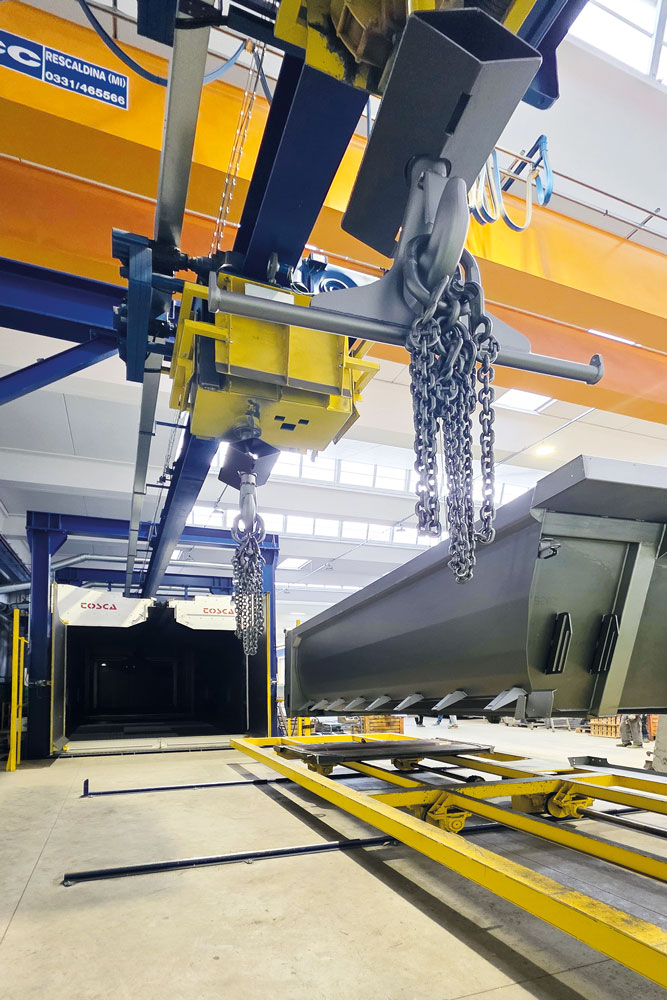 Eurotherm’s design for the new coating line incorporates an automatic shot blasting system. Ⓒ ipcm®
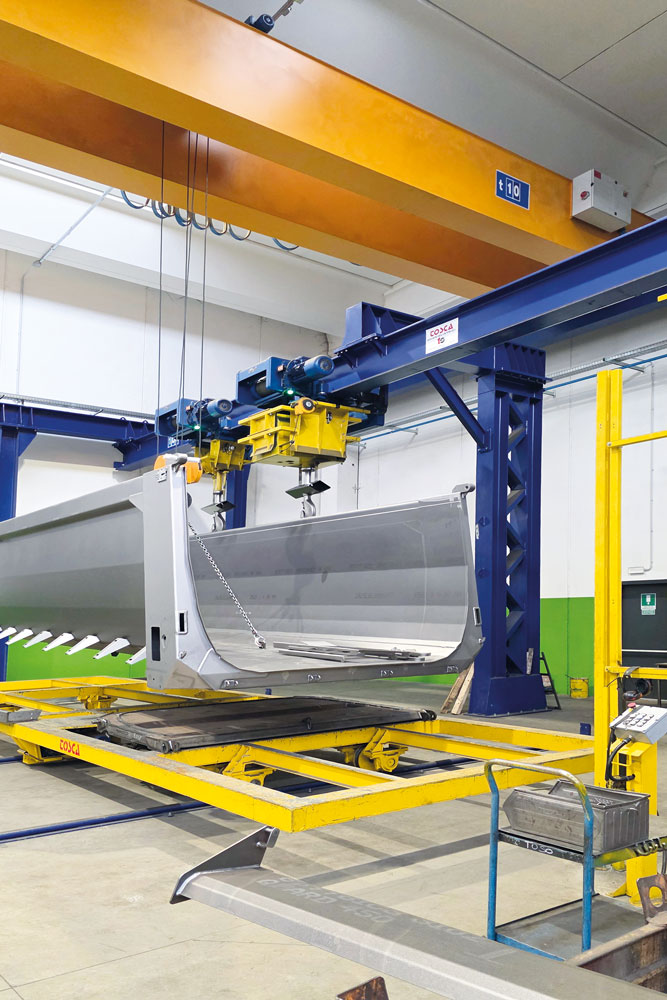 The automated shuttle designed by Eurotherm to move the bodies from the shot blasting system to the coating one. Ⓒ ipcm®
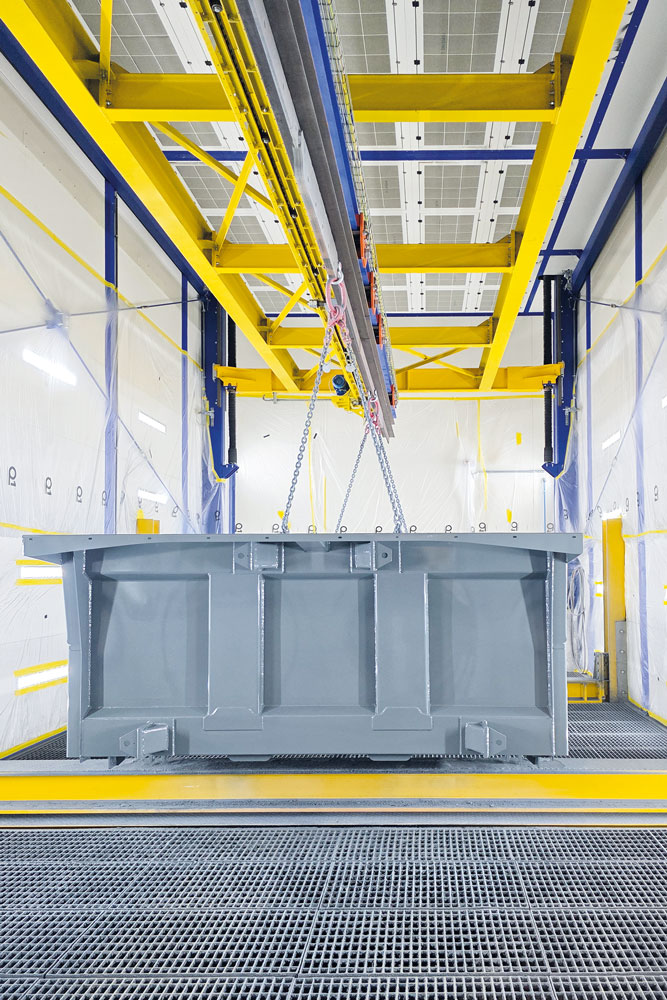 The inside of one of the 3 booths: the lift is designed to enable the operator to paint from below in complete safety. Ⓒ ipcm®
An effective abrasive mix
To achieve a SA 2½ preparation grade, Cantoni uses a spherical and angular abrasive mix supplied by Ervin. This combination is the result of a long testing and optimisation phase. “After numerous trials, we identified the most suitable mix for our entire range of products. Exclusively spherical abrasives would tend to mark the surfaces without providing sufficient impact, while angular abrasives would be too aggressive. The mix was defined jointly with the shot blasting machine supplier and the abrasive supplier to obtain a perfectly balanced solution,” adds Antonio Cantoni.
“Following the installation and testing of the system,” says Pietro Turrin, the sales manager of Ervin’s Italian division, “we carried out the necessary technical checks by analysing the required mix, the waste generated, and the degree of surface preparation of the treated products. We then selected our AMASTEEL abrasive, adjusted for size and hardness, which ensures the ideal blasting action.”
Ervin also supplied the AMAPURE degreasing additive, developed to prevent the build-up of oily contaminants left by previous machining operations. “The use of the additive also benefited the external filtration system: condensation, generated by low temperatures and humidity in combination with the hot air from the process, can reduce the filtering efficiency and service life of the elements. AMAPURE helps limit the risk of damage to the cartridges and potential dust emissions.” After determining the most suitable type of abrasive, Ervin’s staff also trained the personnel involved in these operations.
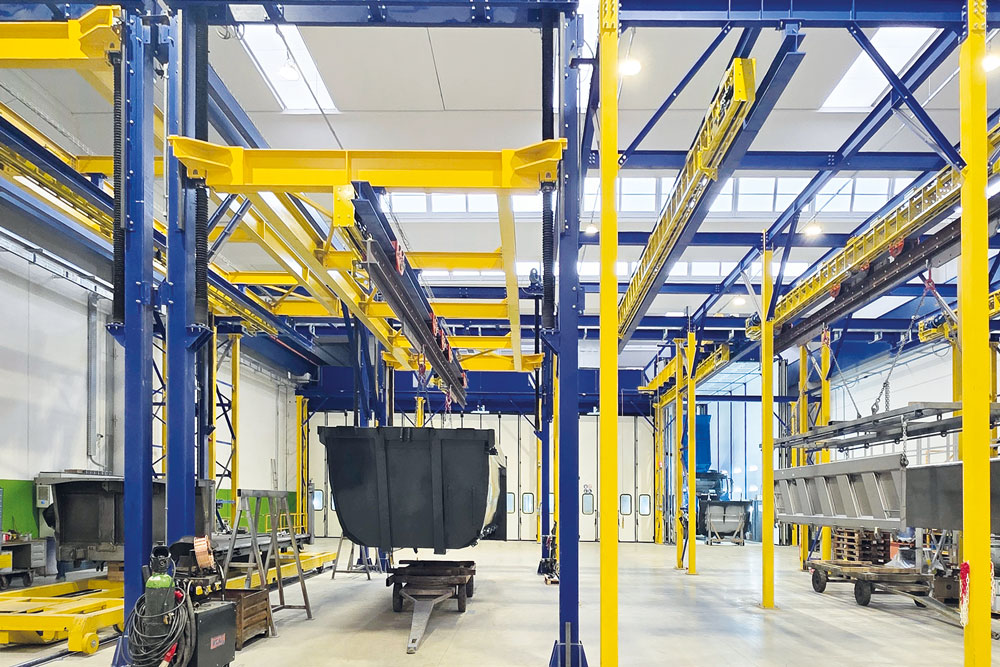 The handling area outside the 3 booths. Ⓒ ipcm®
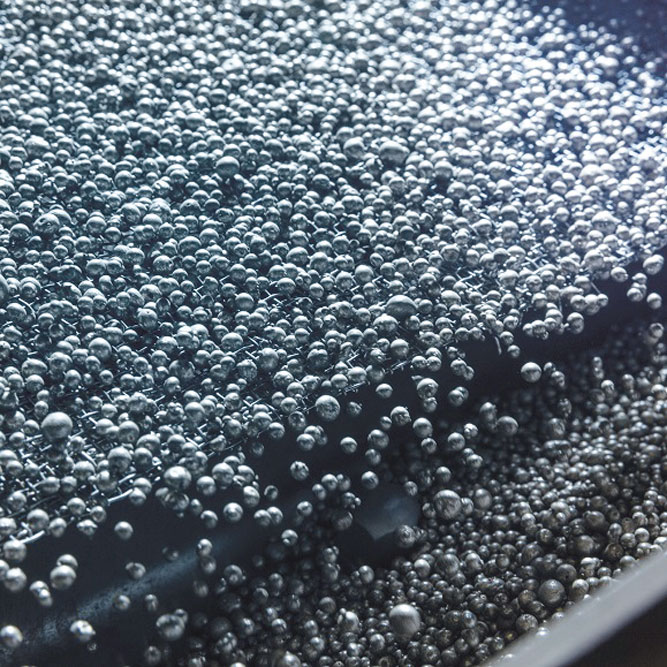 The blasting media supplied by Ervin Germany GmbH. Ⓒ Ervin
A monitored process
Process control is continuous: Ervin carries out periodic checks, supported by technical reports that certify the plant’s status and recommend any corrective actions. “We carry out a complete check every three or four months: the grit wears, fragments, and becomes more angular, so it must be replenished to maintain the required degree of roughness,” says Cantoni. To ensure operational continuity, a manual shot blasting chamber has also been installed alongside the automatic plant for touch-ups or extraordinary circumstances. “To date, however, we have never had to use it, which demonstrates the reliability of this system.” At the end of the cycle, the tipping body is tilted to recover the accumulated abrasive, which is recirculated to optimise consumption.
The coating plant: prioritising safety and streamlined maintenance
The coating line comprises 3 identical pressurised booths. “Using an automated shuttle,” explains Rocco D’Aloia, project manager at Eurotherm, “the body leaving the shot blasting machine reaches the lower part of the coating plant, where a lifting station picks it up and hooks it onto the overhead crane, which transfers it to its assigned booth according to a pre-set programme. 80,000 m³/h of air is circulated within each booth, with a constant temperature of 20 °C during the coating phase and 80 °C during the baking phase. The air-handling units (AHUs) are installed outside, where air recirculation also takes place.”
“The line we had in mind turned out to be particularly complex,” notes Cantoni. “With support from Eurotherm’s team, we adopted several technical measures that optimised the entire system for both safety and maintenance. We set up a system with hydraulic lifts, designed by the plant engineering company and capable of lifting up to 10 tonnes, ensuring the safety of components during coating from below. In addition, removable trestles allow the parts to be coated from any position without risk. To facilitate maintenance operations, we have also created an easily accessible utility room that houses all filtering systems and enables operators to work in an upright position. This may seem like a minor detail, but it is actually quite significant: plant maintenance always involves heavy work, and together with Eurotherm, we created the ideal conditions to make it easier.”
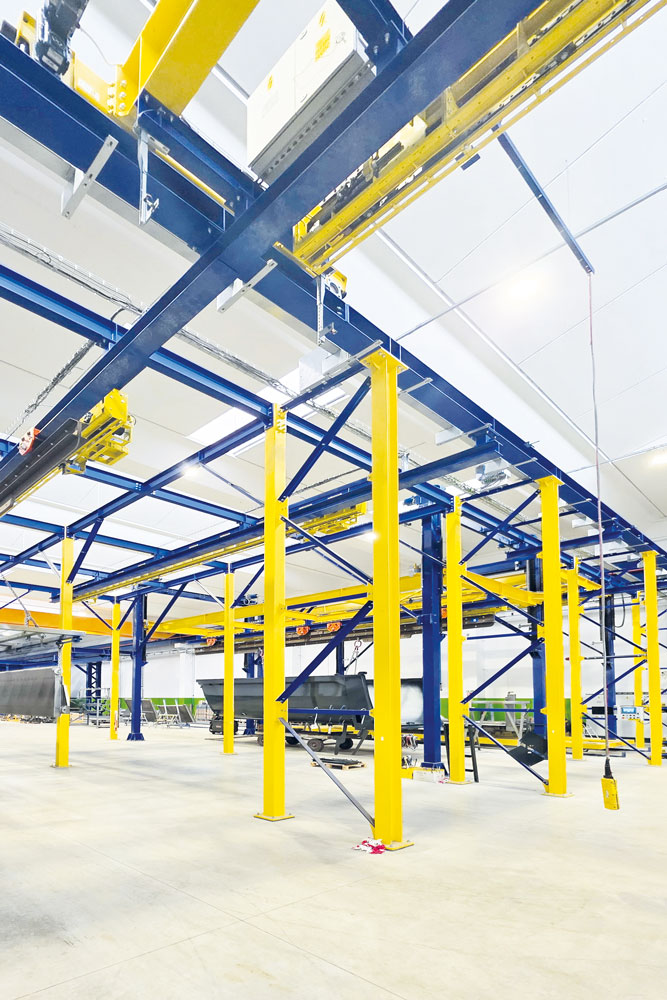 The storage buffer where the parts are placed before being sent for assembly. Ⓒ ipcm®
The water-based coating cycle
The coating cycle comprises a two-layer application, a primer and a top coat, supplied by Estalia Performance Coatings Group under its Damiani brand: a two-component epoxy primer from the 0212 WATERPOX - Grey RAL 7035 series and a two-component polyacrylic finish from the 0218 WATERPUR Glossy TF series, available in various colours. Again, several preliminary tests were carried out to identify the most suitable solution. The tests showed excellent results in terms of aesthetic quality, application uniformity, adhesion, resistance, and overall reliability, fully meeting the company’s technical and production requirements. In particular, this coating system provides high chemical and physical resistance (salt spray according to ISO 9227 and humidity according to ISO 6270) and weather resistance according to ISO 11507.
“For components, we mainly use RAL 7021, whereas for the bodies, the colour choice is determined by multiple variables, including customer requirements: it can reflect the brand’s corporate colours, which are usually two, follow specific aesthetic guidelines, or be chosen to ensure a perfect colour match with the cab. To meet the latter requirement, Estalia provided us with a latest-generation portable sphere spectrophotometer, operated via a formulation app that instantly detects the booth colour and transmits it directly to Estalia’s tinting department, enabling us to access an extremely wide range of hues with rapid production times,” indicates Cantoni.
A highly controlled application system
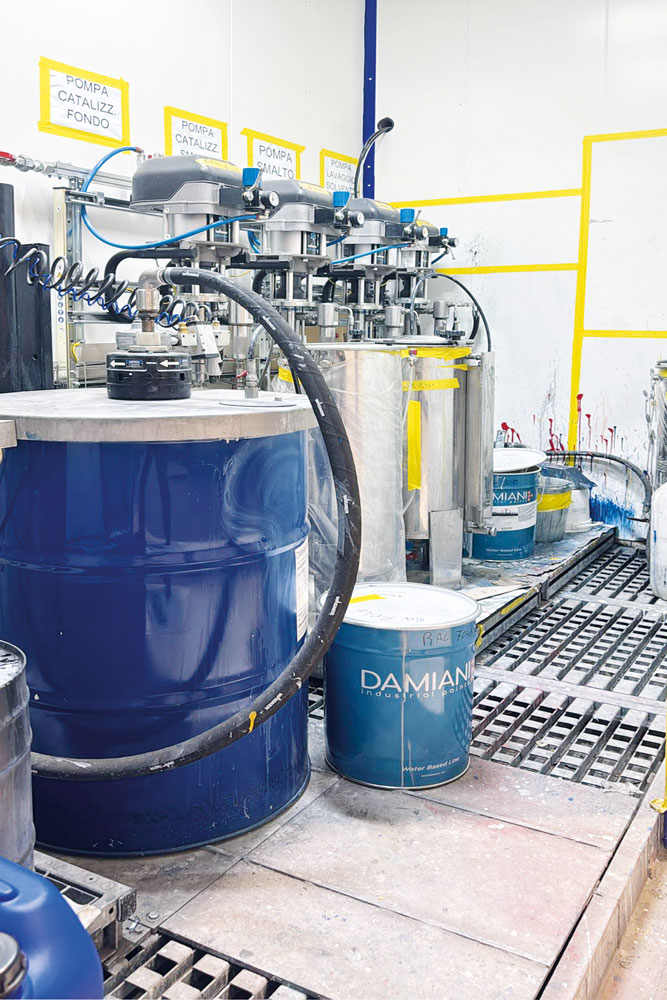 The paint management unit designed and installed by Wagner. Ⓒ Estalia
Each of the 3 twin booths installed by Eurotherm is equipped with a mixing system designed specifically for applying the epoxy primers and polyurethane top coats
used by Cantoni. The technological heart of the plant is a Wagner Intellimix Touch Plus mixing system, which manages two completely independent fluid sections via a single control panel: each section can operate with products of different chemical natures, maintaining separate mixing, control, and monitoring parameters. This DSF (Double Fluid Section) solution is particularly suitable for production contexts where different coating systems need to be applied, as in this case, where epoxy primers and polyurethane finishes coexist, ensuring maximum operational flexibility without duplicating control panels. “This enables us to control the entire mixing and parameter management (catalysis ratios, product service life, diagnostics, and traceability) process from a single centralised interface, with clear advantages in terms of plant efficiency, space optimisation, and simplified maintenance,” says Cantoni.
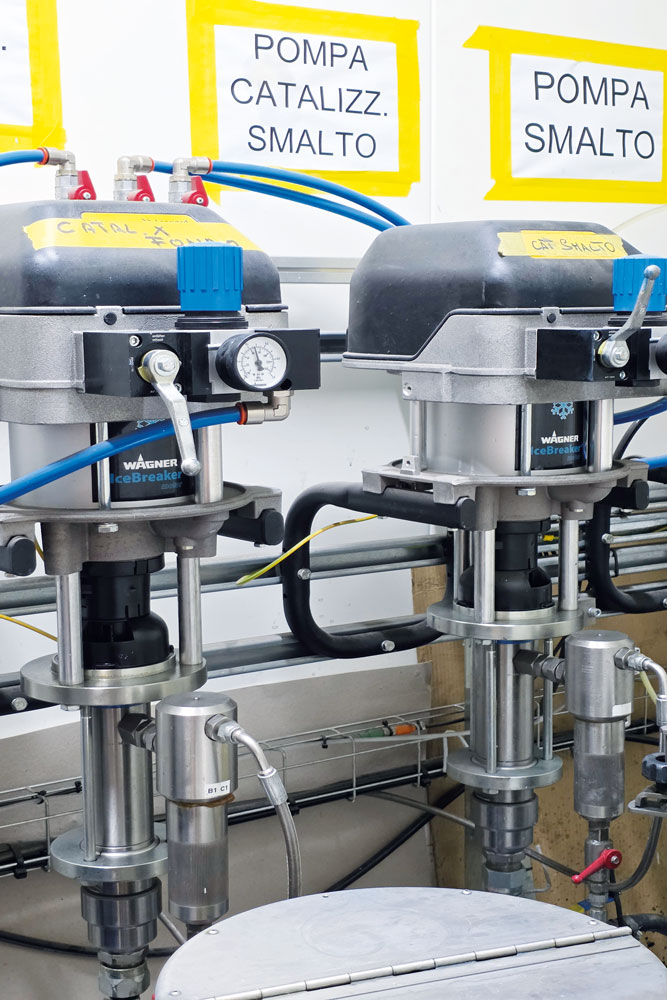 The application system operates at high pressure using Wagner Leopard 35-70 pumps. Ⓒ ipcm®
The use of water-soluble coatings also requires specific measures for viscosity management, mixing-ratio control, and fluid circuit protection. “The entire system operates at high pressure using Wagner Leopard 35-70 pumps, ensuring constant flow, pressure stability, and reliability even under intensive use. Application is carried out manually using AirCoat technology and GM 4700 guns, a solution that delivers high-quality finishing, excellent atomisation, and minimised overspray.” From a functional perspective, the adoption of 3 Intellimix systems, one for each booth, ensures full operational autonomy between stations, providing production continuity and reducing the risk of system downtime.
Ensuring technological continuity
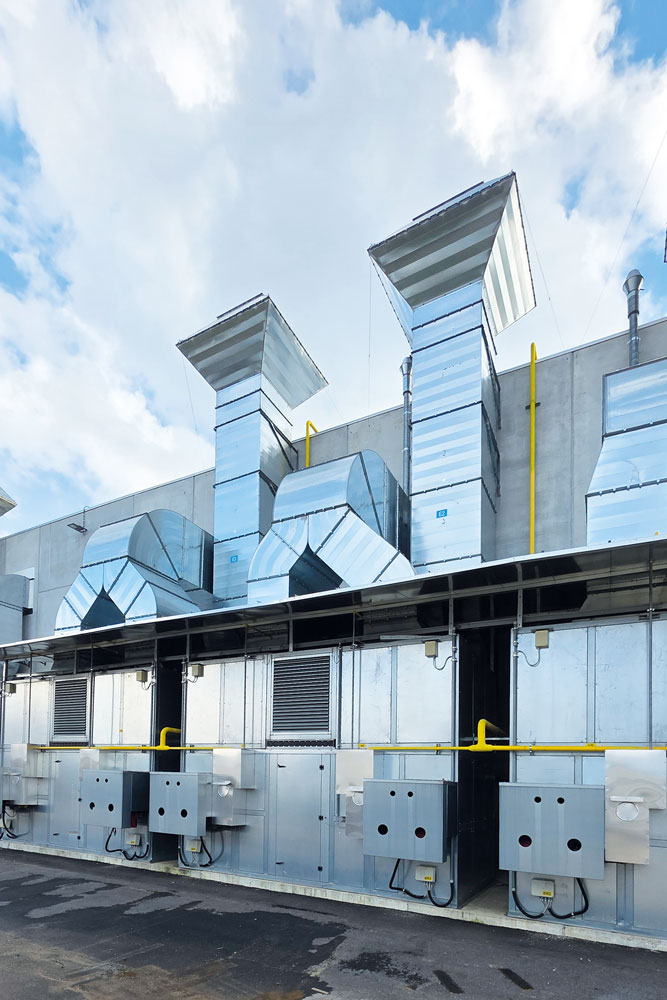 The external AHUs, where air recirculation also takes place. Ⓒ ipcm®
Antonio Cantoni emphasises that his company’s long-standing partnership with Wagner was instrumental in smoothing the way for a project that initially appeared particularly complex: “We have been familiar with Wagner’s technology for many years, as we have implemented several of their solutions over time. In addition, we are supported by their certified partner, FG SERVICE, for service activities and the supply of spare parts. This has been a decisive added value, enabling us to integrate this new plant into an already established technical context and to be supported through continuity of service, rapid intervention, and in-depth knowledge of our production needs.” Overall, the project was highly technological and geared towards maximum application flexibility, precise control of process parameters, and optimisation of quality and production performance, in line with the most advanced requirements of the water-based industrial coating sector.
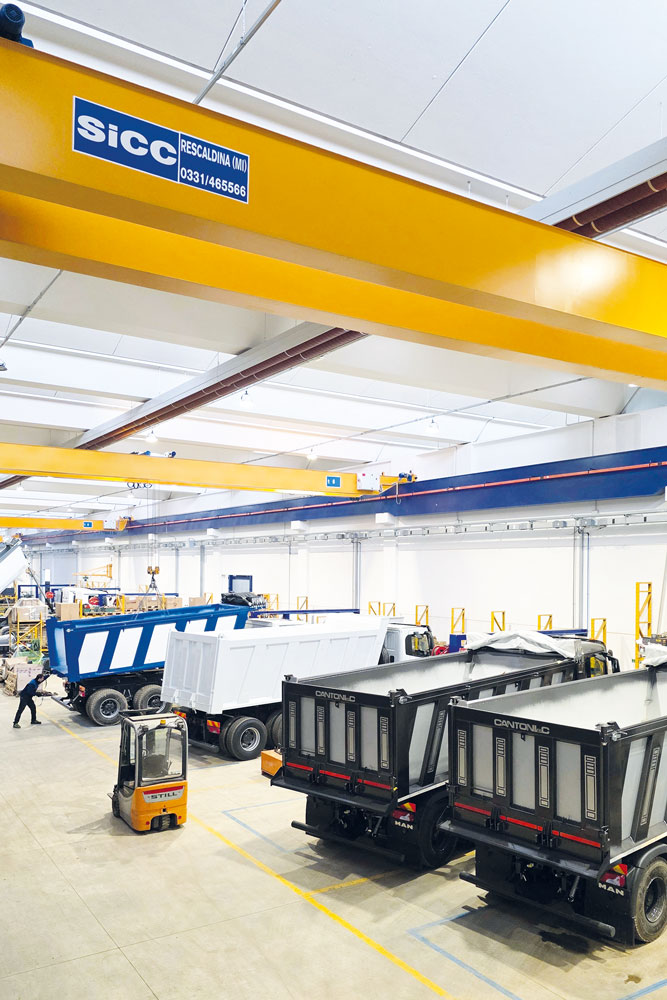 Some of tippers ready to be shipped to the customers. Ⓒ ipcm®
Towards extreme colour customisation
“Today, thanks to the system installed, the products we use, from abrasives to water-based paints, and our advanced application system, our coating department not only makes us proud but also enables us to position ourselves at an extremely high-quality standard, while maintaining the application consistency,” concludes Andrea Cantoni. “Customers’ quality expectations have grown significantly – as already mentioned, especially in the Italian market – and are set to increase further: this investment was our concrete response to this trend. The project has reinforced our family-run company’s vision and laid solid foundations for its future development, secure in the knowledge that we have chosen the most suitable technology partners for our growth objectives.”
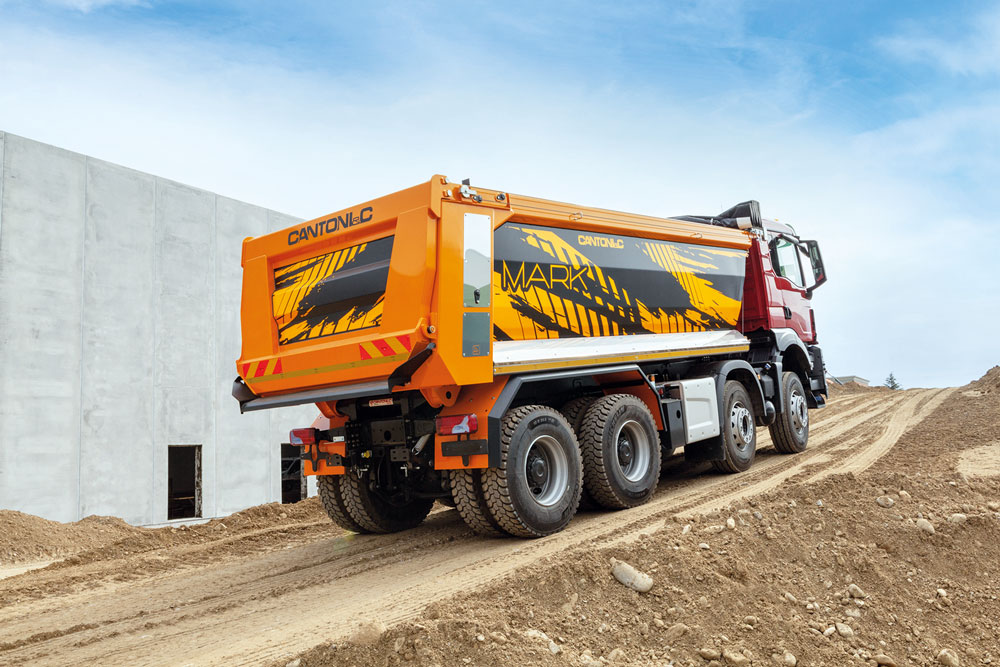 Perfect colour matching between the cab and the body is one of the factors that place Cantoni at the top of the market in terms of coating quality. Ⓒ Cantoni
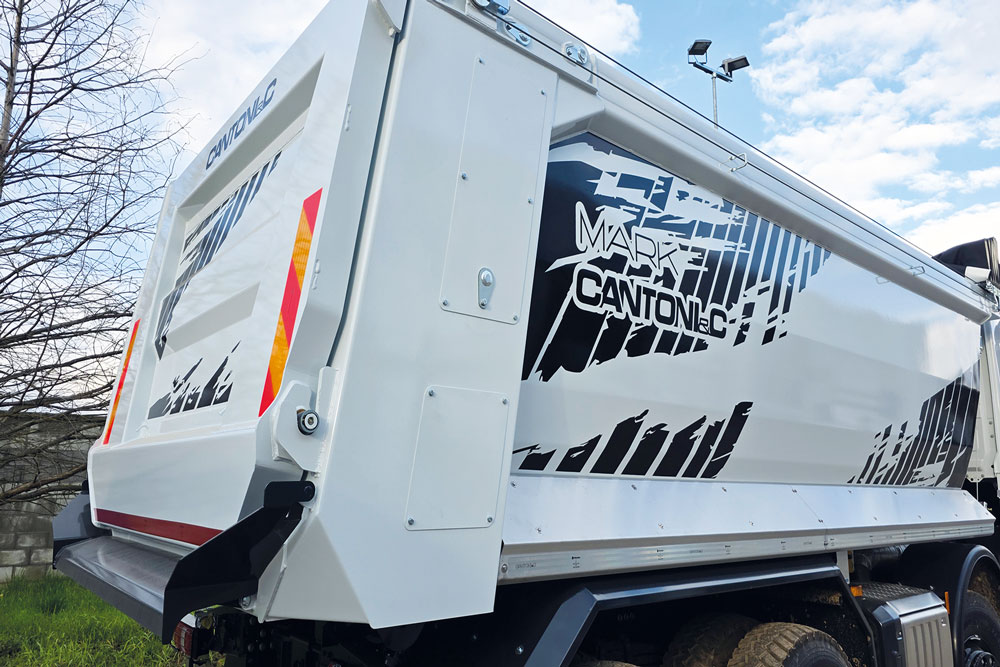 The colour of the tipper bodies can reflect the brands’ corporate colours, usually two, or adhere to specific aesthetic guidelines set by customers. Ⓒ ipcm®