Medesy, a company specialising in the manufacture of dental instruments, has identified the cleaning phase as a key process in its workflow. Through collaboration with IFP Europe and Dollmar, it has adopted a modified alcohol-based system that combines high performance with sustainability.
In the heart of Italy’s Friuli Venezia Giulia region, in the foothills of the Alps, lies Maniago, a small town that has been an international hub for metalworking for over six centuries, earning it the nickname ‘the city of knives’. In this manufacturing district, craftsmanship, precision, and the sharing of knowledge have been intertwined for generations. Its origins date back to the Republic of Venice, when the area was chosen for the production of iron weapons and tools. Since then, the skills of local blacksmiths have evolved and specialised, adapting to technological changes and market demands: production has shifted from weapons to knives, scissors, and tools, and on to industrial components and high-precision instruments for the medical sector. This is the field in which Medesy Srl has built up its expertise.
“My grandfather, Guglielmo Ghezzi, founded this company in the postwar period, when Italy was focused on rebuilding the country and driving industrial development. Initially, it produced surgical instruments, and then it gradually narrowed its scope to focus on a highly specialised niche: the dental sector,” says Diego Ghezzi, now at the helm of Medesy. “With my father Claudio taking over the leadership, Medesy took a further evolutionary leap by introducing new machinery, including the first machining centres. That is when we started a modernisation process aimed at improving production efficiency, without losing sight of the attention to detail and quality that have always been the hallmarks of our artisan tradition.”
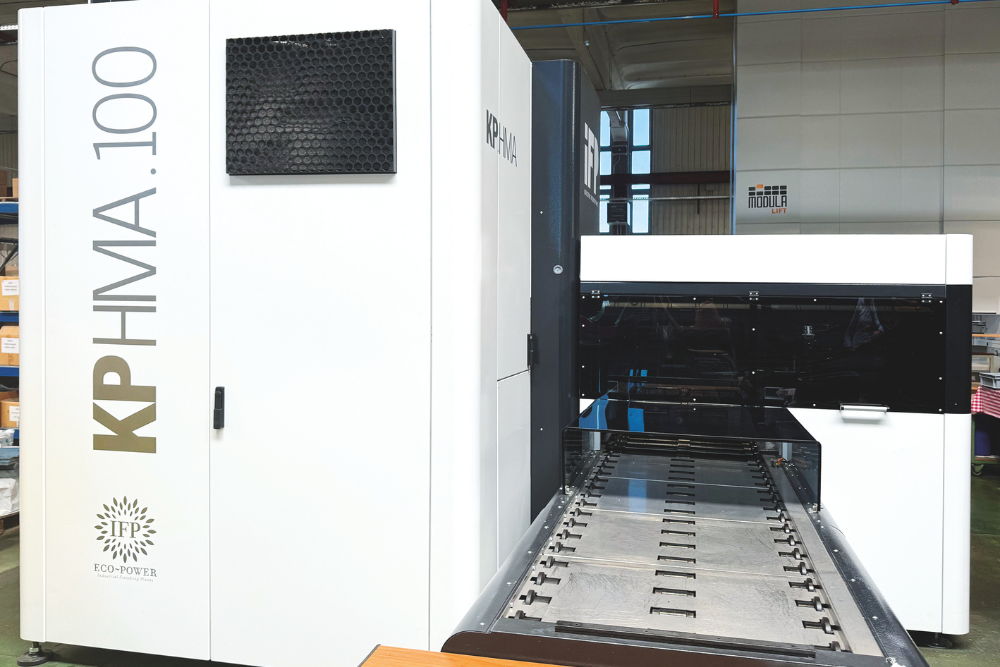 Overview of the IFP Europe KP HMA 100 plant. © ipcm
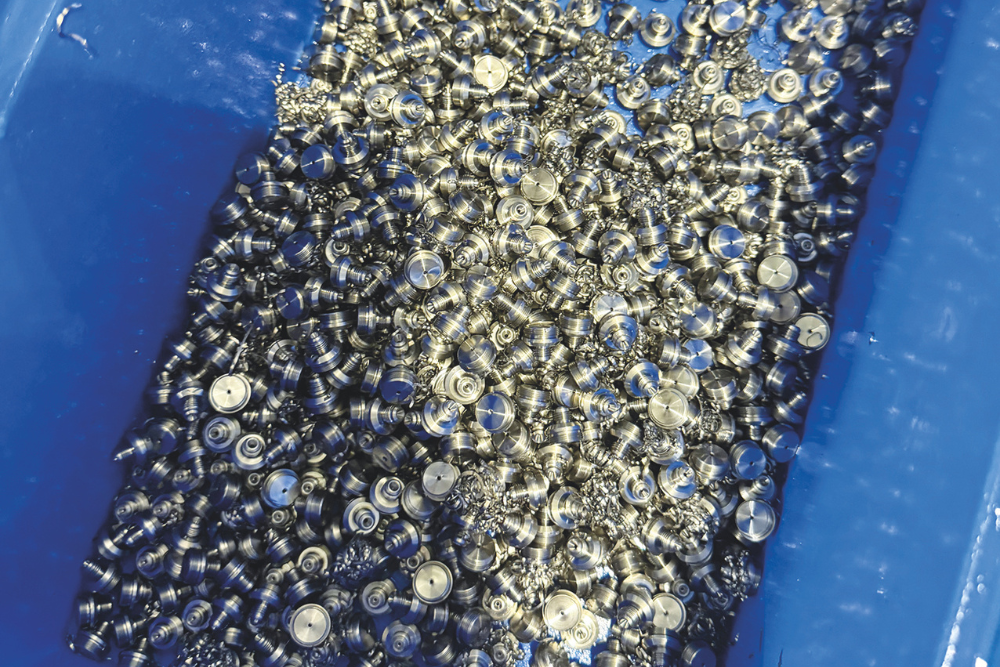 Components contaminated with turning oil. © ipcm
Today, with the third generation at the helm, represented by Diego, Lisa, and Camilla Ghezzi, the company continues to grow by adopting increasingly advanced and interconnected technologies in line with Industry 4.0, which ensure optimised processes, improved traceability, and ever-higher quality standards. At the same time, Medesy is investing in research into new, higher-performance materials, such as next generation steels and high-performance polymers, which deliver greater stability, strength, and durability. Its most recent investments include a new modified alcohol-based cleaning system provided by IFP Europe (Galliera Veneta, Padua, Italy), with support from Dollmar(Caleppio,Milan, Italy) for the supply of chemicals. The synergy between these companies has supported a process of workflow optimisation and quality standard enhancement, aimed at making the cleaning phase more efficient, high-performing, and sustainable.
A process of the utmost importance
At Medesy, cleaning is a strategic process step, crucial to achieving the high degree of precision and cleanliness required for dental instruments. “We carry out in-house most of the machining processes required for our products, which are made from 303 or 420B stainless steel, depending on the component type. For some operations, such as forging, heat treatment, laser cutting, and electropolishing, we rely on specialist companies in the Maniago district with which we have an established partnership,” explains quality manager Alessandro Cecchin. “Precisely because of its importance within our production cycle,” he adds, “we have always managed the cleaning phase in-house, both as an intermediate stage between machining operations and as a final stage before quality control, packaging, and dispatch to the 105 countries where we distribute our instruments. Intermediate cleaning is undoubtedly the most critical phase because, during machining operations, the parts come into contact with oils, emulsions, and abrasive pastes used in turning, grinding, and polishing, as well as with solid residues such as swarf and shavings, which can also accumulate in hard-to-reach cavities. Removing them is essential to ensure the correct execution of subsequent stages. Final cleaning, on the other hand, ensures an additional level of cleanliness for our finished products. Although not always strictly necessary from a production point of view, it reflects a specific company policy aimed at continuously raising our quality standards.”
“The process was initially developed in line with ISO 9001 requirements and subsequently took on an even greater role with the adoption of ISO 13485, the standard specific to the medical sector. It is therefore one of the phases most closely monitored during inspections, which assess not only operational effectiveness but also performance stability over time in accordance with our standards,” says Ghezzi.
The new cleaning plant
Medesy’s need to upgrade its cleaning system stemmed from the necessity to further improve efficiency. “We were looking for a plant capable of delivering more effective, high-performance cleaning and able to remove contaminants completely. The main issue we encountered with the previous system concerned the oil used in the turning stage. As it is a light contaminant, it tended to rise to the top: with an immersion plant, although the parts were cleaned during the cycle, they came into contact with that layer of oil on the surface upon extraction, compromising the cleanliness level that had just been achieved,” explains Cecchin.
To address this issue, the choice fell on a KP HMA 100 plant, a modified alcohol-based system designed by IFP Europe to meet high production demands and effectively remove the most complex contaminants. “Thanks to a vacuum treatment cycle down to 1 millibar, the KP HMA technology integrates cleaning, drying, and decontamination into a single process, ensuring high performance in both standard and customised configurations,” states Giampaolo Rossi, sales manager at IFP Europe.
“The process is fully automated: the operator only loads the basket, which is then transferred into the cleaning chamber by an automatic roller system. Once the most suitable cycle has been selected, the process runs autonomously through to the unloading stage. The preset cycles can be easily managed via the company’s MES software. Load management within the baskets is a key factor in achieving a high degree of cleanliness. Semi-finished parts, typically treated in intermediate cleaning stages and characterised by a higher level of contamination, are loaded in bulk; during the cycle, a tilting system promotes their oscillation and movement, allowing the modified alcohol vapours to penetrate even the most complex geometries and ensure thorough cleaning. For finished and pre-assembled components, on the other hand, we use special workpiece holders that ensure precise positioning and more delicate handling during treatment,” notes Medesy’s quality manager. The cycle time averages around 15 minutes. Since Medesy produces around one million units a year, and since some products, such as syringes, consist of around 12 components to be assembled, cleaning speed and efficiency are key factors for productivity.
“The KP HMA plant also offers a high degree of configuration flexibility thanks to numerous additional options, including robotic loading systems, supplementary drying modules, solutions for applying protective treatments, and the possibility of integration into clean room environments. It is therefore a scalable solution, designed to adapt to the most advanced production requirements and perfectly aligned with Industry 4.0 parameters,” concludes Rossi.
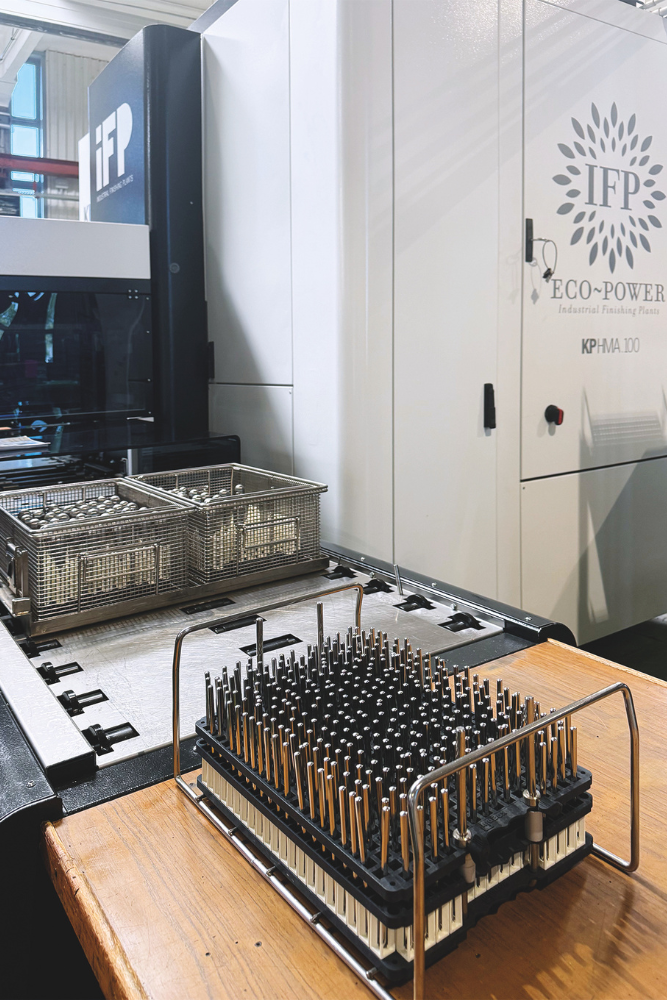 At the end of the assembly and production process, the items undergo a final cleaning phase, during which they are precisely and strategically positioned within baskets. © ipcm
Dollmar’s cleaning chemicals and technical support
"Regarding the chemical products, we are collaborating with DOLLMAR, which has supported us in improving the process", says the quality manager. “First, we checked the compatibility of modified alcohols with the oils used in the turning process through stress tests carried out in our laboratories. Then, we supplied the modified alcohol Dollmarsol G 120, developed to ensure high performance in cleaning and degreasing processes. Its formulation delivers high oil, grease, and machining residue removal capacity, guaranteeing consistent, controlled levels of cleanliness. At the same time, we introduced the pH stabilizer for the modified alcohol, Dollmarstab G, which helps maintain a stable cleaning process, improving the plant’s overall performance,” explains Mario De Cenzo, Dollmar’s sales director. “Our support is not limited to the supply of chemicals but includes ongoing analysis and technical assistance. Through regular checks and laboratory tests, Dollmar provides detailed reports on the condition of the solvent, offering a constant snapshot of the cleaning bath’s operating state, and recommends any necessary corrective measures.”
“The technical support and regular analyses, certified by its in-house laboratory, enable us to continuously monitor the solvent’s behaviour and provide useful guidance to enhance our internal quality systems,” says Cecchin.
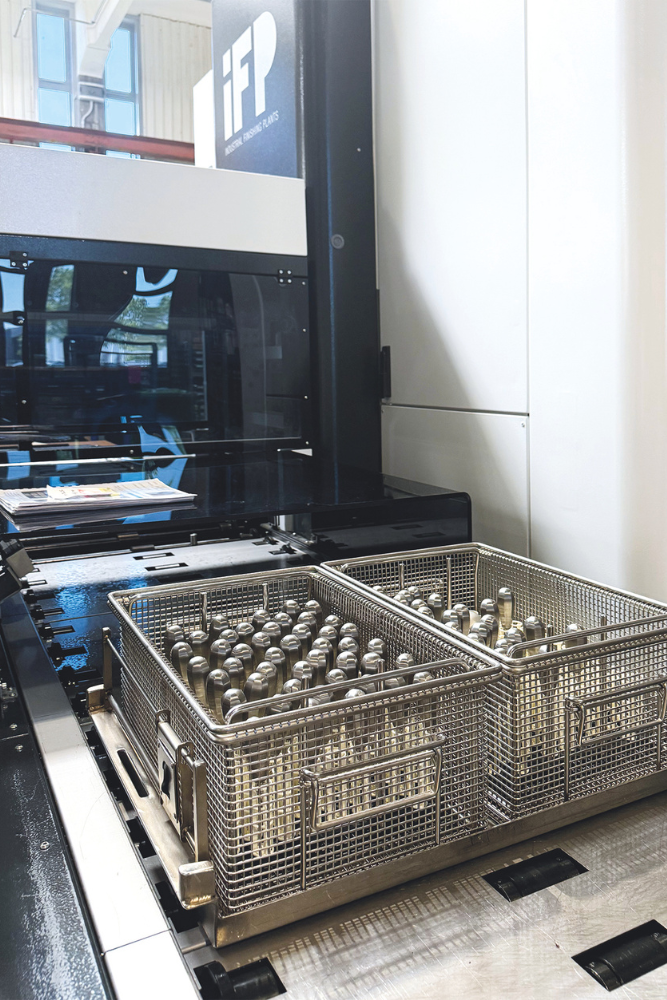 Loading the cleaning system. © ipcm
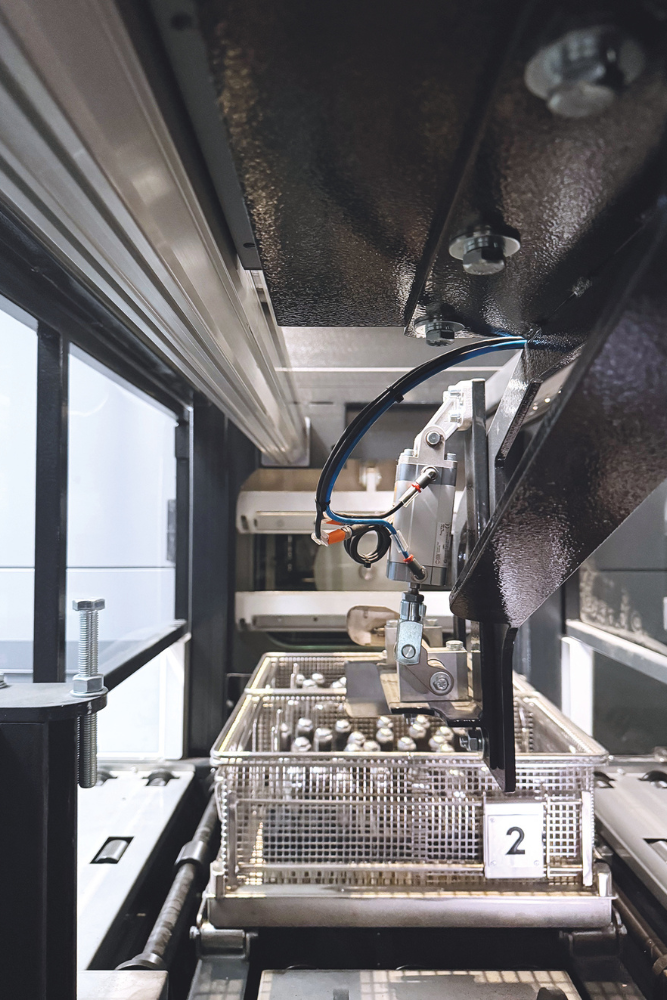 Components exiting the cleaning chamber. © ipcm
Cleaning as a strategic lever between performance and environmental friendliness
IFP Europe’s KP HMA 100 system, together with the high-performance chemicals developed by Dollmar, has enabled Medesy to make a significant leap in quality, improving cleaning efficiency, process stability, and the control of operational variables over time. It was not just the plant technology that made the difference, but the synergy among the system, process chemistry, and specialist technical support. In fact, this integrated approach has transformed a production challenge into a concrete opportunity for optimisation and growth. Alongside production performance, process sustainability also played a central role. “We designed this plant as a closed-loop system that prevents direct contact with cleaning fluids and enables the safe, controlled management of the entire cycle. The integrated filtration, purification, and separation units allow the recovery of oils, water, and metal microparticles, significantly reducing waste,” says Rossi. “The use of modified alcohols is also an advantageous choice, as the solvent’s controlled volatility and low toxicity make it a more sustainable alternative to traditional systems. This translates into a reduction of the impact on operators’ health and, more generally, on the working environment," adds Adina Diaconu, marketing manager at Dollmar.
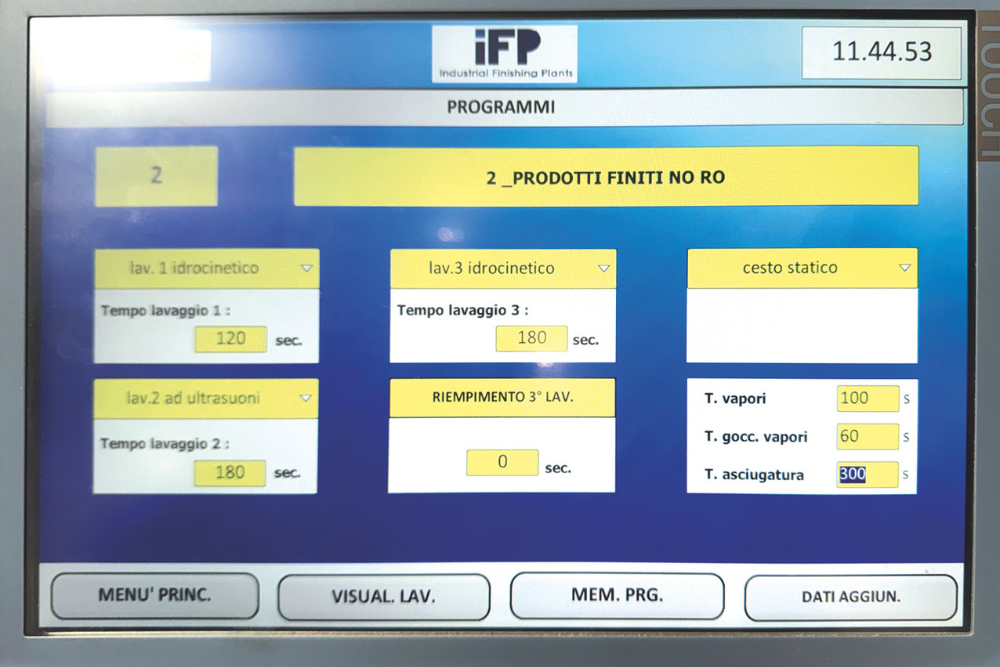 The cleaning programmes can be selected via the PLC. © ipcm
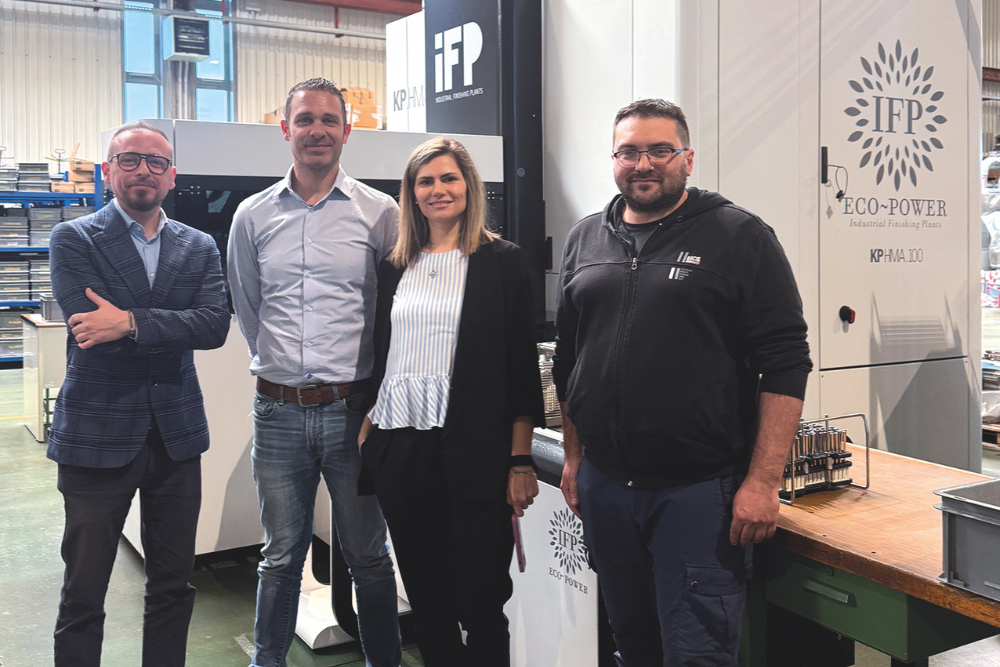 From left to right: Mario De Cenzo, sales manager at Dollmar; Diego Ghezzi, owner of Medesy; Adina Diaconu, marketing manager at Dollmar; and Alessandro Cecchin, quality manager at Medesy. © ipcm