The project to improve the efficiency of Asturmadi Doors’ coating line arose from the need to meet growing production requirements and increasingly stringent regulatory standards in the fire-rated door sector. The design and installation of the new powder application plant, carried out by Cabycal in collaboration with Nordson, involved a complete reorganisation of its layout, with particular attention to integrating manual and automatic handling systems and optimising production flows.
A fire door is a technical closure designed and certified to ensure fire compartmentalisation between adjacent spaces, limiting the spread of flames, smoke, and heat for a defined period in accordance with specific fire resistance classes. An essential component of building safety, it differs from other door types in two fundamental ways: fire resistance and the ability to self-close. It consists of a door leaf and a frame made from materials such as steel, aluminium, plaster, wood, or glass, selected to ensure structural integrity and thermal insulation during exposure to fire; the system is complemented by certified accessories, including hinges, locks, automatic closing devices, and intumescent seals, which expand in the event of a fire to help seal the joints and contain flames and smoke.
Fire doors undergo rigorous laboratory testing and must comply with current European regulations, including CE marking and the relevant EN standards. In particular, the key certifications that govern their performance under real fire conditions and the safety of escape routes are EN 1634-1 for fire resistance and EN 1634-3 for smoke control. “In recent years, an increase in industrial fires, as well as several incidents, has drawn international attention to the importance of passive fire protection systems, such as the fire at the Wang Fuk Court residential complex in Tai Po (Hong Kong) and the one still fresh in the collective memory that occurred in Crans-Montana (Switzerland) during the New Year’s celebrations,” says Iván González Candañedo, Head of Production and Purchasing at Asturmadi Doors, a company based in Avilés, in the Spanish region of Asturias, specialising in the manufacture of certified fire-resistant metal doors. “These examples highlight the importance of having effective passive fire protection systems in place, particularly certified and properly maintained fire doors. This is not merely a regulatory requirement but an integral part of containing the spread of fire, protecting people by enabling their evacuation, and minimising damage in industrial facilities, public spaces, and private homes.”
The growing focus by designers and regulators on these safety systems has increased demand for suitable solutions: “That is one of the reasons why we have recently upgraded the plant equipment at our site in Avilés, including its powder coating line. In addition, although our end products do not have the same visual appeal as decorative doors for domestic use, the demand for ever-higher aesthetic standards has begun to affect our sector as well. Today we work with a highly efficient, fully digitalised line designed in collaboration with Cabycal (Alaquàs, Valencia, Spain), which specialises in bespoke coating systems and was able to provide us with a plant that meets industry demands, delivers high production throughput, and integrates perfectly with our business management system.”
Asturmadi Doors: over 30 years of specialisation in passive fire protection
Founded over 30 years ago, Asturmadi Doors has specialised in the design and manufacture of certified fire-resistant metal doors, developing solutions that comply with the main European and international standards for passive fire protection. Over time, it has expanded its range to include complementary components such as certified door frames, hardware, and accessories. “Our ability to adapt to regulatory changes and market demands while offering customised solutions has been a key factor in our growth,” adds Iván González Candañedo. Today, Asturmadi Doors exports its products to over 70 international markets across Europe, Latin America, and Africa, with a consolidated commercial presence in more than 40 countries. Alongside its production expansion, it has invested in optimising its industrial processes and using materials that meet the latest environmental requirements to combine reliability, regulatory compliance, and production efficiency.
A production facility designed to handle high volumes
Asturmadi Doors’ production facility integrates 2 dedicated lines for door components: one for frames and the other for door leaves. “For us, it is essential to synchronise their flows, planning the production of frames in advance of door leaves,” explains Iván González Candañedo. “We operate in relatively compact spaces compared with the volumes we handle, so every component must be ready for immediate assembly at the end of the line. We manufacture the door leaves in the panelling and profiling department, where we installed the powder coating line, and then fit them to the frames during final assembly.”
In recent years, this company has embarked on a major project to automate its entire production facility, introducing robotic manipulators for automatic loading and unloading, alongside new profiling and panelling machines. “We realised that the previous panelling line was inadequate for the volumes required by the market, despite working 3 shifts, 5 days a week. At the same time, the growing diversification of colour batches was turning the coating process into a bottleneck.” To overcome these limitations, Asturmadi Doors’ management launched a major investment programme covering both its coatings and machining departments, along with an expansion of its production spaces. “We removed some machinery belonging to another company in the Group to install the new coating plant developed in collaboration with Cabycal; once our coating capacity had been increased, the need to also upgrade the door panel machining line to support the rise in volumes became immediately apparent.”
Although the existing line remained fully operational, the manufacturer had ceased trading, so Asturmadi Doors could no longer rely on that solution alone. Therefore, it decided to install a second line of the same length, over 30 metres. However, the increase in production capacity has brought new logistical challenges. “With the rise in volumes, the line’s output station has become the new bottleneck: the number of doors produced exceeds the capacity of the roller conveyors used for handling. Currently, we are considering introducing an automatic storage system.”
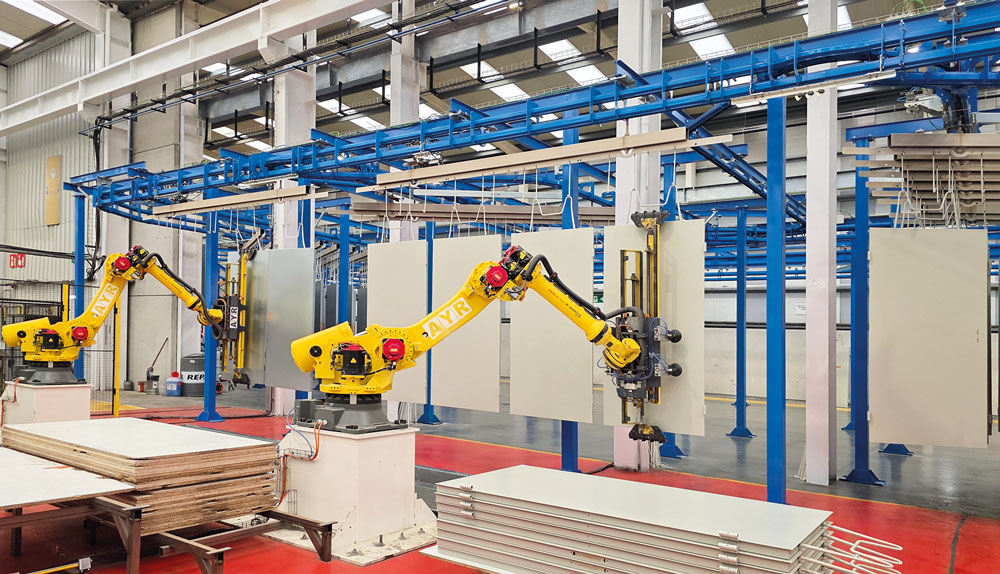
The two robotic manipulators in the loading and unloading area: integrating automatic and manual handling devices was one of the main challenges of the project for the new plant. Ⓒ ipcm
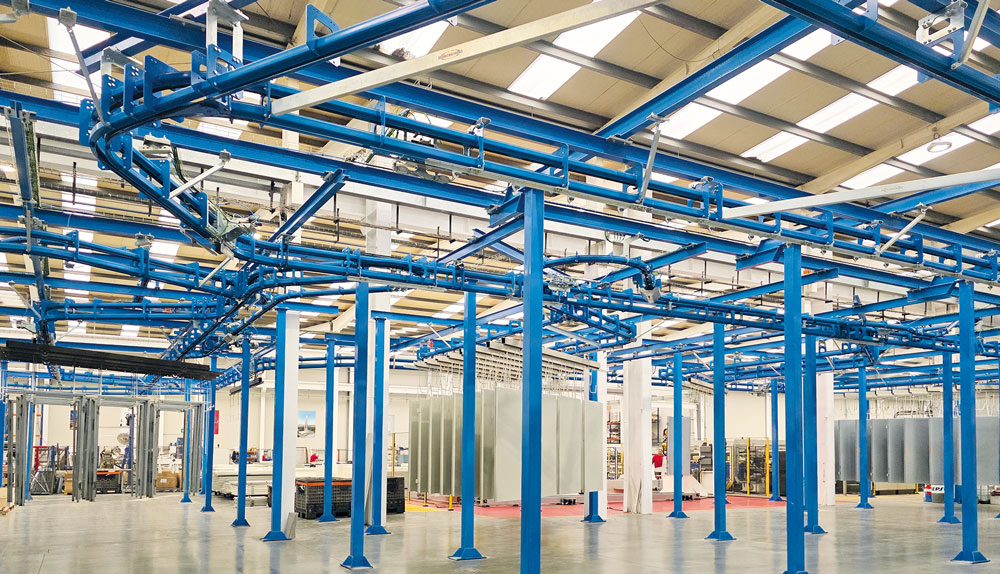 The power & free conveyor features 5 independent drive systems, allowing the load bars to follow different paths along the route. Ⓒ ipcm
A new coating line designed to improve efficiency and productivity
The new powder coating plant was designed with two main objectives: to increase production capacity by reducing throughput times and to integrate manual and automatic loading systems efficiently. “Previously, we were using a monorail conveyor operating across 3 shifts a day,” indicates Iván González Candañedo. “With the new power&free configuration, we can now coat higher volumes in one and a half shifts, keeping the process cycle unchanged.” To support the increase in production capacity, Cabycal designed an advanced buffering system comprising 5 storage stations distributed along the line. Handling in the loading and unloading area is assisted by 2 robots capable of managing up to 160 door leaves, whereas the frames are loaded manually. The door leaves are attached to the conveyor’s load bars in groups of 4 for standard sizes and 3 for larger products.
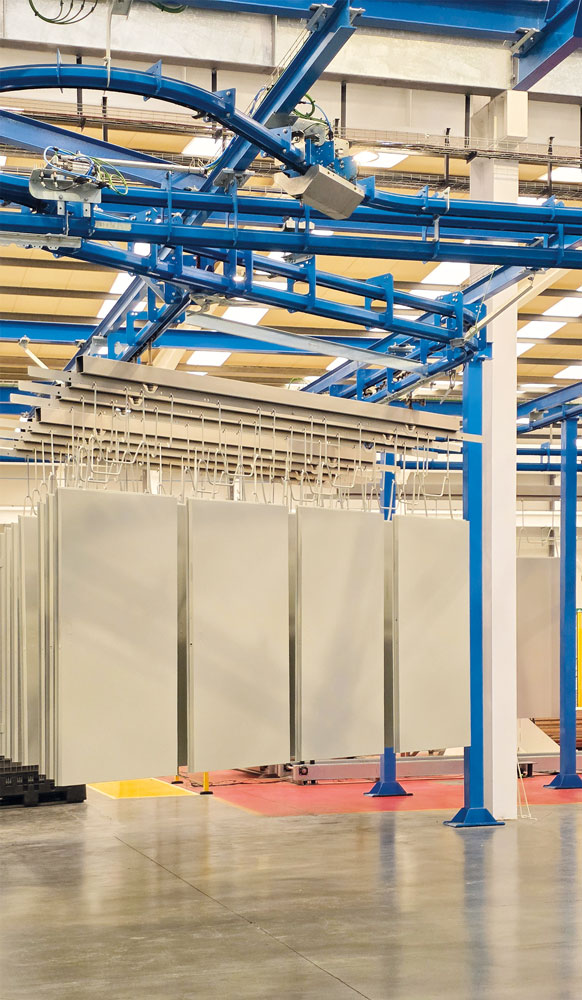
Each load bar can accommodate door leaves in groups of 4 for standard sizes or 3 for larger products. Ⓒ ipcm
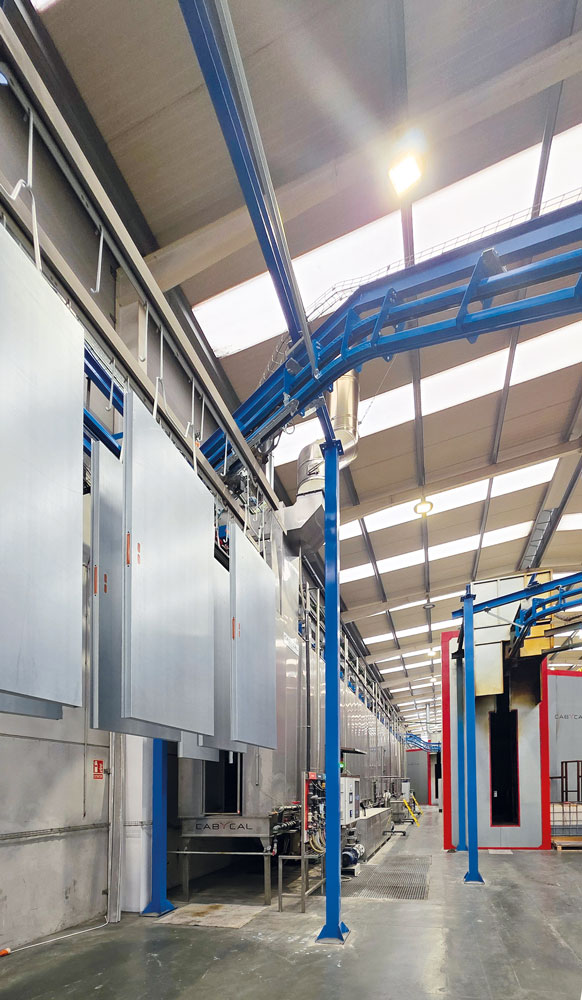
On the left, the entrance to the 3-stage pre-treatment tunnel; on the right, the exit from the curing oven. Ⓒ ipcm
The coating process begins in a 3-stage pre-treatment tunnel that incorporates a ProSpray Air nanotechnology spraying system developed by Proquimia. This device sprays a nanotechnology passivation solution onto the parts, ensuring uniform surface coverage while minimising product consumption. The combination of the nanotechnology product with the ProSpray Air system increases the corrosion resistance of the treated surfaces by 2 to 4 times, achieving exposure classes C4H or C5H, depending on the coating system used. The plant also incorporates Proquimia’s ProGuard System, a management and control platform that automatically regulates chemical concentrations in the baths and enables real-time process monitoring and traceability, both of which are key to meeting the repeatability requirements of industry certification standards. “We also installed a reverse osmosis unit to ensure greater process stability,” says González Candañedo. “Although water quality in Asturias is already very high, we opted for this solution to further enhance the reliability and repeatability of our rinsing stages.”
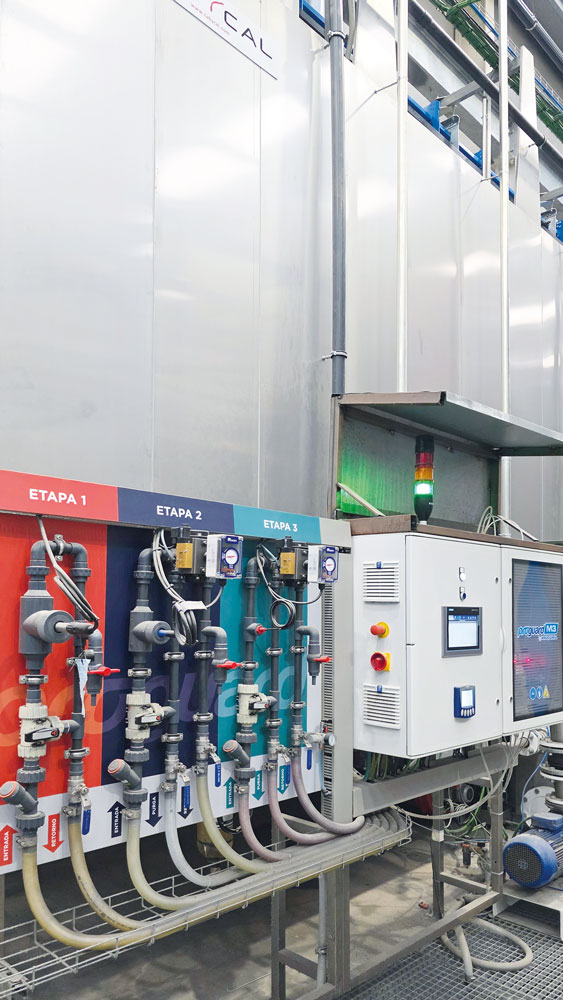
The pre-treatment tunnel integrating Proquimia’s ProSpray Air atomisation system and ProGuard System control solution. Ⓒ ipcm
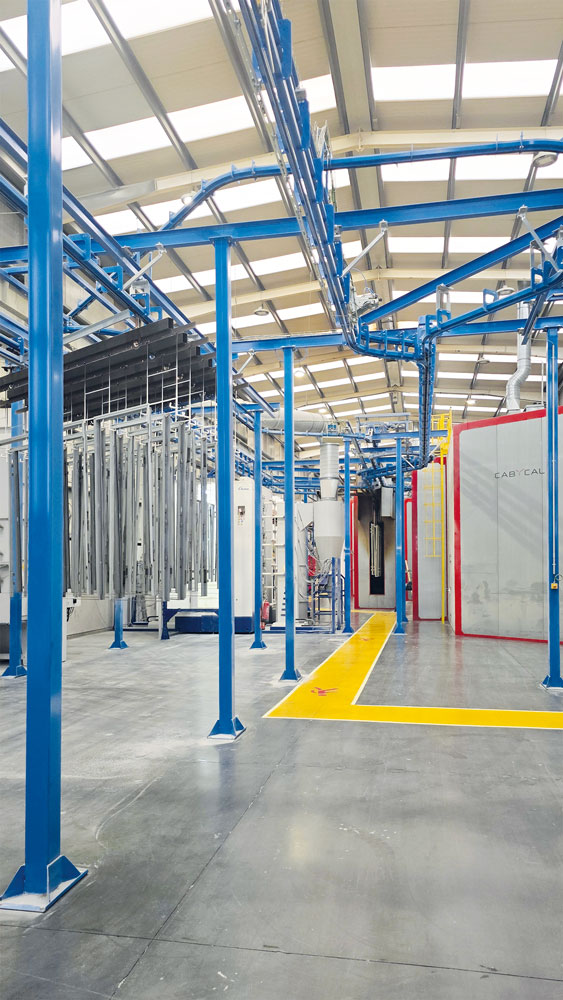
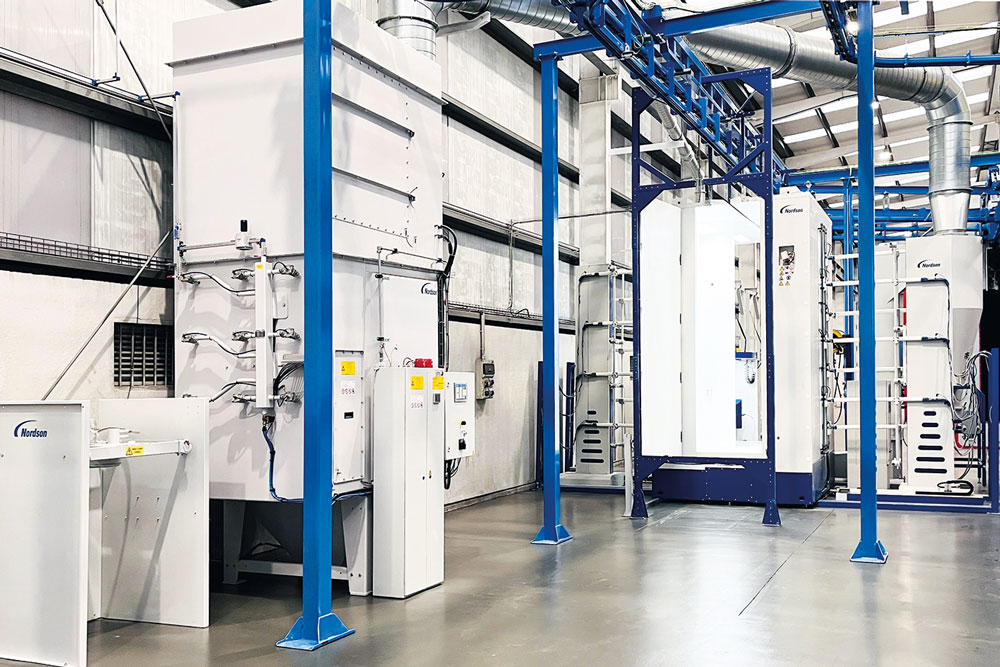
The Nordson dense-phase coating booth on the left and, on the right, the rear of the Cabycal drying oven. Ⓒ ipcm
The components then pass through the drying oven, where they dwell for about 20 minutes at 135 °C before reaching the powder coating booth equipped with Nordson’s dense-phase HDLV technology. “We asked Nordson for a robust, reliable system that requires minimal maintenance, but above all, one designed to operate 24/7; it also had to be fully automatic, not dependent on the skills of coating operators, and capable of rapid colour changes, with various automated processes. Nordson installed a booth with 7 guns on each side and 1 fixed gun, with automatic adjustment of parameters and application programmes, the ability to communicate with Cabycal’s control panel, and process control through Nordson’s HDLV technology,” explains González Candañedo. “Thanks to this dense-phase solution, we have complete control over coating thicknesses. This is only possible thanks to Nordson’s Encore® HD system, which delivers maximum penetration, process repeatability, exceptional uniformity, and excellent finish quality while eliminating the need for rework. Similarly, the Spectrum HD powder feeding centre ensures a stable supply of coating product, reducing maintenance and downtime. “This configuration has doubled our production capacity, ensured a high degree of repeatability in the application process, and significantly reduced powder consumption.”
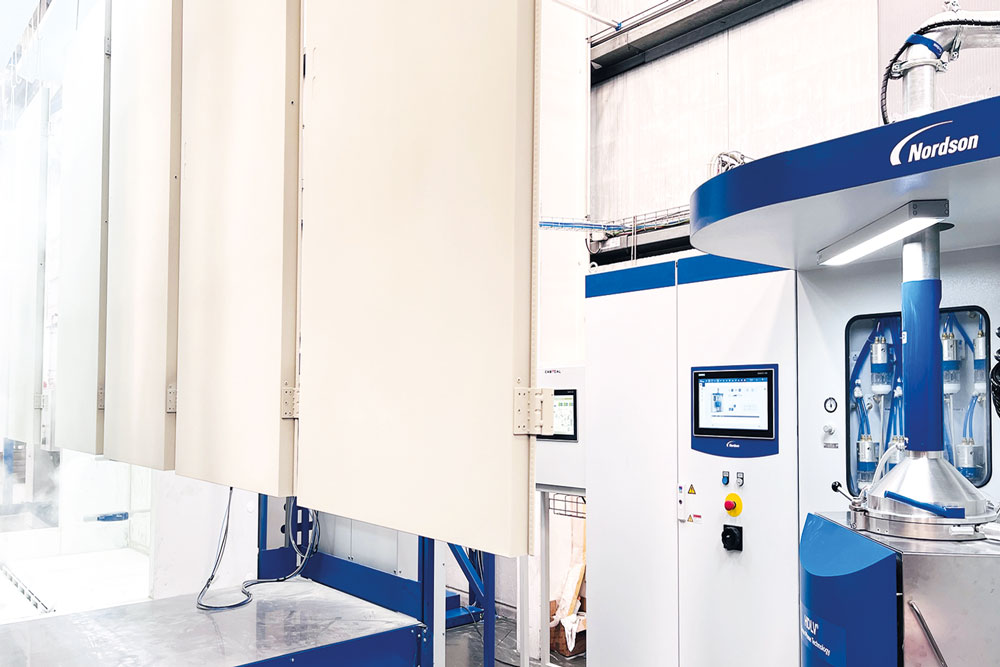
The exit from the Nordson ColorMax®3 booth featuring the PowderPilot® control panel and the Spectrum® HD powder centre. Ⓒ Nordson
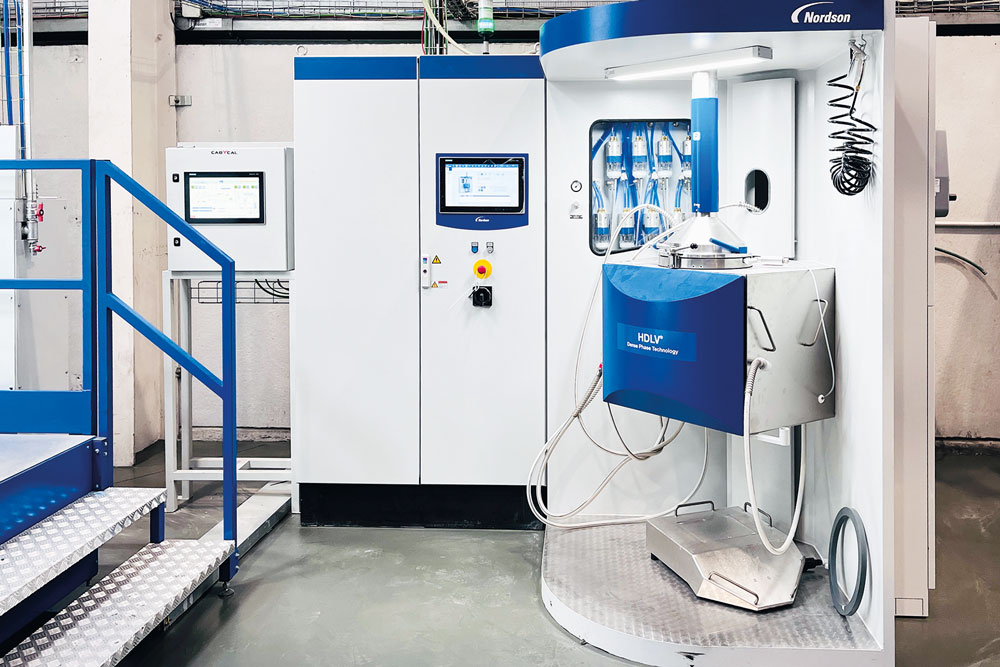
Nordson’s Encore® HD system with HDLV technology for coating Asturmadi Doors’ frames. Ⓒ Nordson
The plant handles an average of 4 colour changes per day: 2 standard colours account for around 80% of volumes, with the remaining tints used for small batches and bespoke orders. After powder application, the components pass through the curing oven, which operates at 200 °C for about 35 minutes for door leaves and 30 minutes for frames. The coated parts are finally transferred to the final storage buffer, where an unloading robot conveys them to the roller system for automatic assembly or to intermediate stations for special processes, such as the assembly of peepholes or tubular sections for double doors. “Our line can reach a speed of 3 m/min, with a complete cycle of around 1.5 hours and a coating time of 2.5 minutes per door leaf. Until a few years ago, we considered such performance unattainable.”
The Spectrum® HD centre and the PowderPilot® control panel, with Cabycal’s auxiliary control panel. Ⓒ Nordson
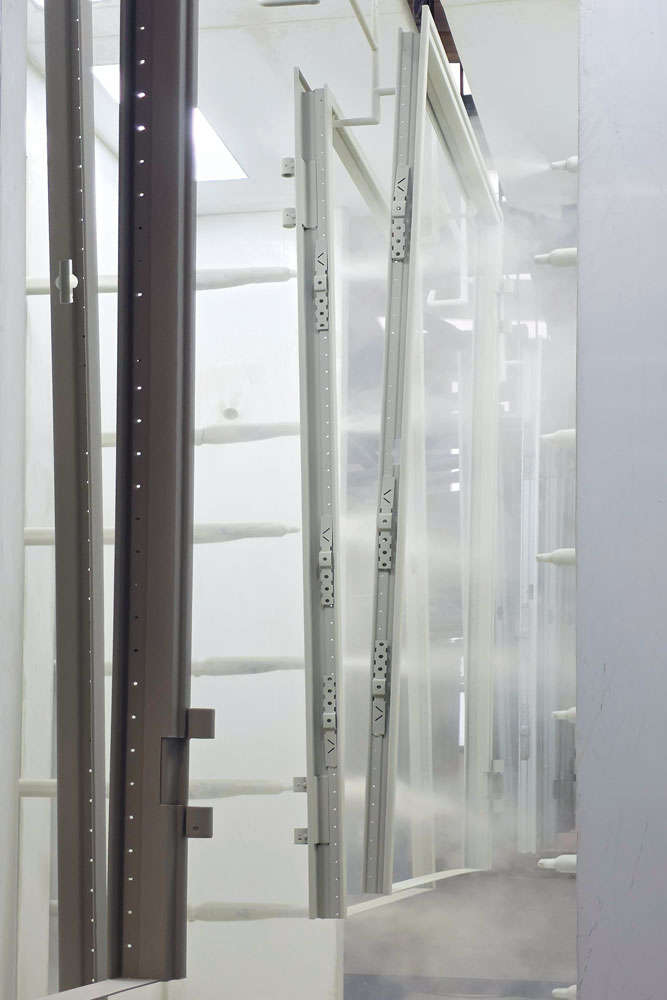 Sistema de Nordson Encore HD con tecnología HDLV recubriendo marcos de Asturmadi Doors. Ⓒ ipcm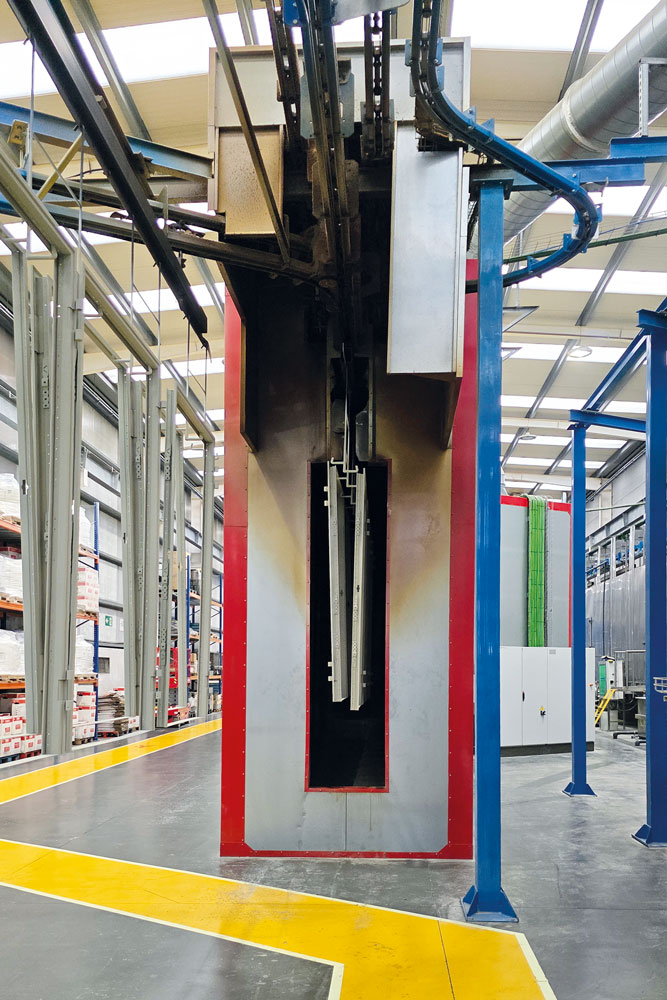
Parts entering the Cabycal curing oven. Ⓒ ipcm
A project developed through co-engineering
The design of the new coating shop was developed through a co-engineering process, with the direct involvement of Asturmadi Doors’ production manager from the outset. The joint effort between Cabycal’s technical team and the company’s staff enabled the design of a plant solution aimed at significantly boosting production performance. “It was a very close collaboration, with our technicians working side by side with Asturmadi Doors’ personnel to achieve their improvement targets,” says the managing director of Cabycal, Emilio Ferrando.
One of the most complex aspects of the project was integrating manual and automatic loading systems. “With a conveyor designed with 5 independent drive systems, the load bars’ paths intersect at several points along the route, making full traceability essential. The challenge was addressed by integrating management software linked to the company’s MES, developed in line with Industry 4.0 principles,” says Kepa Soto, Cabycal’s area manager for Northern Spain.
“We completely transformed the management of our production flow,” notes González Candañedo. “In the past, the system did not allow full identification of parts in production. Today, we have complete control over incoming and outgoing load bars, their route, the number of door leaves and frames being processed, and the coating cycles for each batch.”
The integration between the line and the company’s digital system also streamlined management of the pre-treatment tunnel through the automatic adjustment of parameters according to the type of component being treated. An operational monitoring solution for daily recording of coated parts was also implemented, fully interconnected with the loading and unloading robots, to ensure ongoing process control. The coating team is currently considering integrating an additional application booth for small colour batches – another option made possible by the flexibility of the power & free conveyor.
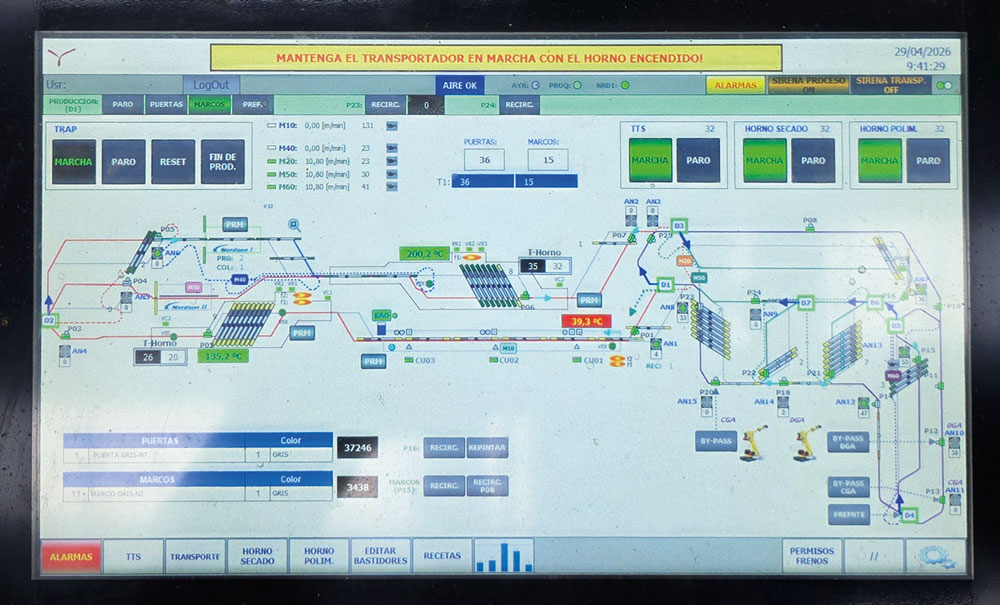
The control PLC for monitoring the entire coating process. Ⓒ ipcm
A winning choice to ensure safety
This project went beyond replacing the old coating line, serving as the starting point for a complete reorganisation and redesign of the entire production facility. The revamp enabled Asturmadi Doors to double its production capacity while reducing the number of shifts by 50%.
During the preliminary phase, the company evaluated various suppliers of coating systems and booths and ultimately chose Cabycal and Nordson. “We selected Cabycal because we observed significant growth within the company, both in technological innovation and industrial maturity. As for Nordson, we were already familiar with its reliable technology and were confident it would ensure excellent plant robustness and operational continuity in the long term. Materials, thicknesses, and build quality were the main assessment criteria that guided us in selecting the best technologies available on the market.”
This choice of technology was also driven by the need to meet increasingly stringent quality and regulatory requirements in the fire-rated door market. Asturmadi Doors’ products must meet rigorous certification standards for fire resistance values and application cycles, as well as the legal requirements of the Spanish market. In addition, manufacturers must hold EN 1125 certification for anti-panic devices intended for emergency evacuation.
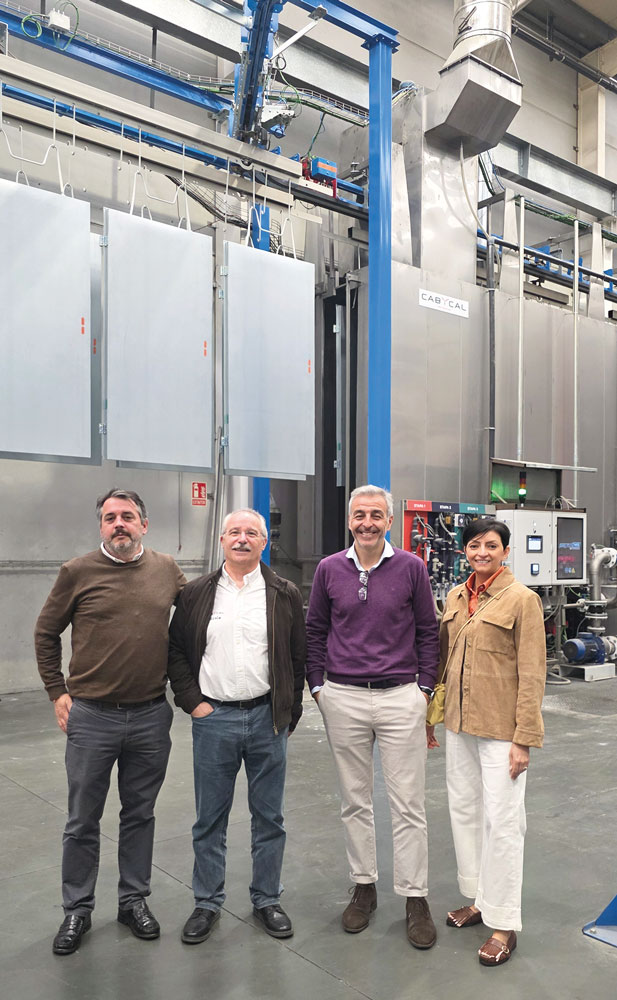
From left to right: Kepa Soto and Emilio Ferrando from Cabycal, Iván González Candañedo from Asturmadi Doors, and Alessia Venturi from ipcm®. Ⓒ ipcm
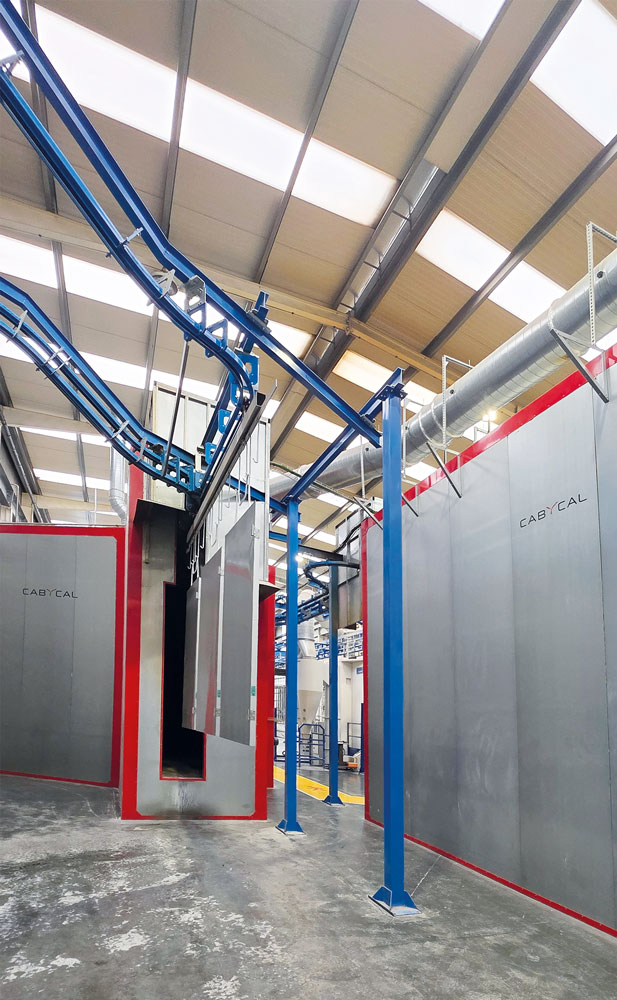
On the left, the drying oven; on the right, the curing oven. Ⓒ ipcm
“This places a very high barrier to entry for other producers, as maintaining certification involves numerous instrumental tests, periodic checks, and ongoing audits designed to ensure the consistency and traceability of production processes.” The coating of fire doors also falls within this rigorous certification system. For each production batch, the physical and chemical characteristics of the paints used and the applied thicknesses must comply with predefined parameters. “Thanks to Cabycal’s collaboration, we have installed a line that supports high production volumes and enables us to meet our clients’ increasingly stringent quality requirements. This is particularly relevant in light of the tragic events we have unfortunately witnessed, which have led to ever-stricter certification standards for our products to ensure people’s safety.”